


How Transcription and Authentication Software Preserve Accuracy, Privacy, & Trust at Scale
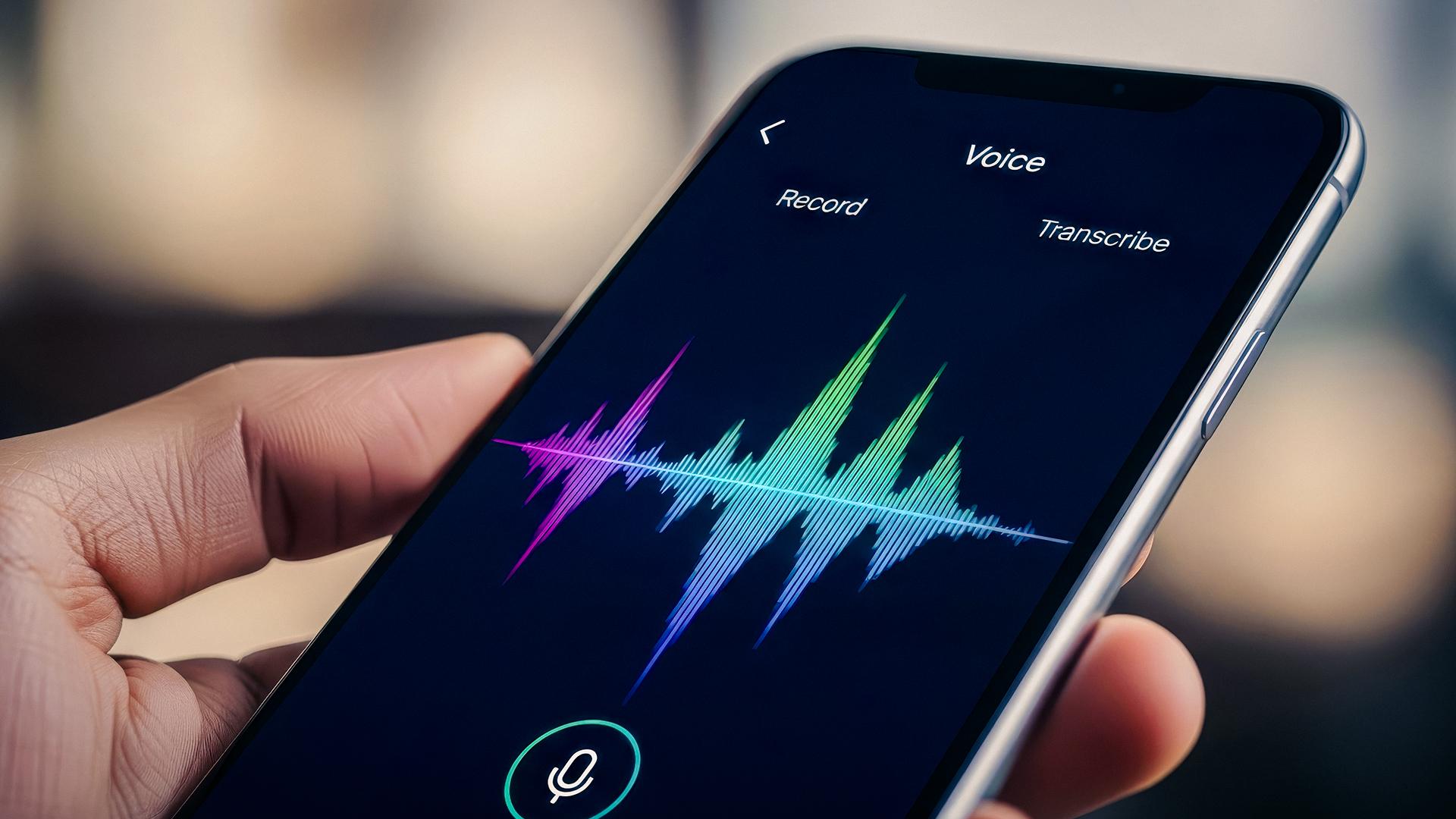

How Transcription and Authentication Software Preserve Accuracy, Privacy, & Trust at Scale
In software development, communication drives the work.
Sprint reviews, client stand-ups, design critiques, and strategy sessions generate decisions that echo through codebases, statements of work, and production systems.
Every word has consequences. Feature scope shifts, timelines adjust, and, in many cases, sensitive client data moves through environments that must remain compliant and defensible.
That’s why we focus not only on what gets said but also on how it is captured and secured.
At Big Pixel, where custom software and AI intersect with regulated operations, every conversation leaves a digital trail.
That trail has to be accurate, attributable, and protected from end to end.
Transcription and authentication software form the foundation of that discipline.
They transform speech into structured records and confirm that access to those records remains legitimate.
When these pieces are in place, documentation stays aligned with reality, handoffs stay crisp, and compliance concerns remain under control.
This is a foundational expectation from clients, auditors, and internal teams who can no longer afford decisions to vanish in thin air.
When conversations carry weight, your systems need a spine.
What This Technology Actually Is
Transcription software converts spoken language into text. Authentication software verifies identity and governs access to the resulting information.
One creates a reliable record of the conversation. The other preserves integrity around who can read, edit, or export that record.
Modern platforms do more than raw capture or simple sign-in.
They apply natural language processing and domain-aware models to produce clean, searchable transcripts, and they pair that with encryption, role-based controls, and audit logs.
The output is more than a pile of notes. It’s a coherent record that holds up in operational reviews, legal scrutiny, and clinical documentation.
Contemporary transcription engines rely on trained acoustic and language models.
They separate speakers, normalize accents, reduce background noise, and recognize specialized vocabulary without guesswork.
A cardiologist referencing “angioplasty,” a counsel citing “force majeure,” or an engineer discussing “idempotent endpoints” each lands correctly because the model understands context, not just syllables.
Authentication runs alongside that pipeline.
Biometric checks validate users through fingerprint or facial recognition.
Multi-factor prompts add a second layer when risk increases. Encryption protects data while it travels and while it rests.
Audit logs record who accessed what and when, creating a traceable history that answers not only what happened but who made it happen.
When teams understand that their words become institutional memory, they communicate with intention.
When they know those records are locked down by design, trust builds faster—internally and externally.
Why It Matters More Than Ever
Ambiguity slows teams. In software, it derails sprints. In healthcare or legal contexts, the impact grows larger—billing integrity, clinical safety, or evidentiary value may depend on the quality of the record.
Projects generate thousands of micro-decisions.
Prioritization calls in grooming, clarifications in QA, and client feedback during acceptance all affect outcomes.
Transcription captures those decisions faithfully so they can be acted on rather than re-discussed.
Authentication ensures the resulting artifacts live in the right hands and only the right hands.
And here’s the part most teams miss: trust is built in the margins.
When an engineer can reference an exact quote from two weeks ago without ambiguity, that’s operational maturity.
When a project manager can show verifiable handoff documentation to a regulator, that’s reputation protection.
For engineering organizations, this changes outcomes.
An engineer pulling a transcript while updating a HIPAA-aligned workflow needs confidence that the text reflects what was agreed to and that access to PHI remains properly constrained.
Precision in capture, combined with discipline in identity, prevents rework, reduces risk, and preserves trust.
This isn't just about peace of mind. It’s about preventing chaos.
Where It’s Working
Transcription and authentication tools aren’t limited to one field or function.
They’ve become core to any industry that relies on accurate communication and verifiable data.
The technology shows its strength most clearly in environments where precision and privacy aren’t optional.
Healthcare
Hospitals and private practices rely on Amazon Transcribe Medical and ScribeAI to convert clinician–patient conversations into structured notes that integrate cleanly with EHRs. These tools support HIPAA requirements, encrypt sessions, and reduce documentation friction so clinicians spend time on patient care instead of typing after hours.
Legal
Firms use Rev AI to process depositions, hearings, and client interviews. Machine speed combines with human verification where stakes are high. Authentication and audit controls preserve chain-of-custody expectations, which is essential when transcripts become part of a case record.
Corporate and Enterprise
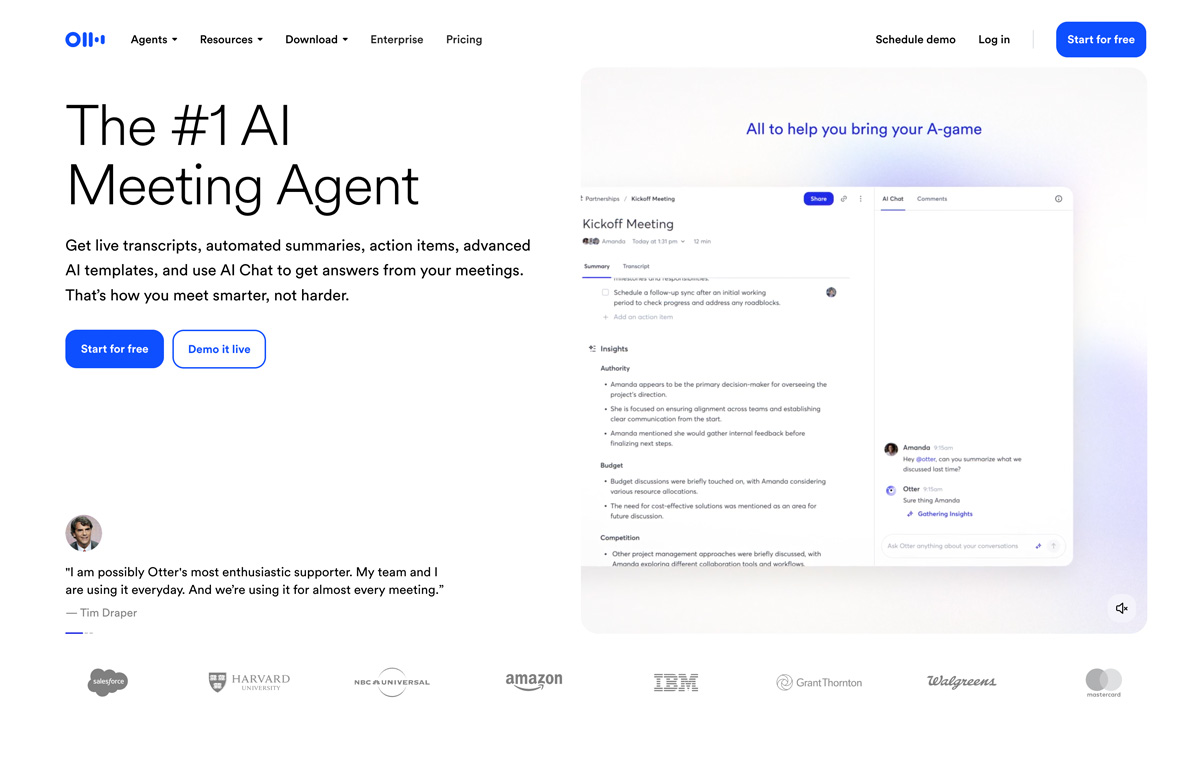
Teams turn to Otter.ai for live meeting capture and searchable summaries across product, finance, and operations. Beyond convenience, the benefit is institutional memory. Decisions remain discoverable and linked to speakers and moments in time. Pairing that layer with strong authentication keeps visibility aligned with role and region instead of just a meeting link.
Different sectors face similar pressure.
They need accurate capture, controlled access, and a record that remains credible long after the meeting ends.
Earlier tools focused on words.
Current systems account for meaning.
Domain-aware language models resolve jargon correctly, attribute speakers reliably, and produce structured outputs—sections, action items, timestamps—that teams can route into downstream systems without cleanup.
Quality no longer collapses when accents shift or specialized terminology appears.
Identity has advanced in parallel.
Authentication is now an ecosystem. It includes device signals, biometric checks, passkeys that remove passwords from the equation, and adaptive prompts when behavior looks unusual.
Security strengthens while friction drops, which encourages teams to keep protection in place rather than working around it.
Together, these advances create operational integrity at scale.
Conversations turn into usable data, and that data remains bound to verified users across its entire lifecycle.
How We Use It at Big Pixel
We build platforms for organizations that live under real constraints.
Healthcare operations, legal workflows, logistics networks, and other environments where accuracy and privacy matter demand more than good intentions.
Inside our own practice, we capture sprint discussions, design critiques, and client decisions so handoffs are precise and history is searchable.
In the products we ship, we embed the same discipline so our clients benefit from it automatically.
A field-reporting application might accept voice updates from a distributed team, produce structured entries, and restrict review to supervisors with the right credentials.
A consultation platform might record session audio, generate a transcript in real time, and limit replay access to licensed personnel. In both cases, transcription makes information usable. Authentication ensures that use remains appropriate.
This discipline becomes a quiet standard.
No one has to remember to capture the conversation. No one needs to wonder who was in the room.
The data proves it.
The goal stays consistent across projects. Capture dependable data once. Reuse it many times.
Selection isn’t about showy demos.
It’s about performance under real conditions. Look for accuracy that holds steady through noise, long sessions, and domain-heavy vocabulary.
Expect security that covers more than encryption. Role-based access, audit trails, and compliance should align with your obligations.
Demand integrations that plug into your world instead of forcing manual exports.
When the tool fits, teams move without thinking about the capture layer or the sign-in step. When it doesn’t, friction appears immediately in the form of rework, missed details, or permissions drift.
The strongest solutions don’t demand attention.
They keep conversations, records, and access in alignment so people can focus on the work. Transcription and authentication software deliver confidence at a moment when speed can’t come at the cost of control.
Teams gain clarity about decisions, organizations preserve trust with clients and regulators, and products inherit a standard of proof that holds up over time.
That is the infrastructure we choose to build with and build around.
We believe that business is built on transparency and trust.
We believe that good software is built the same way.

How Transcription and Authentication Software Preserve Accuracy, Privacy, & Trust at Scale

How Transcription and Authentication Software Preserve Accuracy, Privacy, & Trust at Scale
In software development, communication drives the work.
Sprint reviews, client stand-ups, design critiques, and strategy sessions generate decisions that echo through codebases, statements of work, and production systems.
Every word has consequences. Feature scope shifts, timelines adjust, and, in many cases, sensitive client data moves through environments that must remain compliant and defensible.
That’s why we focus not only on what gets said but also on how it is captured and secured.
At Big Pixel, where custom software and AI intersect with regulated operations, every conversation leaves a digital trail.
That trail has to be accurate, attributable, and protected from end to end.
Transcription and authentication software form the foundation of that discipline.
They transform speech into structured records and confirm that access to those records remains legitimate.
When these pieces are in place, documentation stays aligned with reality, handoffs stay crisp, and compliance concerns remain under control.
This is a foundational expectation from clients, auditors, and internal teams who can no longer afford decisions to vanish in thin air.
When conversations carry weight, your systems need a spine.
What This Technology Actually Is
Transcription software converts spoken language into text. Authentication software verifies identity and governs access to the resulting information.
One creates a reliable record of the conversation. The other preserves integrity around who can read, edit, or export that record.
Modern platforms do more than raw capture or simple sign-in.
They apply natural language processing and domain-aware models to produce clean, searchable transcripts, and they pair that with encryption, role-based controls, and audit logs.
The output is more than a pile of notes. It’s a coherent record that holds up in operational reviews, legal scrutiny, and clinical documentation.
Contemporary transcription engines rely on trained acoustic and language models.
They separate speakers, normalize accents, reduce background noise, and recognize specialized vocabulary without guesswork.
A cardiologist referencing “angioplasty,” a counsel citing “force majeure,” or an engineer discussing “idempotent endpoints” each lands correctly because the model understands context, not just syllables.
Authentication runs alongside that pipeline.
Biometric checks validate users through fingerprint or facial recognition.
Multi-factor prompts add a second layer when risk increases. Encryption protects data while it travels and while it rests.
Audit logs record who accessed what and when, creating a traceable history that answers not only what happened but who made it happen.
When teams understand that their words become institutional memory, they communicate with intention.
When they know those records are locked down by design, trust builds faster—internally and externally.
Why It Matters More Than Ever
Ambiguity slows teams. In software, it derails sprints. In healthcare or legal contexts, the impact grows larger—billing integrity, clinical safety, or evidentiary value may depend on the quality of the record.
Projects generate thousands of micro-decisions.
Prioritization calls in grooming, clarifications in QA, and client feedback during acceptance all affect outcomes.
Transcription captures those decisions faithfully so they can be acted on rather than re-discussed.
Authentication ensures the resulting artifacts live in the right hands and only the right hands.
And here’s the part most teams miss: trust is built in the margins.
When an engineer can reference an exact quote from two weeks ago without ambiguity, that’s operational maturity.
When a project manager can show verifiable handoff documentation to a regulator, that’s reputation protection.
For engineering organizations, this changes outcomes.
An engineer pulling a transcript while updating a HIPAA-aligned workflow needs confidence that the text reflects what was agreed to and that access to PHI remains properly constrained.
Precision in capture, combined with discipline in identity, prevents rework, reduces risk, and preserves trust.
This isn't just about peace of mind. It’s about preventing chaos.
Where It’s Working
Transcription and authentication tools aren’t limited to one field or function.
They’ve become core to any industry that relies on accurate communication and verifiable data.
The technology shows its strength most clearly in environments where precision and privacy aren’t optional.
Healthcare
Hospitals and private practices rely on Amazon Transcribe Medical and ScribeAI to convert clinician–patient conversations into structured notes that integrate cleanly with EHRs. These tools support HIPAA requirements, encrypt sessions, and reduce documentation friction so clinicians spend time on patient care instead of typing after hours.
Legal
Firms use Rev AI to process depositions, hearings, and client interviews. Machine speed combines with human verification where stakes are high. Authentication and audit controls preserve chain-of-custody expectations, which is essential when transcripts become part of a case record.
Corporate and Enterprise
Teams turn to Otter.ai for live meeting capture and searchable summaries across product, finance, and operations. Beyond convenience, the benefit is institutional memory. Decisions remain discoverable and linked to speakers and moments in time. Pairing that layer with strong authentication keeps visibility aligned with role and region instead of just a meeting link.
Different sectors face similar pressure.
They need accurate capture, controlled access, and a record that remains credible long after the meeting ends.
Earlier tools focused on words.
Current systems account for meaning.
Domain-aware language models resolve jargon correctly, attribute speakers reliably, and produce structured outputs—sections, action items, timestamps—that teams can route into downstream systems without cleanup.
Quality no longer collapses when accents shift or specialized terminology appears.
Identity has advanced in parallel.
Authentication is now an ecosystem. It includes device signals, biometric checks, passkeys that remove passwords from the equation, and adaptive prompts when behavior looks unusual.
Security strengthens while friction drops, which encourages teams to keep protection in place rather than working around it.
Together, these advances create operational integrity at scale.
Conversations turn into usable data, and that data remains bound to verified users across its entire lifecycle.
How We Use It at Big Pixel
We build platforms for organizations that live under real constraints.
Healthcare operations, legal workflows, logistics networks, and other environments where accuracy and privacy matter demand more than good intentions.
Inside our own practice, we capture sprint discussions, design critiques, and client decisions so handoffs are precise and history is searchable.
In the products we ship, we embed the same discipline so our clients benefit from it automatically.
A field-reporting application might accept voice updates from a distributed team, produce structured entries, and restrict review to supervisors with the right credentials.
A consultation platform might record session audio, generate a transcript in real time, and limit replay access to licensed personnel. In both cases, transcription makes information usable. Authentication ensures that use remains appropriate.
This discipline becomes a quiet standard.
No one has to remember to capture the conversation. No one needs to wonder who was in the room.
The data proves it.
The goal stays consistent across projects. Capture dependable data once. Reuse it many times.
Selection isn’t about showy demos.
It’s about performance under real conditions. Look for accuracy that holds steady through noise, long sessions, and domain-heavy vocabulary.
Expect security that covers more than encryption. Role-based access, audit trails, and compliance should align with your obligations.
Demand integrations that plug into your world instead of forcing manual exports.
When the tool fits, teams move without thinking about the capture layer or the sign-in step. When it doesn’t, friction appears immediately in the form of rework, missed details, or permissions drift.
The strongest solutions don’t demand attention.
They keep conversations, records, and access in alignment so people can focus on the work. Transcription and authentication software deliver confidence at a moment when speed can’t come at the cost of control.
Teams gain clarity about decisions, organizations preserve trust with clients and regulators, and products inherit a standard of proof that holds up over time.
That is the infrastructure we choose to build with and build around.
We believe that business is built on transparency and trust.
We believe that good software is built the same way.
Our superpower is custom software development that gets it done.


