Why Doesn't AI Give You Consistent Results?
Why Doesn't AI Give You Consistent Results?
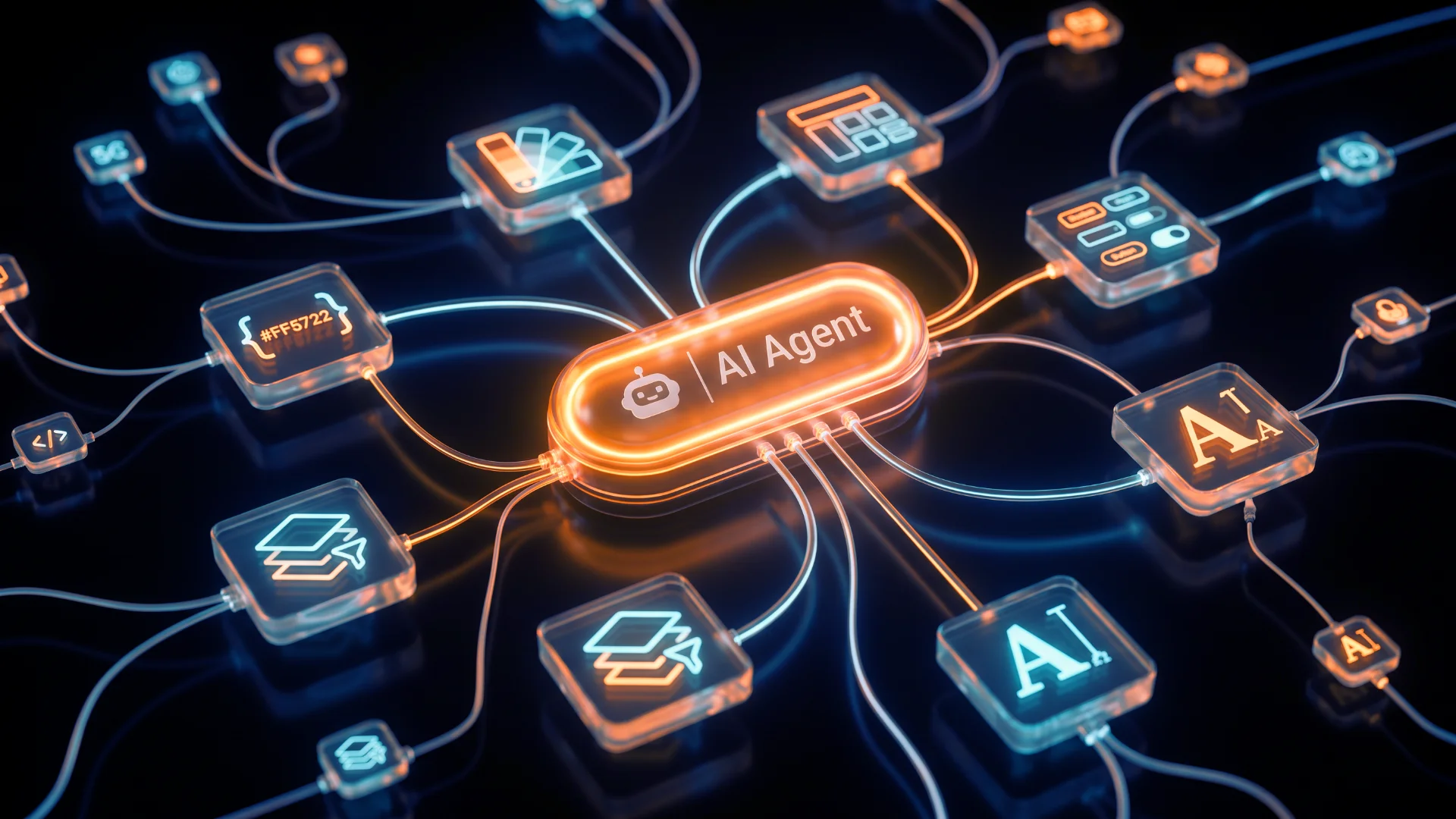
Ask an AI coding agent to build a screen and it produces something plausible, on brand in places and completely off in others, inventing button styles and component names as it goes. The instinct is to blame the model, or to write a longer prompt. But the problem is simpler: the agent never had access to your design system. It was guessing because nothing told it the rules.
Give that same agent a component contract, a machine-readable definition of your real components, their properties, and how they fit together, and the output changes. It goes from plausible-but-wrong to something you would actually merge. The AI did not get smarter. The system around it got clearer.
That is the whole lesson, and it reaches well past design. AI performs in direct proportion to how much structure it is given. If your workflows, data, permissions, and business rules are unclear, AI will not create clarity out of nothing. It fills the gaps with guesses, and in a real business those guesses have consequences.
Where is AI being asked to guess in your business?
Start there, because that is where the drift begins. AI rarely goes wrong at random. It goes wrong at the exact points where the business never defined the rule clearly enough and the model has to infer what you meant. Look for the places where AI is filling in structure that does not exist:
- Which customer status is the correct one
- Which data source to trust when two disagree
- Which workflow step comes next
- Which user is allowed to see what
- Which approval is actually required
- Which answer is safe to send a customer
Anywhere AI is inferring one of those, it is doing a job the system should have settled already. The fix is a defined rule the AI can follow, instead of a gap it has to guess across.
What does a "contract" look like for business software?
The same thing a component contract does for design: a clear, agreed set of rules the system has to follow. In design it is components and states. In business software it is a handful of contracts worth writing down:
- Workflow contract: how work moves, who owns each step, what triggers the next action, how exceptions are handled.
- Data contract: what each field means, where it comes from, who owns it, and which source wins when two disagree.
- Permission contract: who can view, edit, approve, export, or delete what.
- Customer contract: what customers should see, when, and what should never be exposed.
- AI-output contract: what the AI may generate, what it must reference, what it cannot decide, and what always needs human review.
When those rules are not written down, AI improvises them, and improvised rules become real ones. In February 2024, Air Canada learned this in public. A customer asked its support chatbot about bereavement fares, the chatbot described a refund policy the airline did not actually offer, and when the customer relied on it, a tribunal held Air Canada liable for the bot's answer. The chatbot was never connected to the real policy, so it filled the gap with something reasonable-sounding and wrong. The company owned the result either way.
What should AI assist with, and what should it never own?
The line runs between help and authority. AI is genuinely good at the flexible, first-pass work: summarizing, drafting, classifying, searching, spotting patterns, routing a request to the right place. Let it. Where it should never hold the final say is the decisions that carry real weight: access control, pricing, compliance calls, final approvals, permission changes, and anything a customer will treat as a promise.
The rule of thumb is short. The more important the decision, the less room AI should have to improvise. Assistance can be fast and loose. Authority needs a human name attached to it.
Which rules belong in software, not in AI?
The fixed ones, and this is the part that gets missed most. If a rule never changes, do not ask AI to interpret it every single time. Enforce it in code. A permission check, a required field, a valid status transition, a compliance gate, none of those are judgment calls, and handing them to a model only adds a chance to get a settled question wrong.
Split the work by how fixed the rule is:
- Let software enforce the hard rules: required fields, permission checks, status transitions, data validation, duplicate detection, required approvals, audit logs, compliance gates.
- Let AI handle the flexible work: summarizing, classifying, drafting, searching, spotting patterns, suggesting a next step.
The strongest AI-supported systems pair AI with plain, deterministic software for anything that has a right answer, so the model is only ever guessing in the places where guessing is actually allowed.
Should the rules live in a policy or in the system?
In the system, where the work actually happens. A policy document tells people what should happen and hopes they remember it under pressure. A well-built system makes the right thing the easy thing and the risky thing hard: the customer portal only shows what a customer is allowed to see, the approval workflow refuses an unsupported status change, the AI summary keeps a link back to its source, the admin tool logs every override. The guardrail is part of the workflow, not a paragraph nobody rereads mid-task.
All of it depends on one thing existing first: a source of truth. AI cannot reliably support a system that does not itself know what is true. Before you point AI at a workflow, the business has to answer where the correct answer lives, whether every team trusts that source, and who keeps it current.
This is the work we do. We build the structure that makes AI safe to use inside real software, the workflows, permissions, source-of-truth data, design systems, and review paths that give a model something solid to stand on. We believe that business is built on transparency and trust, and that good software is built the same way, which means the rules are built into the system, visible and owned, instead of left for the AI to infer.
What should you check before adding AI to a system?
Before you wire AI into a workflow that matters, run it through a short list:
- What is the source of truth, and does every team trust it?
- Which rules should AI follow, and which should software enforce outright?
- What data can AI access, and what is off limits?
- What can AI assist with, and what can it never decide?
- Who reviews the output, and what happens when it is wrong?
- Can a user see where an answer came from, and correct it?
- Who owns these rules as the business changes?
Cannot answer them yet? That is your build list, and the clarity you create answering it is most of what makes AI trustworthy in the first place.
What actually makes AI reliable?
Structure, not a better prompt. AI does not perform because a team asks it nicely or phrases the request perfectly. It performs when the system around it is clear enough to guide the work, with defined rules, a trusted source of truth, review where it matters, and boundaries it cannot cross.
The companies that get more out of AI will not be the ones that let it guess its way through the workflows that matter. They will be the ones that decide what is true, write the rules down, build the guardrails into the software, and give the model less to invent. Better AI outcomes start with better structure. Define the rules, and the AI has a lot less to guess.
Related Articles
Here are a couple related articles to view, or return back to the main page.

Check out the BIZ/DEV podcast
Our weekly tech podcast focusing on AI, our industry, the founder's journey, and more.