AI Can't Fix Broken Handoffs

AI Can't Fix Broken Handoffs
You rolled out AI to speed up an operation, and the early numbers looked good.
Then the complaints came back, and they were the same complaints as before, arriving faster. The deal that closes in sales still reaches operations missing the three things only a person knew to pass along.
The difference now is that the AI moved it there in seconds, so the gap that used to surface in a day surfaces in an hour, with more of it to clean up.
Bill Gates wrote the rule for this in 1996, before any of it was something you could buy: "automation applied to an inefficient operation will magnify the inefficiency." AI is the most powerful version of that rule the market has ever produced.
Pointed at a process that works, it compounds the gains. Pointed at a broken handoff, it compounds the confusion at speed.
The failure is already documented
MIT's 2025 study of enterprise AI, The GenAI Divide, found that 95% of corporate generative AI pilots never produce a real return. The researchers did not trace those failures to the models.
They traced them to fit. Generic AI tools stall inside companies because they do not adapt to the way the work actually flows.
The same study found something worth holding onto.
AI built with experienced partners succeeded about 67% of the time, while internal builds succeeded roughly a third as often. The teams that fitted the tool to the operation got a return.
The teams that aimed a tool at the existing mess did not. The technology was rarely the variable. The seam it was dropped into was.
What a handoff actually is
Every operation runs on handoffs.
Sales hands a closed deal to onboarding, onboarding hands a live account to support, one system hands data to the next in the chain.
A handoff is any point where work changes hands and context has to travel with it.
The seam is where things break, because context is heavier than it looks.
The person handing the work off knows things that never made it into any system:
- The client who needs extra attention through the first month
- The order that is technically standard but is actually an exception
- The step everyone skips because it has not mattered in two years
Strong teams cover these gaps by hand. Someone walks over and says the thing the system did not capture.
Someone catches the exception because they have seen it before.
That informal layer holds more of the operation together than anyone realizes, and it stays invisible right up until the day it is removed.
The handoff you cannot see
Not every handoff is between two people.
The most expensive ones are often between two tools, and there are more of them than most leaders think.
According to ONEiO research, mid-market companies now run between 150 and 250 SaaS applications on average, and enterprises run between 250 and 500.
Each one potentially connects to several others, and most of those connections were built one at a time, by different people, for different reasons, with no single picture of what was being assembled.
Your CRM hands data to your billing system, which hands it to the analytics tool leadership watches.
Each connection is a handoff. Many were built fast, under deadline, by someone who has since moved on, and they hold until a data format changes or a field gets renamed or the volume doubles.
Then they fail without warning, and the first sign anyone gets is a number that looks wrong in a report three weeks later. SAP and IDC research found that nearly half of organizations have replaced their primary integration tools in the past three to five years, and the old connections rarely come out.
The new layer gets built on the old one, and the seams multiply.
This is the foundation AI gets dropped onto, and it is exactly the kind of foundation AI makes worse.
An automated workflow running on a fragile tool-to-tool handoff does not repair the fragility.
It pushes more volume across it, faster, and turns an occasional manual catch into a continuous automated error.
What AI does to it, and two companies that found out in public
When you automate a handoff, you remove the person who was carrying the context across the seam. If that context was fully captured in the system, you get a clean win.
If it was not, and it rarely is, the automation moves the work across the gap faster while dropping the same context the people used to carry by hand.
There is a second effect that makes it harder to catch. AI output looks finished. A wrong answer arrives formatted, confident, and on time, so the broken handoff no longer announces itself with an obvious delay or a blank field. It hides inside work that looks done.
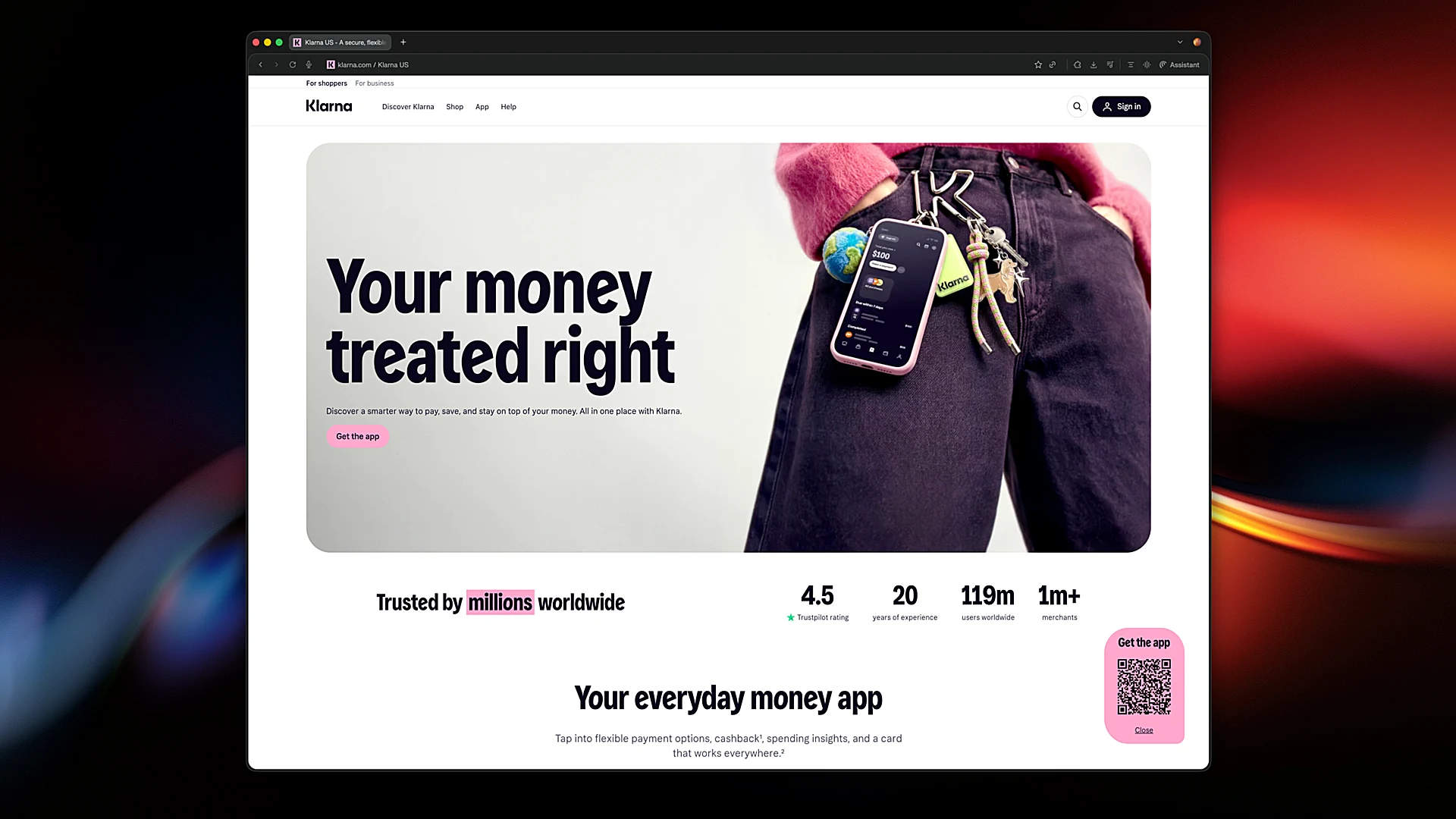
Klarna ran this experiment in front of everyone. In 2024 the company replaced much of its customer service with AI and published the efficiency numbers.
By 2025 it was rehiring people, because the AI could not handle the cases that actually needed handling: the disputes, the exceptions, the moments when a customer needed judgment instead of a fast answer.
The language ability was fine.
The handoff between routine cases and judgment cases was never designed, so the AI took everything, including the cases it had no business resolving.
Air Canada learned the same lesson in court. Its support chatbot gave a grieving passenger wrong information about bereavement fares.
When the passenger sued, the airline argued the chatbot was a separate entity it was not responsible for. The tribunal disagreed and held the airline liable.
The cost cascaded the way these decisions do:
- First on a grieving customer who relied on what the chatbot told them
- Then on the airline, in court and in the headlines
- Then on every other company that watched the case and realized its own AI deployments carried the same exposure
The chatbot did what it was built to do.
The failure was the decision to put AI into a moment where a person was making a real decision under stress, with no handoff back to a human when the stakes called for one.
Broken handoffs survive because nobody owns them
There is a structural reason these seams stay broken for years. A handoff sits between two teams, which means it belongs to neither.
Sales owns sales, operations owns operations, and the space between them, where the deal becomes a live account, belongs to no one with the authority to fix it.
So the gap gets managed instead of solved.
Each side builds its own workaround, the handoff keeps half-failing, and because the work technically gets done, it never becomes a problem anyone is accountable for. AI walks straight into that ownership vacuum.
The automation crosses a seam no one was responsible for, and when it breaks, the same question that kept it broken comes back: whose job was this?
Fixing a handoff is partly a technical problem and mostly an ownership one. Someone has to be accountable for the seam itself, not just the two sides of it.
How to find the one costing you most
You do not need an audit to find your worst handoff. Follow the workarounds. The seam leaking the most is wherever the team has built the most elaborate manual process to compensate:
- The spreadsheet that exists only to move data between two systems
- The standing meeting whose only purpose is making sure one team knows what another did
- The person whose real value is remembering how everything connects when the software does not
Each one points straight at a broken handoff, and the manual effort around it is the cost, paid every week.
Add up the hours spent papering over a single seam across a year and you usually find the budget to fix it properly several times over.
The fix has an order, and AI comes last.
Map the seam and name the context that has to cross it. Make that context explicit, so it lives in the system instead of in someone's memory. Give the seam an owner. Then, and only then, decide where automation helps.
Put a model on a handoff that works and it multiplies something good. Put one on the old version and it multiplies the mess.
What it looks like done right
FindFill started as a handoff problem. Healthcare facilities had open shifts, qualified nurses were ready to work them, and between the two sat a slow manual coordination process that left shifts unfilled and nurses unbooked.
No amount of technology layered on the old phone-and-spreadsheet method was going to fix that, because the method was the problem.
We built FindFill at Big Pixel with the team at Nurse First as a mobile-first marketplace that connects verified nurses with open shifts in real time.
The work was not in clever features. It was in rebuilding the handoff itself: a phone-first sign-in, verification built into the flow, and geolocation matching that puts the right shift in front of the right nurse the moment it opens.
We designed the seam between the two sides first, and the product followed from it. We have also walked plenty of clients out of AI features they came in asking for, because the handoff underneath was not ready, and that is usually the more valuable answer.
The pressure to add AI is real and it is not going away. Boards keep asking, competitors keep announcing, and the path of least resistance is to point a model at the process you already have.
That path looks productive right up until the faster broken handoff starts producing faster broken outcomes.
We believe that business is built on transparency and trust, and that good software is built the same way.
A handoff is where that gets tested, because it is the moment one team has to trust that another has what it needs to carry the work forward. AI dropped onto a seam that was never fixed does not honor that standard.
It is a liability with a launch announcement attached.
If your team is one tool selection away from automating a broken handoff, the cheaper first move is the conversation about which handoff is actually costing you, and whether it is solid enough to automate at all.
That is what our free strategy session is built to surface.
Related Articles
Here are a couple related articles to view, or return back to the main page.



Check out the BIZ/DEV podcast
Our weekly tech podcast focusing on AI, our industry, the founder's journey, and more.