AI Platforms Have Access to Your Business Data. Now What?
AI Platforms Have Access to Your Business Data. Now What?
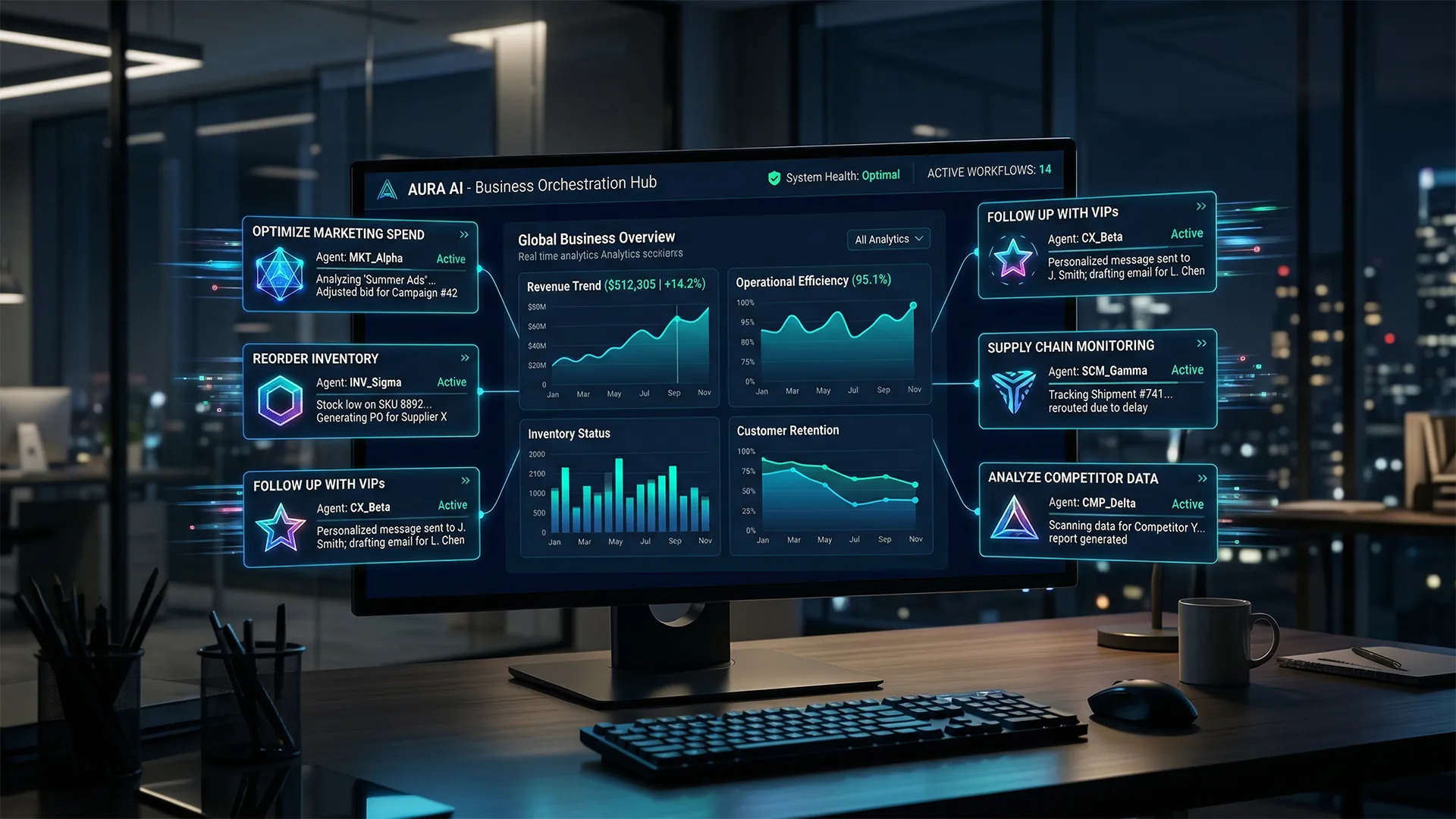
AI platforms can now open your files, operate your browser, run your development tools, and take action across your business systems without waiting for you to direct each step.
They can work while you are in a meeting, while you are with a client, while you are asleep. They can read your codebase, pull data from your CRM, write to your databases, and build a persistent memory of how your team works across every session.
That capability is valuable. It is also consequential.
The question most businesses have not formally answered is where one ends and the other begins.
The Access Is Broader Than Most Businesses Realize
When an AI platform is connected to your business environment, it is reading files, processing documents through external servers, storing conversation history, and in many cases building a cumulative profile of your work across every interaction.
The default settings on most platforms retain significantly more than users expect.
ChatGPT, for example, stores your conversations and uploaded files, builds persistent memory across sessions, and on consumer and Plus tiers uses that data to train future models unless you manually opt out.
When you delete a conversation it disappears from your view but remains on OpenAI's servers for up to 30 days, longer in cases involving legal or safety requirements.
For a business that has used the platform to work through client proposals, contracts, or financial data, that is not a trivial thing to leave on default.
Autonomous agents extend the exposure further.
Anthropic recently announced that Claude now has computer use capabilities, able to open files, operate browsers, and run development tools without step-by-step direction. Claude Cowork can connect to your business systems and take action without waiting for a human to direct each step.
When you connect an autonomous agent to your business infrastructure, the data it can access is therefore far broader than an information tool.
Organizations Should Implement Baseline Controls
If you are using an AI platform that can access your systems, here are controls worth implementing:
1. Deny by default. If an AI platform does not need access to a system or data, do not connect it.
2. Scope access to specific subsets. If an AI needs to read a database, give it read access to the tables it needs, not all tables. If it needs to access files, specify a directory or folder.
3. Separate storage from access. Information sensitive to your business should be stored in separate systems rather than combined with broadly accessible data. An AI assistant that works across your entire company might not need access to your financial data.
4. Use role-based access. Provide different access levels for different use cases. An AI assistant that helps with hiring should have access to job descriptions and hiring process data but not to employee SSNs or salary information.
5. Log all access. Track when, what, and who accessed your data. This is valuable both for understanding what is happening in your systems and for meeting compliance requirements.
6. Audit retention policies. Understand what data AI platforms retain, where it is stored, and for how long. Check whether it is used for training or improvement of their models.
7. Consider what happens if the platform is compromised. If an AI platform is breached, what customer data or business information could be exposed?
The Details Matter
For most teams, the biggest gap is between the default setup and what they would want if they thought about it carefully.
The platforms are not designed with malice. But they are optimized for engagement and improving their models, not for protecting your business. That gap creates the risk.
When you connect an AI platform to your business environment, you are implicitly trusting it with access to your systems and data. That trust is worth being deliberate about.
Related Articles
Here are a couple related articles to view, or return back to the main page.



Check out the BIZ/DEV podcast
Our weekly tech podcast focusing on AI, our industry, the founder's journey, and more.