Are Your Support Tickets Actually Product Requirements?

Are Your Support Tickets Actually Product Requirements?
A customer opens a ticket asking where to find their order status.
Another wants to know how to upload a document, a third asks why the dashboard number does not match their invoice, and a fourth asks your team to make a change they should be able to make themselves.
Each one looks like a small service request, and each gets answered and closed.
Handled one at a time, they are support volume. Seen together, they are something more useful: a map of everywhere the software is making people ask for help it should have given them.
The reflex is to read a full support queue as a staffing problem and hire or train through it.
But some of that queue is a product problem in disguise, and the repeated tickets are telling you exactly what to fix.
Is every support ticket a product problem?
No, and saying so would cost you credibility with your own support team.
Plenty of tickets are genuine one-offs: real bugs, true edge cases, user mistakes, questions that will never come up again. Those get answered and closed, and that is the job working correctly.
The signal is in repetition.
When the same question arrives from different customers, the same confusion shows up right after onboarding, the same request comes in after every release, or the same high-value account escalates the same issue, you are no longer looking at support volume.
You are looking at a pattern, and a pattern is the system telling you something a single ticket never could. A single ticket is noise. A repeated one is evidence.
What are repeated tickets actually telling you?
Where the software made someone ask for help it should have handed them.
Most repeated tickets translate cleanly into a specific system gap:
- "Where is my status?" usually means the portal does not show enough progress, timing, or ownership.
- "How do I do this?" usually means the interface does not match how people actually think about the task.
- "Can you change this for me?" usually means users lack the permissions or self-service to do it themselves.
- "This number is wrong" usually means the data definitions or their source are not visible.
- "I already sent that" usually means a handoff between two systems is broken.
Every one of those is a product or workflow question that happens to arrive through the support inbox. And they are not free to answer.
In B2B and SaaS, the loaded cost of a single support ticket runs roughly 25 to 60 dollars once you count the people and tools behind it, so a question a hundred customers ask every week is a full salary spent re-explaining something the software could have shown them once. And 81 percent of customers try to solve a problem themselves before they ever contact you, which means most tickets you receive are the ones where your product already failed the self-service test.
Why do support teams see product problems before leadership does?
Because support sits at the exact spot where the software meets reality, all day, every day.
They know which button nobody can find, which report always needs explaining, which workflow falls apart under real use.
The trouble is that this knowledge tends to stay stuck where it was created: in help-desk notes, Slack threads, one-off escalations, and the account manager's memory.
It rarely makes the trip to the people who decide what gets built.
The strongest product teams treat that feedback as a first-class input.
Atlassian's product guidance folds support ticket volume, integration requests, and adoption trends into the path from feedback to roadmap, which is the right instinct.
When support feedback has no route into product and operations decisions, you keep paying, every week, to answer questions the system could eventually retire.
Why isn't the answer just another help article?
Because a help article treats the symptom and leaves the cause in place.
When the same question keeps coming, the reflex is to write a better FAQ, record a training video, add a tooltip, or send a longer onboarding email. Those can support a genuinely good product.
They should never become the permanent patch over a confusing one. If users need training to complete the same basic task over and over, the software is asking too much of them.
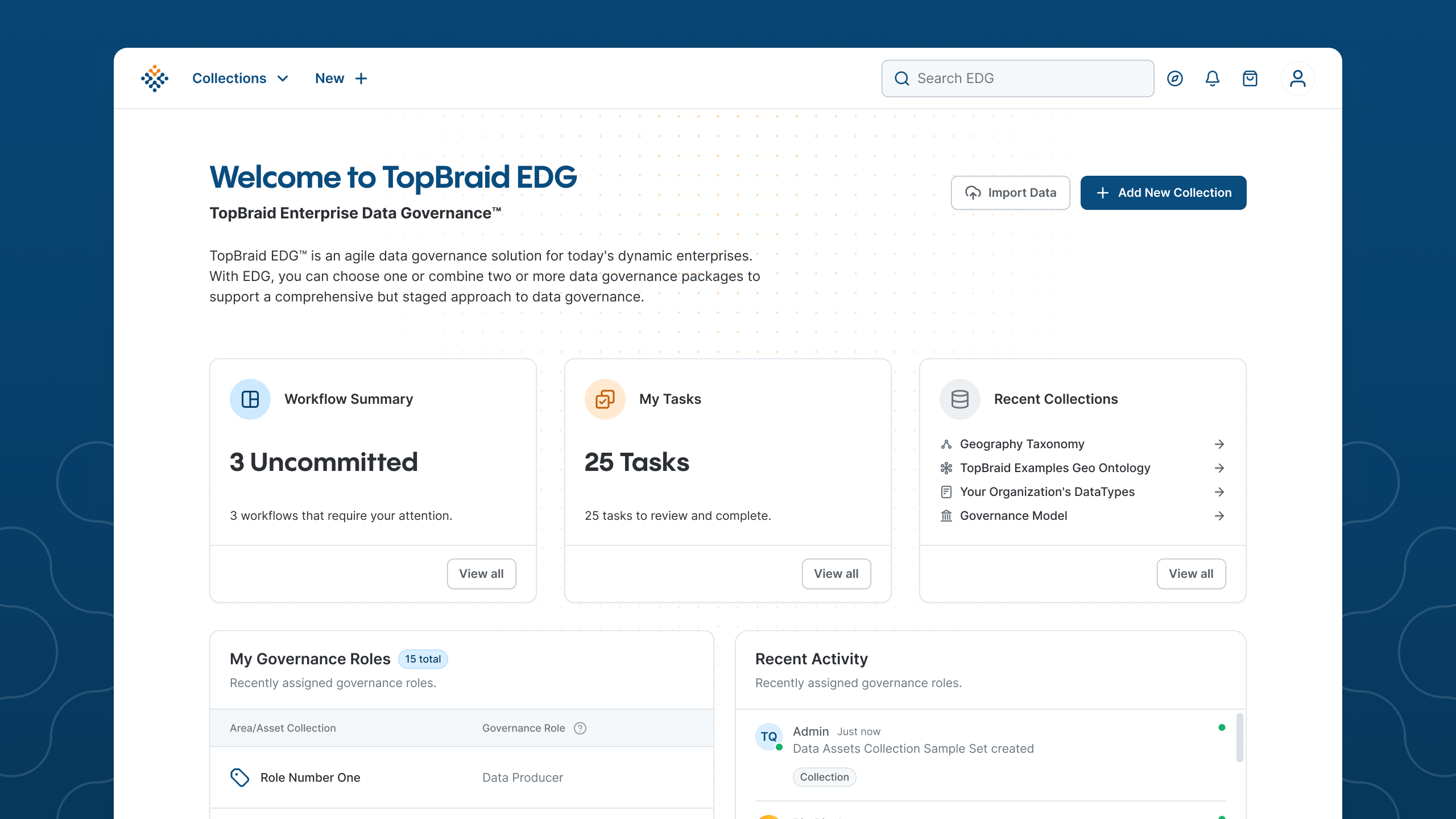
We saw a clean version of this with TopQuadrant. Their data platform was genuinely powerful, but the interface created such a steep learning curve that adoption stalled and onboarding became a real challenge, the kind of friction that shows up as a stack of repeated how-do-I tickets.
So we fixed the product.
We audited the experience and rebuilt the interface and flows around how those users actually work, and it stopped needing so much explaining.
That is the move a repeated ticket usually points at: change the software so the question stops getting asked.
When does a ticket pattern become a product requirement?
Not every repeated question earns a build, so it helps to have a bar.
A pattern is worth product attention when:
- It repeats across multiple customers or teams, not just one loud account
- It affects high-value or high-risk accounts where the stakes are real
- It creates recurring manual work inside your own company
- It blocks a customer from finishing a task they came to do
- It points at something users should safely be able to do themselves
- It shows up as confusion about numbers, statuses, or definitions
- It clusters at the same step of onboarding, every time
Hit several of those and the ticket has graduated.
It is a requirement your customers have been submitting for you, one at a time.
What does a good support-to-product loop look like?
A short, repeatable one.
The pattern that works has five moves:
- Capture. Support tickets, onboarding questions, sales objections, and internal help requests all need one place to land.
- Structure. Tag feedback by workflow step, product area, user role, and business impact, so a count of tickets becomes a picture of where the work breaks.
- Review. Product, operations, and support look at the patterns together on a regular rhythm, not whenever someone happens to remember.
- Decide and build. Weigh each pattern against value, risk, and effort, then fix the strongest ones in the product, the workflow, or the data.
- Close the loop. When a fix goes live, tell the people who raised it, so the queue teaches the roadmap instead of only absorbing complaints.
AI genuinely helps with the first two moves.
It can classify tickets, cluster repeated themes, summarize long threads, and route feedback to the right owner, and recent requirements-engineering research shows models can even draft requirements from raw feedback.
What it cannot do is decide which pattern matters most, which account carries strategic weight, or whether the answer is UX, automation, or a workflow change.
That judgment stays human, and it is the same standard we hold for everything we build.
We believe that business is built on transparency and trust, and that good software is built the same way, which means a person owns what the queue is telling you and what you decide to do about it.
What should you ask about your own support queue?
Pull last quarter's tickets and run them through a short set of questions:
- Which tickets repeat every single week?
- Which come from confusion rather than an actual failure?
- Which force support to look in three systems to answer one question?
- Which ask for something the customer should be able to do themselves?
- Which touch the customer experience most directly?
- Which would simply disappear if the portal, dashboard, form, or workflow were clearer?
- Which of these should become a product requirement instead of another support macro?
The tickets that keep surfacing under those questions are a product backlog your customers have been writing for you, sitting in a place nobody thought to read as one.
How do you turn a support queue into better software?
A support ticket is a request for help.
A repeated support ticket is a request for a better system.
When customers or employees keep asking the same question, you are not only carrying service volume, you are being handed clear evidence about where the product is unclear, where the workflow is too manual, and where self-service is missing.
Acting on it does more than lighten the queue.
Making status visible, adding the self-service path, cleaning up the report, or redesigning the confusing step can cut ticket volume by a quarter or more, and it does it by making the software easier to use, easier to trust, and easier to own.
The point is simple: stop paying people to explain, over and over, what the system should have made clear, and shrink the queue by fixing what keeps filling it.
Related Articles
Here are a couple related articles to view, or return back to the main page.



Check out the BIZ/DEV podcast
Our weekly tech podcast focusing on AI, our industry, the founder's journey, and more.