CLEAR Vision w/ Jay Graves

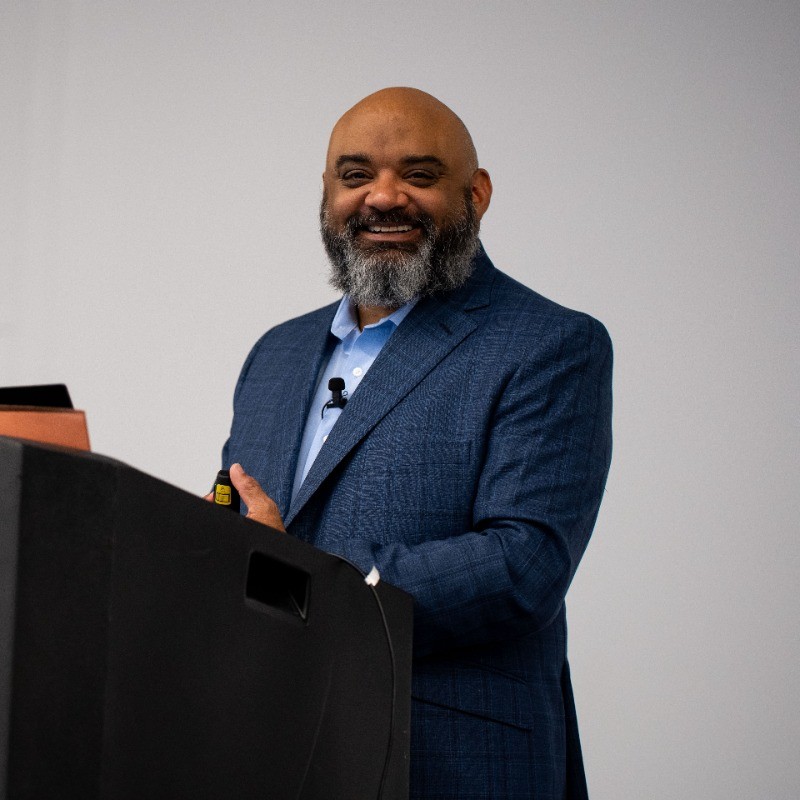
Jay Graves
Founder & CEO Leadership Canvas
In this episode of Biz/Dev, we sit down with Jay Graves, founder and CEO of Leadership Canvas, to talk about what it takes to build high-performing organizations.
Jay shares lessons from his CLEAR™ methodology, why culture and leadership remain at the center of organizational success, and how leaders can create environments where people and performance thrive together.
Along the way, we discuss the growing role of AI in leadership, the importance of community, and why the strongest organizations are built on more than strategy alone.
[00:00:00] David: They were really upset that I was gone. You know that.
[00:00:03] Gary: Not according to one email that we got from someone named Bavid Daxter I don't know who that was
[00:00:09] David: That's totally
[00:00:10] Gary: "I miss David".
[00:00:11] David: That is not. Yeah, and I know our analytics just went through the floor, so I'm glad I'm here to lift it up. That's what I'm here for.
[00:00:21] David: Hi everyone. Welcome to the Biz Dev Podcast, the podcast about developing your business. I'm David Baxter, your host, joined Per Usual by Mr. Gary Voight. Hello, sir. Been a bit, I've been out of town. I'm back.
[00:00:32] Gary: you're back. Unfortunately, for our audience, they like it better when I host,
[00:00:37] David: they were really upset that I was gone. You know that
[00:00:40] Gary: not according to one email that we got from. Someone named Bavid Daxter I don't know who that was,
[00:00:46] David: That's totally
[00:00:47] Gary: I miss David.
[00:00:48] David: That is not. Yeah, and I know our analytics just went through the floor, so I'm glad I'm here to lift it up. That's what I'm here for. That's what I'm here for. More
[00:00:56] Gary: optimizing for the agents now, so it should
[00:00:59] David: is that right? Well, that's who, that's all is listening. Anyway, more importantly, we are joined by Jay Graves, who is the founder and CEO of Leadership Canvas.
Welcome Mr. Jay. How are you?
[00:01:10] Gary: AJ.
[00:01:11] Jay: Good. Good. I love the banter, guys. That's that's a good sign when you can have that kind of humor with each other.
[00:01:16] David: we've known each other for over 20 years now and I regret all of them. So
[00:01:21] Gary: Yeah.
[00:01:21] David: we decided to do a podcast. So there you go. Alright, we'd like to start with some random questions to get to know you a little bit better. So we're gonna start out here. There are, these are, there is no rhyme or reason to any of this. Starting out with a really heavy hitter, black licorice, good or bad.
[00:01:41] Jay: Bad. You gotta go red.
[00:01:42] David: There we go. Is red Now that's controversial in and of itself. Is red licorice still licorice?
[00:01:47] Jay: it is title licorice. Technically it's not Right. I think 'cause licorice is the
[00:01:51] David: It is Just plastic and sugar, right? I mean that's
[00:01:54] Jay: Yeah. Yeah. But it's, it's, it's amazing somehow.
[00:01:57] Gary: it's also a straw if you bite the ends off
[00:02:01] Jay: and there's a big difference.
[00:02:02] David: you actually do
[00:02:03] Gary: Twizzler. Yeah.
[00:02:04] Jay: yeah. With certain kinds. So they got the kind where it's like rope. Which doesn't taste good to me. And then there's just the traditional where it's just like the regular black licorice, right?
So the rope one works as a straw. I learned that when I was maybe seven, eight
[00:02:19] David: All right, so I know you are a man of travel. We spoke a little bit before we push started recording. So this one's gonna hit hard too. Mountains or beach
mountains,
All right,
[00:02:30] Jay: Yeah. Yeah, man. You mentioned Tennessee. I'm in North Carolina. Uh, we love the Great Smokies. You know, on our side of the mountains, Asheville area is beautiful. Unfortunately, the whole area that got devastated, we used to go there a lot. And then we'll go over into Tennessee. Last this time, last year I think we were in Pigeon Forge in a little campground out there.
[00:02:52] David: that the Myrtle Beach of the mountains.
[00:02:55] Jay: We won't go back. We won't,
[00:02:57] David: weird if you've never been there. It is like all the kitschy, weird stuff. There's Gator Town and there is Dollywood, which actually is pretty great. My daughter went there
recently. I just, the craziest weird stuff for tourists.
It's purely a tourist drive, but anyway.
[00:03:13] Jay: purely, yeah. Yeah. Love the mountains.
[00:03:17] David: Are you a manual or automatic guy when it comes to driving a car?
[00:03:22] Jay: I have a 1979 mg in the garage. Automatic manual. All,
[00:03:32] David: No one starts a story like that and says, Hey, it's an
[00:03:34] Jay: yeah. Yeah. Manual all day long. I'm. I'm 52. So when I learned on a stick shift. My dad was a mechanic and he specialized in like foreign sports cars. So I grew up with Spitfires triumphs mgs and Porsches and stuff.
So when I hit my I think I'm still in it, but I hit my first part of my midlife crisis. I just wanted the smell, the feel, and found a good deal. And it was so funny 'cause I have a 22-year-old and she sat in the car with me. And she was like looking for buttons to roll the window down and I was like, nah, you gotta crank this bad boy.
And it was tight. And then she was like, you're really working hard. What's this thing? Like you're working so hard to get the car to move. And I'm like, just let Daddy cook. Just let dad cook. I'm good. I'm good.
[00:04:20] David: My son wants to drive stick. I started teaching him. I don't have a stick anymore, but I had one for 20 years and I'm an automatic guy now. I'm like, I did that for 20 years.
I'm good. My leg, left leg is all warped now. And, but he really wants, he's he's a believer, even though he's never owned a stick, he believes strongly that's the only way to drive.
And I'm like, yeah, the things that used to be true are no longer true. The automatics are now faster than a manual,
all that stuff. And so I'll just save my leg, but I totally get it. I, it's very fun to drive a stick. Very cool.
[00:04:52] Jay: I I have a busted leg from the army on the right side, so I can only do it in in, short things where the legs start hurting. But man, I get it all in and then I enjoy an automatic.
[00:05:02] David: I totally get it. I totally get it. So tell me about Leadership Canvas. I know this is your baby. You've been running this for several years now. Tell me about it.
[00:05:11] Jay: Yeah. Yeah. So, leadership canvas really started, it was kind of a culmination of experiences that I'd had throughout my career, both in the military and, and then in, corporate as a corporate leader, helping, transforming teams, building high performance teams. And so I created this methodology. When I was still within corporate, I started doing talks about the methodology 'cause people were noticing that, you know, I was kind of labeled a turnaround guy.
And, um, started talking and, and started seeing that a lot of people were looking for turnaround practice, best practices and things like that. And decided to, uh, you know, take the leap of faith and leave the, uh, corporate world and start my own company. And uh, and that's where Leadership Canvas was born.
So we help, uh, organizations build high performing teams and, and organizations. We implement our methodology throughout. We have a lot of different diagnostic tools and things like that to really get to what are those friction points that you're having within your organization? And then we take a stepwise approach to, you know, really kind of move the middle look at systems to make sure systems aren't getting in people's way.
So we look at everything from people strategy to business strategy, and then we really kind of pull those together so that they're seamless in moving forward.
[00:06:20] David: So when, if I, how, first, how big are you typically when you need your services? Like how big is your average client in terms of people size? I.
[00:06:30] Jay: That's a great question. It's actually across the spectrum, I would say. I've worked with organizations that are around 20 people. But they're, getting into growth mode. A lot of them are, maybe PE funded and there's pressure to go from 20 people to, let's hit our North Star and let's get it rolling.
There's sometimes a lack of infrastructure there, right? There's a lack of really how to go from 20 to 200 to whatever. And the principles are the same. So the principles of the framework work the same across all of them. And then I've worked with organizations that are anywhere by about 8,000 people.
I would say that the larger organizations are sometimes a little bit tougher because there's just so much, embedded bureaucracy and. Challenges and things like, their challenges can be a little bit different, certainly than smaller, more agile organizations.
I really like working with any of 'em as long as they're willing to invest in their people, invest in the time. This isn't something where, you sit around the executive table and you say, this sounds like a great idea. Let's push this all on hr. And then you walk away, like everybody in the organization has a role.
And as long as they're willing to work with me and. And follow the journey and respect the journey then I'm happy. I'm happy to be with him.
[00:07:34] David: So what are the symptoms of a company that need your services? Like how I, I don't wake up as the CEO of a, 500 person company and go, you know what I need a leadership canvas. That's not, what is it that happens to me that I start looking for you and, what are the things I would be looking for?
[00:07:51] Jay: Yeah, you're really struggling on transformation, growth, hitting your targets. Maybe you're falling short on your milestones. So really those companies that are struggling to, to hit those critical milestones within their organization, whether they're financial or product driven, or whatever those milestones are, if you find yourself lagging in that.
Then, which is top of mind for a lot of CEOs. There's a big balancing act that they have to do there. If you find yourself in that situation or you're just looking at, we need growth, we need a ramp, we need to get going. That, that's really the organizations that I work with and that seek me out.
[00:08:25] David: So if I'm think, I think of our little company now. We're only 12, so we're s even below your smaller size. But when I think to myself, and I go to my team and I say, we need growth. I don't think. That means I need to bring in a consultant for a leadership canvas. I'm thinking I need to bring in a sales guy or a sales agency at the very least to help me with that.
[00:08:48] Jay: Yeah.
[00:08:49] David: Would I bring you in your group in versus a dedicated a. Because I think, I understand leadership campus is a whole cloth, we're gonna transform you and make you better. But if I am a narrow focused CEO kind of guy, I'm gonna think I need growth. I'm gonna hire a, an agency that's gonna bring me more leads and I'm gonna grow.
That's how do I know to hire you versus them.
[00:09:11] Jay: Oh yeah. Actually it's interesting because I do work with a lot of organizations when they're looking at at their. A commercial strategy. That's my background is in commercial strategy. So take your scenario for instance, right? You as a leader of the organization may look and just say, Hey, I need a plug and play.
I'm gonna do an outsource sales team. They know what they're doing. I'm gonna bring 'em in, I'm gonna plug 'em into the system. But how do is your culture ready for that? Are there people on your team that are aligned with that? Is your organization adaptable enough to work with that organization?
Are they ready for it or are you actually going to hurt sales by bringing them in encumbering that sales organization with some processes that maybe don't line up well? Whether that's people friction or process systems or things like that. So it's really good to make sure that your organization is squared away and ready.
And that's part of the clear framework. So part of that is adaptability. That's the a and clear, so you gotta make sure that you're ready both culturally from a people perspective, from a systems perspective to bring that growth on. Sometimes organizations that I work with, they'll say, okay, we've got our 12 people.
We've got a new milestone that we gotta hit, for whatever reason where we need to bootstrap to the next level, or we need to. Do this with this investment or we need to hit this milestone and let's go, and but without kind of this holistic look to make sure, is the framework there ready for that growth?
Or are you just gonna frustrate people by spinning your wheels and is it actually gonna backfire on you? So taking an opportunity to assess and see where are those potential friction points are, where do they lay within the framework? And then fix those quickly. You'll have a better launch pad for doing.
Like in your example then if you just go out, the other thing that I find is people will say, okay, I'm gonna do something within the organization. Let's invest in leadership development. And they'll spend a lot of money in that area, but. Maybe they have a major cultural issue, and so it doesn't even you're investing in your leaders, but they're sitting there going, yeah, this is great.
You're sending me to this workshop, or you're bringing these people in. But man I can't speak up. I can't contribute. I can't do these things. So that's why it's a stepwise approach. So it's really are you prepared for growth? Are you seeking growth? Are you seeking to increase your performance?
And if so. Make sure you have the foundation and that you're at the right inflection point to be able to have that growth.
[00:11:30] David: You mentioned Clear that's your framework that you run everything on. Is that right?
[00:11:35] Jay: It is, yeah. It's a framework. Culture, leadership, employee engagement, adaptability, reward, and recognition, all of those things line up to create a high performance team. And a lot of organizations will go out of step, maybe HR or somebody will say, we're really not patting our people on the back.
Let's implement a reward system, and then you're handing out $20 gift cards, or, something, right? What is that really getting you? Is that. Is that really addressing the need, right? Or how are you connecting your reward back to your culture or what it is you want to hit in your milestones or your North Star within your organization?
So that's why we start with culture, do you have the right culture within your organization to get where you need to go? And everything from there downstream links back to that. And if you miss a step and it's so easy to do, like I don't. Think poorly of organizations that do that.
They're trying, right? But I've walked into so many situations where people are like, yeah, okay, that's great. I got this gift card, I got this award or whatever. But we have some serious issues here, or my leader's amazing. But look at what these are doing. They're just, they're not aligned.
They're not this. So if you don't address the upstream pieces in order, then you might actually add. Fuel to the flame in a bad way if you go outside of the steps.
[00:12:56] David: I am familiar. I, I was a member of C 12 for, uh, eight years, and they were really big on EOS
Is clear, similar to EOS, are they totally different? Is I know they're transformational. So in that regard, there is a But I mean, would that be a competitor to you? Is to put it in my framework.
[00:13:14] Jay: Yeah. Yeah. So there are definitely some similarities there. What I've seen there though is, i'm rooted really in people strategy and connecting it to your business strategy because I've walked both sides of those lines as a leader and as a corporate leader and a business owner. So understand the business and what you're trying to do, but what's often left out is the people strategy and the importance of that.
I think it's easy for us to say. Hey, people are important. And then you do an organizational assessment and all of a sudden it's especially now, like with ai, it's I don't hear anything out of the leadership, other than ai. These bots are doing the, the, this is going on.
What about the people? Kind of thing. I've worked with, a couple of PE firms, they like EOS, they'll bring that in, but then they'll still bring me in because they're really missing out on some of the people side of transformation. They're doing the business side of transformation very well.
But they're forgetting that it's the people that are the engine in the organization and they're not lined up together sometimes.
[00:14:07] David: So you mentioned ai, of course you we're nerds, so that has to be brought up. How has that changed? You've been doing this for seven years. I would imagine the last two have been a little different. How does, like when you hear things like block and they fired 40% of their people and they believe that they can have a ratio of one manager to 50 people or whatever using AI and agents and we're all gonna have fleets of bots that are gonna do all of our whims. How does that change how you do things?
[00:14:38] Jay: Yeah, that's a great question, and I've really been deep diving into that. Definitely over the, like you said the past year, big time. But started seeing signals probably about two years ago. And what's interesting is everything that I'm seeing is that we're about to hit another big, sort of transformational milestone within the next year or two that will a leap in ai.
The story you just talked about, real world. I was talking to a dear friend of mine who is a genius in marketing and had like a small marketing group. And it was a smaller organization, I think 20 some people. Their software and the CEO had been playing around with building bots, came in and said, I built bots that are more efficient than you.
It's just gonna be the C-suite. You're all fired. Took all the jobs off the job board and, poof.
[00:15:19] Gary: Get any ideas David.
[00:15:21] Jay: yeah.
[00:15:21] David: I just want to fire Gary. Everybody else can stay.
[00:15:24] Jay: I feel like Gary's the glue man. I don't know. I don't know. Let me, let me do a clear assessment on you guys and
[00:15:29] David: Oh man. He's just the appendix of Big Pixel anyway.
[00:15:33] Jay: just don't let it rupture. Yeah, so what I would say is and actually. Having conversations with some clients about this recently and some good friends is we can't forget humanity and ai. Like I'm an AI adopter. We're a small, we're a small company, we're just a handful of people and I have a big network that I can reach out to and, depending on the project, for me personally, like I've got things that I love it.
It's sped me up. But I'm also a subject matter expert, so I know when it's drifting, like I know, but it's created a lot of grid efficiencies. And, I'm not to the bot level yet, but I'd love to continue to go down that path of some automations. Maybe I won't have 600 and some emails, next time you ask me. But there's still people involved and so I think we have to be really careful with our communication. So part of what we do under the culture is you also have to create a comm communication plan because you're talking about transforming the organization. So you can't just.
Jump into something like that and be like everybody, we're transforming, right? You gotta come up with where are you at and where you're trying to get the organization to go, and what's that communication need to look like? I'd say it's the same thing for ai because if you, everybody's saying it, right?
We're an AI first. We're an AI driven, we're, all the buzz words. Okay. What does that landing on your people like, what does that mean to your people? Are they, are you telling them to create something that might replace them? Are you creating something that might make them more efficient?
There's a lot of confusion. Which platform are you using? I know a company that I talked to a couple weeks ago and we did some consulting with him and he said, Hey, have a policy, have a this have frame, blah, blah, blah. We did the communication plan. They didn't put the policy in place.
They blew their entire marketing budget within a month and a half. Because they didn't restrict, they didn't throttle. They had everybody using all these different ones. You guys know how tokens work, right? They blew through hundreds of thousands of dollars like that with no ROI.
There's no ROI whatsoever,
[00:17:14] David: I
think, uber just admitted they had set a token budget for the year for the entire organization and they blew through it in three months.
And and
[00:17:25] Gary: Talk about the people thing. Oh, go ahead, David.
[00:17:28] David: I'll just say you hear for the last few months we've been hearing about token Maxine and this, that and the other and they would've leadership boards on who used the most tokens. And I like anybody who thought even half a step ahead would realize anything you incentivize increases the use. So people started asking AI for the weather. Which is horribly inefficient, just stupid stuff. Just so they could use more and more tokens, they would have
it literally running in circles on a behind the scenes just to maximize tokens and they were spending Those things are, I can tell you those things are very expensive and I is just so funny.
And now you're hearing the back, oh, we took down the leaderboards. Duh dude. Like seriously.
[00:18:07] Jay: so yes. So I think there's a couple things there. One is how do we keep humanity top of mind? How do we keep our employees top of mind? How do we, do that while we're doing our AI transformation? The fact of the matter is it's here, it's going right. So we do need to use it in organizations for.
[00:18:23] David: Competitive. Whatever. So that's part of your business plan. Great. But what are you doing as far as your people strategy when it comes there and how are you keeping your people front and center and how are you communicating that out? Yes, we're probably gonna be bumping up against a pretty uncomfortable area here soon where.
Things in the backend will be replaced. I sat through a talk a couple weeks ago and they were saying, certainly gonna impact white collar jobs. And they started listing out all the different areas and I could just sense the anxiety of people who were in those areas. So that's coming.
So how are we preparing for it from a people perspective? Maybe we do, maybe we are going from, 100 people to 25, in that, one, are we attracting the right people? 'cause that's gonna be really competitive. What's your culture like to attract those people? How are you gonna lead those people?
Subject matter experts? Are you now gonna go from an executive team that's leading leaders of leaders to leading a subject matter expert in AI without a team who's had bots? Those are the things that I would, would say that we're talking about now to get ahead of now.
[00:19:26] AD: We believe that business is built on transparency and trust. We believe that good software should be built the same way. Big Pixel is a 100% US-based fixed fee, custom software design and development agency built on transparency and passion. No offshore handoffs, no surprise invoices, just a team that treats your problem like it's our own.
UX and design are core to everything we do. Not a phase that gets handed off, but a discipline that runs through every decision we make. We bring the expertise to build what your business needs and the clarity to know when AI and technology help and when they get in the way, we provide our clients honest assessments of where they are and how they can get where they want to go.
Your idea deserves the right team. Let's talk plan and create something that truly works for you.
[00:20:21] David: So what is the future, I hear a lot of is, hey, AI is coming. You're probably gonna shrink, maybe a hundred, maybe down to 75, 50, 25, whatever. But I'm thinking to myself, okay, if that's me in a year or two as the CEO, if I'm going from a hundred to 25, which was that extreme case one, how do you maintain culture when you just ditched three quarters of your people?
[00:20:47] Jay: Oh
[00:20:48] David: And it is one thing to start and say, I'm gonna build AI focus and be lean and I'm gonna hire very slowly 'cause I'm gonna use the bots. But if you're like, I can't imagine in blocks world right now that everybody is just like really happy, right? Because they, they have, almost half their friends are gone and that's gotta have a massive culture hit.
And so what is the, I guess it's both ways. If. If you have to shrink like I do, you have to shrink. Like I've always post, I've never understood why. If I now have the ability to make each of my people can do the work of four people, why am I shrinking? So I still do the same amount of stuff rather than looking forward and saying now I can just do four times the stuff for the, for a modicum of cost.
There will be more cost, but
for way less cost than if I quadrupled in the size. Do more and aim higher and then make a better product and all of that. But everybody seems to be saying, no, we're gonna maintain the status quo and shrink.
I don't, that seems unhealthy in, in, in one way, but at the same time, it's if you do make that decision, what's the right way to make that decision?
What's the healthy way to shrink in a Yeah I'm
running in circles, but there you go.
[00:22:00] Jay: No it's okay. Yeah. And David I like your mindset for one thing because I'm a growth guy, right? When I look at that, I think, okay, so our goal, whatever that is within an organization, market share, whatever it is, right? Your goal within an organization is here with my current team.
Now, if I embed these things in there, I can overshoot that, right? Or whatever. It really comes down to what's that organization's business strategy. Is it to, some people cut to the top line, right? Is it doing the math right? I cut here, I can jump there, and then the bot will catch up and then I'll be able to get here.
That's the, maybe the discussion that the executives have to have from a business strategy standpoint, because I tend to think, like you, you've just given me an accelerator. That I can layer on top of these wonderful people that I have within the organization who are already producing let's go.
But it really depends on the business di strategy dynamic there. What I would say is the right way to do it is, look, reorgs are common, reorgs have been happening for a long time, right? And all of us have probably either been a part of them or had to lead them or whatever.
Really what this is it's. It's a reorg, but it's pinned to a very specific thing. It's not, Hey, we fell short of our profit this year, we're gonna have to cut back. That's gonna cause a reorg. You're gonna have to do more with less, which I think we've been saying for the last 25 years plus, than organizations.
One, first and foremost, when we're going into a situation where we do know that there is actually a smart reorg that needs to happen within the organization and it makes sense and it makes sense to the business and so on and so forth, is the how. How do you do that? Are you gonna do it in an impersonal way?
Are you gonna do that in a very personable way for the people that are being impacted in a personal way, for the people who are gonna have survivals guilt, who are gonna be going through anger, who are gonna be going through that? So when you look at a reorg. Post reorg, there's a curve, right?
You gotta let people dip. One of the things, philosophies that I love is situational leadership. 'Cause it lines up with the type of leadership you need to have to line up with where a person's at within a particular task or something new, right? It's the same thing.
Your organization's gonna take a dip, but what is the North Star that you're putting in front of them? That's one of the things that we really try to clearly define is what is that North star? And that's where that communication plan has to come into play, where it's so important. And also just understand your people are gonna dip.
It's not comfortable for everybody, you gotta show your empathy. If your empathy, look, maybe I'm a CEO and I'm like. Whatever. I don't my empathy's about that big. I gotta drive this business. Somebody on your team, is somebody on your team who's influential with an organization.
People who you know are peer thought partners or things like that, right? There are people within the organization that their voice is gonna carry a lot within that organization, and maybe they're the ones that you put in the face of certain things. So I think that's where I'm saying you have to be very smart.
Okay. What is the transformation we're doing? It's no different than a reorg. So we have to be very thoughtful around how we handle people going into that reorg. How we handle people that are going through that change curve during and after the reorg. And then how do we get them set back on track and what do we think that timeline's gonna be?
What do we, what are the steps and things that we can do? And it can be different for each, different organizations, but that's where you gotta really. Have a curated plan, but I think any of us who live through a reorg or constructed reorgs, we know, we know there's always gonna be that change.
And then you look back six months later and you're, hopefully you're humming along and you're like, okay, that sucked. But if I did it I've unfortunately been a part of a lot of reorgs and, I have people on LinkedIn who were impacted and, friends of mine who came to the organization that were impacted that.
Pretty quickly, because of the support structure that we put in place, they found, where they wanted to be. And they still send nice messages and they're still connected and they're growing and it's, and so it's the how, it's the how you do it. I have a plan.
Yeah.
[00:25:48] David: Okay, so I wanna change gears a little bit. I want, if I am a newer company, most of our audiences is newer startups, newer entrepreneurs. How do I use your expertise to build my company?
[00:26:02] Jay: Oh man, love that. So I happen to be in research Triangle Park. I don't know if people, the audience knows that, knows about RTP, this area is a lightning rod for startups. So I volunteer a lot of time at some of the incubators and things like that. With these organizations, it's five people or whatever, two or three people who.
Came up with this amazing thing and their plan is to, grow to the point where they can get it and they can be, acquired or whatever, whatever that, whatever their plan is. One of the things that I say is, put the framework in place now, right? Like you and your buddies have a great synergy here, but your next step is to bring in, four or five people you know, to add to your org chart.
Like you have all that mapped out, your growth plans mapped out. Hopefully, if not, we'll help you, but your growth plan's mapped out, so the dynamic of your culture is gonna change. If maybe you were the one that gave birth to the baby with your friend and now you're trying to add to it, that dynamic is gonna change as you bring d different people in.
So what are those principles? Why did you start what you started? And if you lift and shift those principles 20 years down the road? Do they shift? Should they shift? Should they look differently? One of the things in dealing with startups that was interesting to me when I first started my business, is I worked with a lot of startups and, I had to change my mindset, right?
Because, it was exciting, it was scrappy, it was a handful of people, not a lot of money, not a lot of resources, not a lot of this, but incredibly adaptable. Two things, and I noticed that you can't really take like a bloated system for a big corporation and landed it on top of them.
It just, it didn't line up. It didn't line up correctly. So as I even went through my own journey, I started to realize that's okay, but you need to think about, your current culture with your buddies or your coworkers or people that you've been working with for several years.
You're about to introduce new variables into there. What type of people are you looking for? Are you looking for, people that are like you I tend to not love that, because you're gonna need to be challenged. Are you bringing people in that are gonna bring their expertise that you need to have into the organization?
Are you willing to listen? Otherwise, so are you thinking about your culture? Are we willing to make mistakes? Are we gonna have open forum? Are we gonna have open communication? Are we gonna have all these different things? Shape it now. Shape it now. Because as you add people in there, that's not the time to figure it out.
Because at that point you can just expand it and grow. What are the type of leaders that you want within your organization? Startup part of that frenetic pace right, is. Worklife balance, like I've worked with some startups and the they'll have in there, we have, people first work life balance, all these values and stuff they put on the wall and it's brother, you're working your people 18, plus hours a day because you have to.
And some of these people know that, but they're investing in you in the company because, they want a piece of that or they or here's their why. So let's take that off the wall and let's be real, over the next few years, we need people who are willing to work like this. Here's the payoff.
Here's what we're gonna do for you. Here's how we're gonna make it fun for you. Here's where we're gonna invest in you. Here's how're gonna do these things. So think about those things when you're just a handful of people and put that framework in place because it expands with you.
[00:29:02] David: Very.
[00:29:02] Gary: Now coming from that this segues perfectly into our final question of what would your top three pieces of advice be for a new founder or startup?
[00:29:13] Jay: New founder startup? I tell you, I would reach out and try to get as many resources as possible I did not know I got my MBA about a year or two before I started my business. I had a business plan and, I had some people and resources from the university that, I could reach into.
But very quickly I was like, gosh I know nothing about accounting. And actually when I was getting my MBA, you wouldn't wanna see my score. You don't want me touching your finances. Support network, whether that's a direct employees or whatever that you're bringing into your organization or whether you're looking out for resources.
Score. I worked with score. Every State has a score chapter that can help you out. But I would say, have some people, some trusted people that will shoot you straight. I needed people like that. People love the idea. People were like, yeah, do it. Do this, do that. This is great.
Oh, you're going to, be so successful. I needed people to tell me like, no, where are the ugly babies here? Where are the issues? What's, shoot me straight here. I need subject matter experts to help me in areas where I'm weak. Unleash my strengths where I can, but I need to surround myself with really good people and really good resources.
So I would say, take the time to do that. Also, don't get over your skis don't. Follow the process, right? There, there's certainly, at least for me, there is a certain Hey, I'm going out from the umbrella of corporate structure to now I'm paying for my own insurance.
I'm feeding my family, I'm doing all these things. So there's a certain intensity that I needed to have in that growth model. However, looking back, there were certainly things that I spent way too much time on and too much resources on that just didn't matter. So have that trusted advisor, those trusted people, friends or whatever, trusted advisors that you can bring on board to help you keep straight.
So I would say that's first and foremost. The other thing is really think about. Your why are you doing what you're doing? What purpose does it serve? I think from a classical business standpoint, people always talk about, what's your off-ramp? What's your this, what's your that? Really take time to think like where do I see this in the 5, 10, 15, 20 years?
Is this something that you're wanting to do? And what does that evolution, at least abstractly look like? And then what are the non-negotiables for you? What are those things? You know what I mean? Look, yeah. I'm a people culture guy because I've seen organizations. Crush it when they just spend a little bit of time looking at their people strategy.
But as a founder. Might just be you sitting in a room, right? But as you envision what you wanna look like down the road, what are those principles and things and your why that you want embedded within that organization? Does it make sense? And then I think the third thing is be agile. So I started my company in 2019, January, 2019.
I had 11 speaking engagements. I had clients, already lined up. I knew those speaking engagements would bring me, quite a lot of business. And COVID hit. So one of the things that I learned in the military and I preach is you gotta be resilient. You gotta have alternate plans, you gotta be able to be adaptable.
That's a principle that we do under our a right. Have that mindset within your organization and also have the infrastructure in place to be able to do that and the cultural alignment to be able to do that. So I would say be adaptable. I think it was I don't know, Mike Tyson, I think he said, everybody's got a plan until they get punched in the mouth.
You can have the best constructed business plan. You can have all this and you can, oh man, I'm gonna be a multimillionaire by this point. You're gonna get punched in the face, so be ready to dodge block. Adapt, have those trusted advisors that can help you when you're bobbing and weaving through that you know that, that time and remember why you're doing what you're doing.
Because you're gonna get tired. You're gonna get tired and you're gonna take punches. But if you have those three things, then you'll make it.
[00:32:36] Gary: Awesome.
[00:32:36] David: Very good.
[00:32:37] Gary: All right, Jay. Well, if anybody wants to learn more about you, about leadership canvas or the clear methodology, where's the best place to find you?
[00:32:45] Jay: Yeah, so I'm on LinkedIn, Jay Graves. You can certainly find me there. Leadership canvas.pro is the website and you can reach out to me directly. Jay@pathbcs.com. That's path bravo charlie sierra.com. That's my email. Yeah, I'd love to be able to reach out to, or help anybody who who wants to talk.
We have a free diagnostic that we do if somebody wants to see what are the friction points within our organization I can send 'em the diagnostics, sit down with them and, give 'em, give them some advice and a roadmap and some thoughts and some best practices to hopefully steer 'em in the right way.
[00:33:17] Gary: Cool.
Those links will be in the show notes as well.
[00:33:20] Jay: Perfect.
[00:33:20] David: thank you so much, Jay, for joining us. This has been a lot of fun.
[00:33:23] Jay: Yeah. Really enjoyed it guys. Yeah, it's a good time.
[00:33:26] David: And on that note, we are out for this week. We'll be back next time. Have a good one, everybody.
[00:33:30] OUTRO: That wraps up this episode of the Biz Dev Podcast, and this time you get me, Jen Baxter, co-owner of Big Pixel and David's Wife. Yep. I finally took the mic or rusted it away from David. Biz Dev is a production of Big Pixel, a US-based provider of UX design strategy, and custom software. This podcast is edited by Audio Wiz Matt McCracken and Christie Pronto marketing guru for Big Pixel.
Recent Episodes
Here are a couple other episodes to check out, or return back to the main page.



AI, Tech, and Industry News
Check out the latest insights, curated with intent, from our team.