The CloudFruit of Your Labor w/ Sam Hilsman

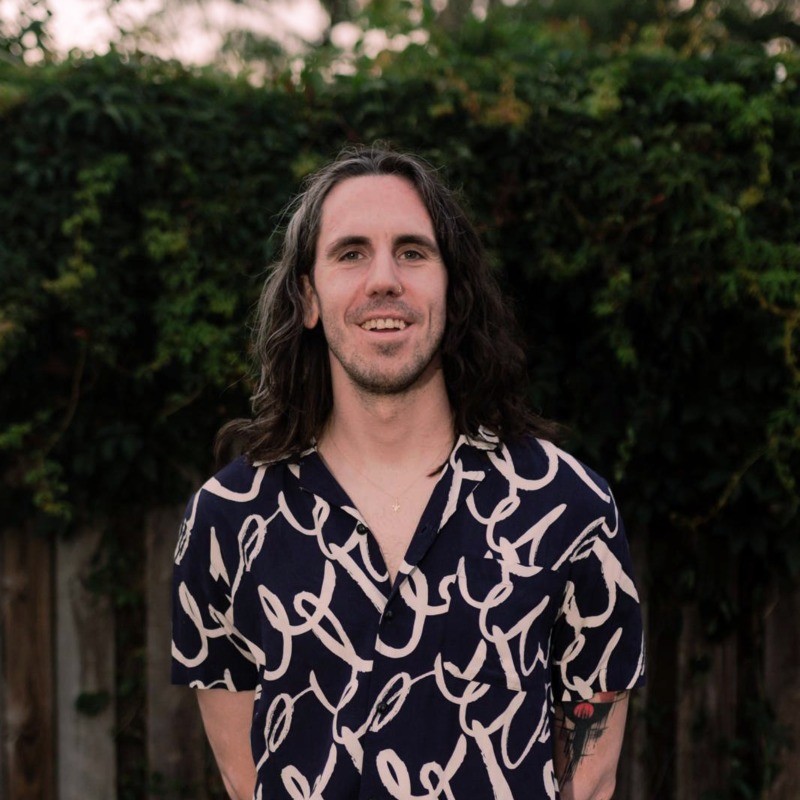
In this episode of Biz/Dev, we sit down with Sam Hilsman, Founder and CEO of CloudFruit, to talk about software development, systems thinking, and the changing role of developers in the age of AI.
Sam shares lessons from building complex digital systems and products, including how AI is reshaping software development and why curiosity and experimentation remain essential skills for builders.
Along the way, we discuss technology, business strategy, and what it means to create products in a world where the tools are changing faster than ever.
[00:00:00] David: It's the classic thing where the plumber comes in for 10 minutes and dinks on- Yeah ... a few pipes and says, "I fixed it." And the guy's like- Yeah ... "Why am I paying you for an hour?" It's like, "'Cause it took me 20 years to get there, to be able to do that."
Hi everyone. Welcome to the Biz Dev Podcast, the podcast about developing your business. I'm David Baxter, your host, joined per usual by the spiky-headed one, Gary Voight. Hello, sir.
[00:00:22] Gary: Hello. I'm trying a new product today in my hair, and it's a little spiky.
[00:00:26] David: What's that like, trying product on your hair?
[00:00:29] Gary: What's it like not having hair?
I don't know.
[00:00:31] David: It's freeing, and I tell you, I get ready way faster than you do. Save a
[00:00:34] Gary: lot of money on product and shampoo- Yeah ... I'm sure.
[00:00:36] David: I will tell you, my wife is embracing her natural curly hair, and so we have a new product coming in every day to try. I did not realize that curly hair was such a thing, 'cause I have no hair, and I didn't have curly hair when I did have hair.
And
[00:00:52] Gary: yeah, my mom- It
[00:00:52] David: is a lot,
[00:00:53] Gary: man ... spends an un- like a crazy amount of time with a very expensive product to make her hair straight. But it looks- Yeah ... really good when she's done, but it's-
[00:01:00] David: That's so funny ... it's effort ... my wife used to use that product, and then she decided to change it to curly, and my son and her now both have curly hair, and so they bond, which is a weird conversation, especially when I have no hair.
So anyway, it's been a process. More importantly, speaking of great hair- Hey ... we are joined by Sam Hilsman. That was an accident. I didn't actually mean that to be a segue, but I'm gonna take it anyway. Well
[00:01:23] Sam: done.
[00:01:24] David: Sam is the founder and CEO of Cloudfruit. Welcome, man. How are you?
[00:01:29] Sam: I'm good, man. How are you?
[00:01:30] Gary: I cannot complain.
All right. So we like to start out with some randomness, little get to know you questions. So you game? You ready?
[00:01:41] Sam: Yep. I'm ready.
[00:01:42] David: I don't know, Gary, what I would do if they said no. Do we...
[00:01:46] Gary: You'd be like, "Too bad. It's our show."
[00:01:50] David: All right, here we go. Are you an optimist or a realist?
[00:01:55] Sam: Oh, oof. Probably more of a realist.
[00:01:59] David: Okay. Fair enough. Are you an overthinker, or do you think it'll just work itself out?
[00:02:06] Sam: Overthinker.
[00:02:08] David: Man, he, him and my wife need to hang out. She's gonna be mad at me, but she, she actually does listen to this. I'm used to answering these questions too. Yeah. Well, if you have something important to say, Gary, you can...
I'll mute you, but you can keep talking.
[00:02:18] Gary: No, that's fine.
[00:02:19] David: That's fine? Edit myself
[00:02:20] Gary: out.
[00:02:21] Sam: I'll say I'm pretty decisive. So like I overthink a lot, but when I, I just let it all stew in my head, and then I'm, I make decisions pretty well. So I'm decisive in spite of being an overthinker.
[00:02:34] David: Wow. That is an interesting combo.
[00:02:36] Sam: That's actually a pretty
[00:02:36] David: good combo. Usually the overthinkers are the analysis paralysis type, and you're saying- Yeah ... "I think hard, and then I can make the decision." All right. I like
[00:02:44] Sam: it. Yeah
[00:02:46] David: All right. Ooh, this is a good one. I have a list of these that I pull from. New car smell or old book smell?
[00:02:53] Sam: Old book smell.
[00:02:55] David: Oh, he answered that quickly. Man, decisive.
[00:02:56] Gary: Yeah. He's got- But you can't, how do you beat new car smell though? Because it's not just- I just like the books ... the smell, it's the excitement of having a new car. I mean, I
[00:03:04] Sam: love the new car smell. Like I, I just- Yeah ... the old book smell beats it out by a little bit for me.
[00:03:09] David: Oh, really? I, man, I'm trying to think. No, I do love some c- ol- some new car smell.
[00:03:14] Gary: Old car smell. Yeah, great.
[00:03:16] David: What's that?
[00:03:18] Gary: Old car smell. Old car smell. Get that air freshener.
[00:03:19] David: That's my son's Miata. Old car smell. Old car smell is my son's Miata, where everything smells just a little bit of- Mildew and
[00:03:25] Gary: feet.
[00:03:28] David: Broken, that's what it smells like. Cars. All right. If you have an interesting social situation, do you replay the awkward moment or do you quickly move on?
[00:03:41] Sam: Quickly move on.
[00:03:43] David: All right. I'm noticing a trend. I find this, if we ask the right questions, there's a trend that emerges. Oh, now, okay, this is my last one.
I like this one. Do you put the milk back when there's only two sips left?
[00:03:58] Sam: No. Ooh.
[00:03:59] David: I try to finish it. Yeah. I just
[00:04:01] Sam: finish it. Oh. My, my, my wife, my fiancée, we're about to get married, but she does that, and I poke fun at her about that because it drives me crazy. And she does it- My son takes it to the next level
because she wants to feel like she left a little bit, like she didn't finish it, and so she'll leave a couple sips. I'm like, "Come on."
[00:04:19] David: My son takes it to the next level. Leave it on. He empties it and then puts it back. That's awful. That's how my s- my son rolls.
[00:04:26] Gary: We have a slightly different problem at my house.
I have two, I was gonna say teenage daughters, but one of them's already 20, but the amount of half drank water cups or giant water bottle- Mm ... things that they spend way too much money on just sitting on the edge- Yeah ... of the counter during the day. It's almost like they play a game of how much water can I leave and how close to the edge of the counter can I put it.
Just waiting for tragedy to happen, but it's ridiculous. By the end of the night, there's six cups of half drank water on the edge of a counter, and it's the smallest counter in the house. It's insane.
[00:04:58] David: My daughter will take that but replace it with leftovers. We have 32 things of leftovers in our fridge that will never get eaten.
It just- ... they're just a chore for mom. That's what those are. All righty, Sam. Now that we've gotten to know you a little bit more, tell me about Cloudfruit. Cloudfruit.
[00:05:15] Sam: Yeah, sure. So I, I started Cloudfruit in 2022. At the time, I had been Working in tech in various, mostly healthcare hospital for about 12 years, 10 years at that point, I think.
I then went to-- I worked at Hopkins for a little bit, and I went to work for Sean Penn's nonprofit during COVID and built an app for them. And I kinda just... I tried corporate, I tried the whole, I'm gonna, I'm gonna move up the technical ladder and I was an ERP architect for a while, and then I tried... I was a director of technology at Core, and I was just like, "I really would just much prefer to have my own business."
I struggle with the, the politics and the red tape, so I wanted to build something where I had control over the speed of development and over the honest- level of honesty of communications. Both of those things were really important to me. So I started Cloudfruit 2022, got a bunch of ERP. We've just been building the business ever since.
It's been going well, steadily increasing year by year. We've got a small team based out of Pakistan, and I run it with my fiancée. She's my business partner. So yeah, open to any questions about it, but that's the gist.
[00:06:35] David: Nice. So what made you guys decide to do offshore as opposed to US
[00:06:41] Sam: based? It's the, the cost of hiring a onshore resource is very high, and the risk of...
What I've learned through having a business is that it's really dangerous to overscale. If you grow too fast and then you run out of revenue or you run out of runway, it's very painful to let people go. And so we just weren't, we weren't ready to bring on an onshore team. We didn't have the revenue to justify it.
[00:07:16] David: Sure.
[00:07:16] Sam: And we were-- The, the nature of the work we were doing, this was like- The, the offshore team works on one project with, with us, and it's we're building a custom ERP for a manufacturing company in Chicago called Bridgewater Studio, and we've been working on that since 2022. And so this was pre-AI, pre using AI to, to write code and use it for everything at this point.
Sure. But at that point, they were well-equipped to build software, and they already had a, an operating model that, that fit with what we were trying to accomplish in terms of... It was basically, to answer your question very directly, it was a revenue-based decision.
[00:07:58] David: That makes sense. So I have, you are a-- It's funny, I had this question, I actually posted this on LinkedIn today as an open question, but I, I, since I have you here and you're, you are perfectly suited to answer it.
How does, in the age of AI, and where code makes you faster, depending, the, and the difference in how fast, like you hear 8X and 2X and, but I don't think that's a fair comparison, but that's a different conversation. Let's assume it makes you 20% faster, which is the industry average.
[00:08:26] Sam: Okay.
[00:08:27] David: You're using offshore people.
Now, your offshore people, I assume, or did you hire them or are they a separate company?
[00:08:33] Sam: I hired them, but they're- Okay ... they're 1099, so it's, it's not quite a direct-
[00:08:38] David: That's fair ...
[00:08:38] Sam: 1099 relationship, yeah.
[00:08:40] David: But they're billing you hourly for their work, correct?
[00:08:44] Sam: It's more on a monthly, monthly- Okay ... like project basis.
So they're kind of like part of our team, essentially.
[00:08:49] David: Yeah. That makes sense. My, my, my question is, and maybe you're not ideal because it sounds like you might have already figured this out, it might, this might answer my question. How does an hourly company, most dev companies are hourly, and if you're an offshore, it's even more, how does a tool that makes you faster h- not just crush your business, right?
Yeah. 'Cause you're char- you're charging hourly. Now, and I'm, maybe you don't, but a lot, most companies do. Like we've been fixed fee for 13 years.
[00:09:18] Sam: Right.
[00:09:19] David: You guys, are you hourly to your employee or to your customers, or are you like a fixed fee or a monthly flat rate?
[00:09:26] Sam: Some, so the big app, app development project that we've had since 2022 is a, a monthly fixed fee.
The, there's other work that we do that's hourly.
[00:09:39] David: Okay. So on your hourly work, and you've got this new tool that makes you faster- Doesn't that crush your business, or have you figured out a way around it? I've, I genuinely... We've been relatively insulated 'cause we are fixed fee. But if you're hourly- Yeah
this is not a good thing, right? If I'm 2X, let's just make that number up, you can't double your rate. So what do you, what is the answer?
[00:10:02] Sam: You wanna, you want a really honest answer? Sure. At, at the end of the day, like even though I'm billing hourly, what I'm being paid for, like I'll give you an example. I do some work for a couple of big healthcare systems, and I'm an ERP architect for them.
I, I, I'm given, "Here, we need you to integrate with... We just switched to Bank of America from JPMorgan, and all of our- Mm-hmm ... AP positive pay outbound export payment files need to be built." So I'm, I'm responsible for building that integration. Even though I'm billing hourly, I'm not, I'm at a level where I'm not providing like here's the exact work that I did every hour.
It's more I'm expected to bill 40 hours a week, and I'm expected to do a certain amount of work each week. I'm expected to meet deadlines. I'm treated more like an employee in a lot of these roles.
[00:10:50] David: Sure.
[00:10:51] Sam: So that's the way around it is like I'm able to meet my, the same obligations that I was able to meet before, just faster, which frees up more time for me at the end of the day.
Absolutely not. No. I would never, I wouldn't, I wouldn't do that. No. But it's problematic. It's always been like this. AI's just enhanced this, right? When I was an employee at hospitals, I would often get frustrated with vendors because I could tell that they were, I could see what they were billing us, and I knew for a fact that they weren't putting in that amount of work.
So it was more like they got an agreement and then they, as long as they kept whomever they needed to keep happy, they were there. Or if they got embedded and entrenched enough, they were, they were gonna get paid. No one was really auditing their hours at that level. There's very few places I think that have...
So for, so to, to also answer your question as to how I deal with this with the people that I employ, I, we ask everyone to work four hours a day, no more than four hours a day. So it's four hours of focused work a day. We introduced that since AI came about because what I've noticed is that everyone is using it to write code.
And so I'm not expecting someone to sit there with Claude Code for eight hours a day building stuff. I want people to shift more towards putting in the four focused hours doing the development, but also doing the unit testing, doing the QA, and taking some of the... Under- helping them understand that writing code is becoming a commodity more and more because the tool can do it better than you can in most cases.
So the Yeah. The real value is the technical architecture and the product architecture. If you're building in software development, for example, it's the technical architecture and the product architecture, and the AI can help with that as well. But it's how well do you scope, define the solution, gather the technical requirements, like really understand what needs to be built, and then test what you've built against an accurate, a live real environment, not just throwing it up on localhost and testing like a tenth of the overall process.
It's like getting people to go deeper because, especially because the AI can build it, like it's-- I wanted to cut-- I saw that, okay, AI is making, it's making me a lot faster in my other work. For people that I employ, I know it's making them faster. I know they're using it, so I wanted to remove the veil and not incentivize anyone to be dishonest or to try to hide.
And so it's like, okay, just work four hours a day, use this tool, and focus your efforts more on the architecture, aligning with what other people are doing, communicating effectively with the team, and then testing what you've built.
[00:13:52] David: It, okay, so my hypothesis is that whether publicly or privately, a lot of agencies are going to become fixed fee.
And it sounds like the way you're talking about it, you almost are. You're saying, "Hey, I'm gonna give you the same thing. It might be a little faster. I'm gonna get that reward on my side." And which is, I'm not, fixed fee is the same way, right? I get paid for skill, not for time. That is something we are very upfront with.
It's the classic thing where the plumber comes in for 10 minutes and dinks on- Yeah ... a few pipes and says, "I fixed it." And the guy's like- Yeah ... "Why am I paying you for an hour?" It's like, "'Cause it took me 20 years to get the, to be able to do that." Right. Yeah. Same thing. Yeah. So it's an interesting conversation.
Running a dev company in this new age, are you scared? Are you excited? Are you... I'll just leave it there and then I'll continue there. Are, are you excited for all the changes or are you scared that you're out of a job soon? There's no right
[00:15:00] Sam: answer to this. Um, I'm excited about the technology because it's really fascinating and it really allows you to do a lot.
I'm scared for the impact to everyone.
[00:15:08] David: Mm-hmm.
[00:15:09] Sam: For my business specifically, like we, we are moving away from software development and moving more towards ERP architecture and ERP services because I think that the, the software development world is, A, it's flooded with teams and people and groups, and I get 50 LinkedIn messages a day with people like, "Hey, do you, have you thought about doing this?"
It's just there's so much. And on top of that, if a- anyone can build software now, really. Like I know people like to like neg it and say, "Oh, be careful." Yeah, be careful, but if you just need to build a prototype or mock up a design or something, as long as you can figure out how to use Claude Code, you can stand something up pretty quickly.
So like-
[00:15:58] David: Well, but- It, there's a big difference between stand something up and put something in production that won't be hacked to the oblivion. I do think that's a pretty wide gap, and-
[00:16:09] Sam: Yeah,
[00:16:09] David: I agree ... a professional stand, right? I know it, the whole vibe coding thing in that, that's real, and you can stand up a prototype.
We have people come to us and say, "Look, I built this prototype." And I find that to be somewhat dangerous because they th- they don't see it as a prototype. They think it's a finished app, right? They're like, "Look what I built in a weekend." And I, we had a, a guy come to us for a proposal, and he's, "Hey, let me show you this.
I built..." We talked on Friday. We're talking the next Tuesday or whatever, right? And he's, "Hey, let me show you this. I think I got the app built." Right. And he brings this over, and he's showing me this basic form which does everything he wants it to do. He had all these ideas and all of his stuff that was his proprietary stuff in his brain he had put into this form, and he was very proud of it, and I was trying not to shoot it down.
There was no database here, right? It was basically a front end logic, and it did nothing. You save it, it would update the form, but it did nothing to it, right?
[00:17:07] Midroll: Right.
[00:17:08] David: And this wasn't that long ago, so it's not like this was old vibe coding. It just d- he didn't know to even ask the questions, and he was like...
When we're like, "Hey, this is still a lot of work. I see what you've done here, but we're still gonna need a, a weeks of work to make this a real thing that you can put out in the market." And he was like, we didn't obviously work together, but he was like, "This is already done. I don't know what, what kind of scheme you're running here, man, but this app is done, basically."
And I was like... And it's really hard to have that conversation with someone who just doesn't understand what we do for a living.
[00:17:40] Gary: Right.
[00:17:41] David: Because he had boiled it down to two days with Claude Code or whatever he was using, and that's all that this thing needed, and all we need, a little polish here, put it up on a server, and call it a day.
And that's where I find it's dangerous of that. Prototypes are great, and I love when someone brings that to me, and we can say, "Hey, great. Let's start here, and let's bring it home. Make sure it's secure, and safe, and scalable, and useful, and all of the good things." But those are all... Your prototype is none of those things.
No, agreed. Yeah. And as long as we understand that- Yeah. No, I agree ... then I think we... And that's where I think we're standing is that's kind of the, what Gary and I have talked about all the time is our place now in this world, yes, we're coders, but we're the strategists. We're the ones who tell you what is to build, what customers really do want, what the flow in which things...
'Cause humans are still humans, right? We still want the same apps that are just as beautiful, if not more. They've got... If anything, I think their standards are going up because AI can allow this.
[00:18:40] Sam: Yeah. No, and I'm not trying to say that- Any, any random business owner now doesn't need a software development team, or any company doesn't need a software development team.
I just think it's more of a death by a thousand cuts situation where-
[00:18:55] David: No, for sure ...
[00:18:55] Sam: a lot of the steps in the traditional SDLC can be done by a lot fewer people. Some of them can be done by people who aren't super technically proficient. And it's, there's just less... And meanwhile, like on one direction, you've got AI coming in and crushing a lot of apps, where now I can just use AI instead of use it, some, some app that I maybe used to need to use for something.
Exactly. Yeah.
[00:19:30] David: Yeah Yeah, I, man, I push against that though, 'cause I see, yes, you can make that prototype. You, the CEO, is super excited that first 30 days. You build this app. Why do I need developers? I'm gonna fire everybody. I'm gonna get rid of all my SaaS. And then month two, you realize, "I actually have to support this thing.
I gotta fix bugs. I don't have time for that. I need to hire a developer to maintain that." They, "Oh, this thing wasn't secure? Oh, it's got a bug? I don't wanna deal with that." And then month three, they hire their people back and they get their SaaS, right? And I think that you're not gonna go and build Salesforce in an afternoon, which is what a lot of people were saying.
LinkedIn is full of that junk. Yeah,
[00:20:08] Sam: I mean, people are gonna go crazy with the, with their, what they think they can build. It's more like I can do... It's not that I need to fire everybody, it's that if I'm thinking about starting an app, I don't need as many people. So there's just less volume. There's less y- what you used to need five developers for, you could do with maybe two, maybe one.
If I'm thinking about hiring a, if the, the unit economics have changed fundamentally. If I'm thinking, "Okay, I need to, I got a s- I got a contract for a Jerry Garcia Museum. They want some software built inside the museum that's like cool, whatever." Instead of me needing to go hire three, four developers to do that, and I'm the architect, I can architect prototype it myself, and then bring one person on to help me with the build, with the front end, with UI/UX, design, whatever.
Someone who's more also an everything person has... So it's like it's expanded everyone's capability, and at the same time there's y- so you need less people because this tool is so powerful. And so it's just putting pressure on the ability to find contracts, the revenue that you can generate from those contracts.
The companies I think are waiting longer to go to an external dev shop because they have, maybe have someone internal who can do it. It's just, it's the tool is so powerful that I think it, it's not, and of course people are all over the internet, like, "Ooh, I vibe coded this thing and it's a note-taking app in two days."
And people don't understand scale, they don't understand user adoption, they don't understand security, they don't understand like well-architected frameworks at all. But if I do understand those things, I can do a lot more by myself, which to me then that means that other people are in the same position.
So now maybe I single-handedly can go outbid a company that's running with five, six developers charging 50k a month. I go in and say, "Hey, I'll do it for 30k." And we operate at a same, at a, at least at a similar value. We deliver a similar amount of value in a similar timeframe. That's just putting pressure on the whole industry, which is, that's what I'm scared of, is that, that amount of pressure
[00:22:27] Midroll: We believe that business is built on transparency and trust. We believe that good software should be built the same way. Big Pixel is a 100% US-based, fixed-fee, custom software design and development agency built on transparency and passion. No offshore handoffs, no surprise invoices, just a team that treats your problem like it's our own.
UX and design are core to everything we do. Not a phase that gets handed off, but a discipline that runs through every decision we make. We bring the expertise to build what your business needs and the clarity to know when AI and technology help and when they get in the way. We provide our clients honest assessments of where they are and how they can get where they want to go.
Your idea deserves the right team. Let's talk, plan, and create something that truly works for you
[00:23:23] David: So play that out. Put your crystal, your tinfoil hat, crystal ball, whatever the- Mm-hmm ... analogy I'm going for here. Put that on, and let's go forward five years.
[00:23:33] Sam: Yeah.
[00:23:34] David: Where are we as a software development agency planet? Are, do we still exist? Are there just fewer of us? Are there a million of us, the opposite of that?
Or w- how do you see that future playing out?
[00:23:54] Sam: I see it as a similar shape as it is now, where you have all of those things. You have a million software developers running around doing Upwork projects, doing whatever, pretty low quality generally. And then you have all the way up to these really high quality firms.
But I just see, I see the kind of the high quality firms and the agencies that survive adapting themselves to have everyone is more full stack. Everyone is doing product stuff. Everyone is dealing with bugs, and not just s- squashing the bug, but at finding the bug, communicating with the customer.
Basically, I think the agencies that survive will have a smaller number of people that know how to use AI very well and have expanded, have broadened their, their horizons substantially. You still have these focus areas. You still probably have someone who's your cloud architect, but they're doing more than just focusing on a few services or dealing with Kubernetes.
They're now dealing with the whole AWS surface area, the whole CDK, everything. And then you've got two, three full stack developers who've, are, that instead of having two front-end and four back-end and a database administrator, it, it's just everyone is a DBA. E- everyone is a full stack engineer. That's personally where I think it's headed.
[00:25:24] David: I see it as You've got-- You're gonna have a generation of contractors, Upworkers, offshorers, whatever you wanna call them, and they're going to spit out boilerplate slop from AI. And those people are gonna exist, and they're gonna charge, and maybe now they go fixed fee because they can't do it hourly, 'cause they've got this template whipped up and they can do it so fast, and they're charging you for that.
And then, and I, I've alluded to this as like, 'cause I'm old, and I have seen this before. When I started my career, the, the Indian offshore thing started, and that's one of the reasons why we are US-based only, because I saw that. I went through that, lost friends' jobs, all that stuff. But everyone thought that we were toast back then.
This is 2000, 2003. We're toast because we don't need you expensive American people anymore. We're just gonna offshore this bit. And so everybody moved. I watched it. Everybody moved all development over there, or a big chunk of it.
And then people realized that didn't work very well because of lots of quality issues and all sorts of other things.
And so now you move forward, they brought a lot of that back, and now you have this hybrid model, and you see a lot of US-based project managers or whatever, and they're offshoring their development, right? That's very common. And then you, another version of this was Squarespace. Oh, man, Squarespace, Wix, Webflow, whatever.
We don't need web development anymore, right? We'll just whip out one of these guys, and why would I ever pay you 10 times the amount? Because you care about your website. It's, you can use a template, and that'll be what these guys stand up, or you can care about what your output is, and depending on your industry, you may care, you may not, right?
If I'm a lawn mowing service, no one cares about my website. Right. Does it show you my hours? Does it show you my rates? Yeah. Can you hire me? But if you're Big Pixel or you're Nike, your website matters. People are gonna judge your shoe, in Nike's case, based on how dynamic and amazing your website is, right?
'Cause yours is a big, powerful company. And I think anybody who cares about their app is still gonna look for people like us. Anyone who just needs an app to get the dang thing out the door to solve this whatever problem, then maybe they do that on the cheap, and they do the... And so it's everything's different, but everything's the same.
That's my prediction to a point. Yeah, I, that's kind of where I'm, where I'm- But my question is, and this is what I ask myself all the time is, how do we survive to the point where we're one of those agencies that they call when they need something real? How do we set s- ourselves apart so that we're around in five years, in 10 years, whatever?
'Cause it, it's funny, it's 10 years ago, "Hey, what's Big Pixel look like in five years?" The same, but bigger, right? That would've been my answer until two years ago. And now it's like, "What does Big Pixel look like in five years?" Still figuring that out.
[00:28:18] Sam: Right.
[00:28:18] David: Right? We are adjusting and adapting- Right ... and trying to figure out what that means, 'cause boy things are different.
[00:28:24] Sam: No, that's exactly where I d- had literally had this conversation with my CTO for, he's in, based in Karachi yesterday, and it's how do you stand out with all of this? And I, the only thing I can, the only, the conclusion I've come to is that you have to lean into AI, and you have to be upfront about your relationship with AI as a company, and you know, that, what does that mean?
Like it's, we're starting to develop things like a design system, like an internal, a design system which is a, a series of .md files, of Markdown files that we, we all give to our AI co-programmer, or whatever you wanna call it. Um, you know, starting to develop agents and, and tools and skills for AI that we can reuse and then al- also we can market against.
Because now, you know, we, I, I think if you don't lean into it, then you're gonna be stuck with the clients who are, oh, I, you know, they're kinda anti-AI. They're like, "I don't want, you know, I don't want you to use AI. I just want you to use..." You know, and I think some industries, maybe that's still gonna be the case, but even in healthcare, like the hospitals I'm working for are heavily leaning into AI.
Like, it is, is everywhere. It is pervasive. And so I don't know how you, you know, how you survive as a, as a s- software development agency without, without leaning into it, acknowledging that you're using it, you know, explaining where your value is as a human versus, you know, where the m- machine is, y- you know, where the tool is adding value, and then also how your tooling is better than someone else who's just, you know, opening a fresh Claude code console every time they start, you know, programming.
What are the assets that you have that your tool uses that's gonna make you better than the next?
[00:30:19] David: And I think anybody who says they have the answer is lying.
[00:30:22] Sam: Yeah.
[00:30:22] David: But we're following a similar thing. It's like we, being good at our job is no longer enough. So now, what makes us enough? That is the ultimate question, and that's what we're doing.
Yeah. We are hunting actively.
[00:30:49] Sam: Number one is s- sell first. Sell before you build. Find your value. Figure out what you can sell, where you can add value, and to whom in, in as much detail as you possibly can. Number two would be, hmm If you're going to hire people, be very careful about hiring people, and hire people that you can trust and that will be honest with you.
And then number three would be don't go into debt to run a business. It's a bad idea, and I've met a number of business owners who are... It just, it'll kill you slowly
[00:31:38] David: I believe that. I remember, I'll tell you a little anecdote. I- years ago, I, a, a banker was trying to bring me over to their bank, and we were having coffee and stuff.
And he says to me, we were chatting, I don't really l- like debt, I don't do any of that stuff. And the banker says, "You would be surprised how many companies that are your size have a million dollars in debt, and they're just barely skating by." And I'm like, "I don't understand that." Like, 90% of my m- day-to-day is payroll.
So what are they buying? And what I find is a lot of them buy an office, and way too early. Yeah. And they're not renting, they buy. And so they go horribly in debt, and that's... Then you start playing these games, right? But I was shocked to know how rare it is that someone in our industry, which again, there's no inventory, I don't gotta go buy a bunch of stuff, are horribly in debt.
So anyway.
[00:32:32] Sam: No, I'm, I'm- Just an anecdote ... yeah, I think a lot of people are LARPing, and they really wanna feel like they start a business, and they wanna feel like they're successful, and they think that spending money is how you feel like you're successful instead of focusing on making money. And then you just get into this situation where you have to keep this image going, and you just keep borrowing and borrowing.
And from my perspective, if you, if your business can't survive without debt, then you don't really have a business. Now, there's- Hmm ... certain situations where you need to acquire debt to scale, but those are few and far between, I think. cloudfruit.com or my LinkedIn. I also have a, a blog on Medium and Substack called Plain Text Poetry.
[00:33:15] David: Thank you so much, Sam, for joining us. This has been a lot of fun.
[00:33:18] Sam: Yeah. It was great talking to you guys. I appreciate it.
[00:33:21] David: And on that note, we are out. Thank you, everybody. We'll be back next week. Have a good one.
[00:33:27] Outro: That wraps up this episode of the BizDev Podcast. Thanks for listening. Let us know your thoughts.
We'd love to hear from you. Shoot us an email at hello@thebigpixel.net or connect with us on Instagram, Facebook, YouTube, X, and LinkedIn. BizDev is a production of Big Pixel, a US-based provider of UX, design, strategy, and custom software. This podcast is edited by Matt McCracken, yes, that is his name, and me, Christi Pronto, marketing guru for Big Pixel.
Recent Episodes
Here are a couple other episodes to check out, or return back to the main page.



AI, Tech, and Industry News
Check out the latest insights, curated with intent, from our team.