HumAIne w/ Mohamed Elayouty

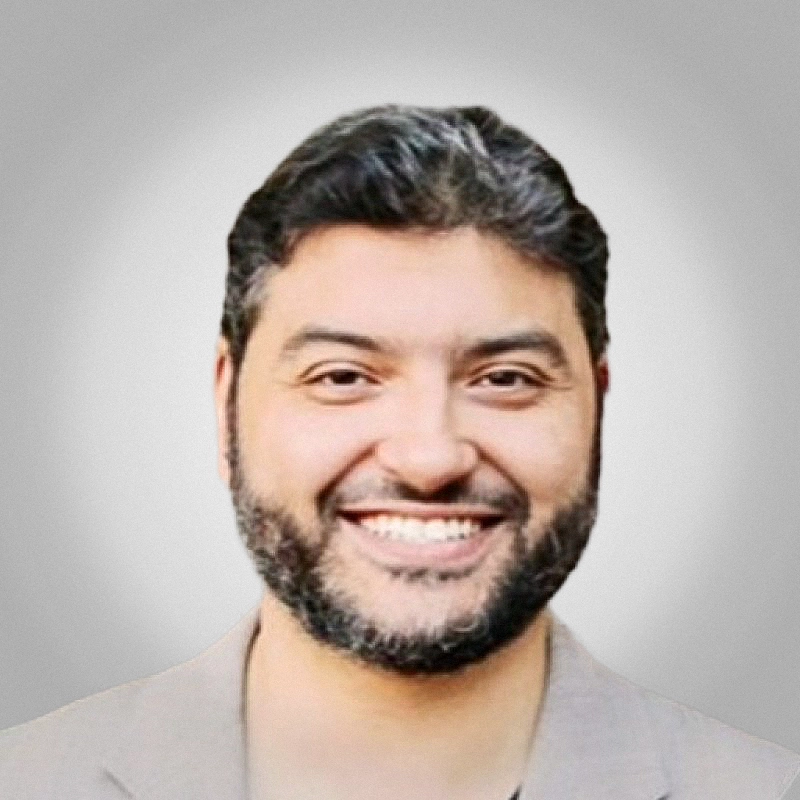
In this episode of Biz/Dev, we sit down with Mohamed Elayouty, Founder of Humaine Dev, to talk about where AI fits in business, how to make smarter technology decisions, and why keeping people at the center matters.
Mohamed shares his perspective on guiding companies through AI adoption, identifying where it adds real value, and balancing innovation with a human-centered approach.
[00:00:00] David: Anyone listening to my voice right now, there are two things I believe very strongly... Three, three things you should invest money in. One, mattress. Spend money on a mattress. Two, office chair. If you're an office worker, invest in your chair. Three, monitor. Invest in a good monitor. All those things will change your life.
If that's all you hear from this podcast, that's, those are the things that are important.
[00:00:26] David: Hi, everyone. Welcome to the BizDev Podcast, a podcast about developing your business. I'm David Baxter, your host, joined per usual by Gary Vogt.
[00:00:35] Gary: Hello?
[00:00:36] David: everybody. Hi, Gary. How are you?
[00:00:38] Gary: Good. That was weird. Sounded like you almost forgot the name of the podcast, though
[00:00:42] David: Oh, I did. I was hoping I was on a better one. Do you know of a better one?
[00:00:47] Gary: We're gonna, we're gonna make this one a better one. You just
[00:00:50] David: We're gonna- we got a good guest. We gotta hope. We got hope. It's not just me and you again. All right. More, more importantly, we are joined by Mohamed Elayouty. He is the founder of Humane Dev, which is an AI consultancy.
He's my friend. I know Mohamed through the s- chamber, and we have met outside of this, just full disclosure there. But he's a really nice guy. This is gonna be a fun episode. I'm gonna pepper you about what AI stuff you're doing there, 'cause I'm very curious.
I think you're the first one. People like this all the time. We're gonna get to it. I'm not there yet. All right. It's icebreaker time. Are you ready? We've got a bunch of random questions for you, and you've never seen them before. No one has actually, except me. Are you ready? We're gonna get to know you a little bit better.
All right, here we go
[00:01:32] Mohamed: Oh, yeah
[00:01:33] David: Do you, are you a handshake guy or a paper contract guy? Generally, I know most of the time. Say if you, would you prefer in an ideal world? I know everyone has to sign contracts,
[00:01:44] Mohamed: Yeah, I think verbal, I mean handshake a man's word, right?
[00:01:48] David: It reminds me of Jerry Maguire every time I say that. Did you ever see that movie? That's one of my faves. Where the guy's like, "My bond, my handshake is like oak," and he's totally lying to him. Anyway sorry. So yep, handshake. All right, I like it. All right. Here we go. Let's see here One monitor or three?
[00:02:07] Mohamed: One 49-inch ultra wide. Yes, baby.
[00:02:11] David: That's exactly what I'm looking at right now. Oh, he's my friend, see? That's right. See,
[00:02:17] Gary: neck problems
[00:02:18] David: Gary is the type who likes baby monitors with ridiculously high DPI.
[00:02:25] Gary: Apple Studio
[00:02:26] David: that are overpriced
[00:02:28] Mohamed: And it's a special model. I got it in COVID, like 2020, so it's, still
[00:02:32] David: anyone listening to my voice right now, there are two things I believe very strongly... Three, three things you should invest money in. One, mattress. Spend money on a mattress. Two, office chair. If you're an office worker, invest in your chair. Three, monitor. Invest in a good monitor. All those things will change your life.
If that's all you hear from this podcast, that's, those are the things that are important. All right, here we go. Are you the type of guy who's got one tab open or 6,000?
[00:03:03] Mohamed: Closer to 6,000, probably 50 or 40
[00:03:06] David: Fif- really? How many tabs do I have open? My problem is I have so many different browsers open that I can't even count the tabs. I think I probably have 20. Gary, how many tabs are you w- rocking right now?
[00:03:15] Gary: I have ADHD when it comes to stuff like that, so since I'm using Theia and they have like you could save the tabs in the sidebar, right now per
[00:03:24] David: Yeah, see that's not fair 'cause I'm using
[00:03:26] Gary: 10, but I just hide them so I don't see them.
[00:03:30] David: I am using what's this called? Zen, which is a Firefox browser, which I never thought I'd say that sentence. And I can't... They hide them all down a sidebar, so I have so many open it's ridiculous
[00:03:41] Mohamed: over Chrome? Why Firefox? What's the
[00:03:43] David: No, I, no, it's not Fire- I don't care about Firefox. I care about Zen. And if you really wanna get nerdy, what I really want is Arc.
Arc got turned away and turned into Dia, which is a crappy browser. Sorry, Gary. And
[00:03:56] Gary: DIA is Arc.
[00:03:58] David: No,
[00:03:58] Gary: Same company,
[00:04:00] David: Same company, not the
[00:04:01] Gary: if you're using Arc, they're pushing you to move to DIA real quick because they're not... They've stopped supporting Arc for a
[00:04:07] David: Zen said, "Arc is dying, let's create..." This is so nerdy, no one cares. But they said, "Let's create Arc," 'cause it was dead, and they stole it just verbatim, and it is lovely 'cause I loved Arc. Anyway, so I don't... I was actually disappointed that it was Firefox 'cause I... Firefox has weird visual glitches on websites if...
'Cause it's so underused, no one optimizes for it. Again, so nerdy. All right. Let's see here. Are you into documentaries or dramas?
[00:04:34] Mohamed: I would say probably more like, yeah, facts, more life mostly YouTube, so documentaries probably.
[00:04:40] David: All right.
[00:04:41] Mohamed: Yeah
[00:04:41] David: Same restaurant every time or never twice?
[00:04:45] Mohamed: Oh same restaurant. Yeah, reliability, consistency. When it hits the spot, it hits the
[00:04:49] David: as Gary. All
[00:04:51] Gary: Oh man, when you f- when you find a place that has a dish that you really enjoy, you wanna go back. You don't wanna just be like, "Oh, had that once. Later." Then again, if you go to a place that has a bad first experience, you'll probably never return.
[00:05:03] David: That's the problem I have is when... I give a restaurant at least two times. If I have a bad experience, I will give you one more chance. I, my my in-laws are the type, if you mess up once, they will never come back, ever,
[00:05:15] Mohamed: Except when it's like
[00:05:15] David: they will talk bad about you
[00:05:17] Mohamed: When the view is really good or it has some, some other special or it's like, okay, maybe I have to go, right? Sometimes there's some features.
[00:05:23] David: So tell me about your company. Give me the, the, the 30,000-foot view. What are you doing over there?
[00:05:32] Mohamed: So after coming out of, corporate 20 years in software engineering and leadership plus operational efficiency I founded HumaneDev, especially in the age of, all the transformation happening with AI to help non-technical leaders business owners in let's say small and medium businesses to take advantage of this major shift.
It's, W- 'cause I've found these large companies, there's-- Having been in a large Fortune 50 company and leading AI adoption there for software engineers They just don't have the speed and the, let's say, open-mindedness, and there's so many layers of bureaucracy that adopting AI is just very hard.
The ROI is hard to get. But whereas I talk, went in the Chamber of Commerce, I found just many people that are dealing with many issues. If they're able to understand AI and leverage it for their small business, they can out-compete others in their industry. So
[00:06:34] David: So I see, and here's where I wanna find out, 'cause you're the first person I have spoken to who calls themself this. I see people like you in, in like your company every other post in LinkedIn, right? This is where everybody's going. All the crypto bros became AI consultancy bros. So what makes you real versus those crackpots who aren't?
I know they're not. So what makes you real and usable versus these guys?
[00:07:03] Mohamed: I think I try to-- Well, I base myself on my 20 years in the software engineering, industry. First as an engineer for 20 years, right? So dealing with code, understanding how deterministic systems work, right? Having to actually work with people, talk to people to solve things. And then moving into leadership and managing, teams, managing people, having to do hiring and unfortunately, firing, things like that.
So understanding the humane side of things. And so right now, as you said online, there's just so many people on LinkedIn. I don't even really post on LinkedIn that much. I found that going into, local spaces local chamber of commerces, the Greater Raleigh Chamber of Commerce, and meeting people in person, especially in this day and age of so much cold messaging, highly fabricated AI stuff, people are just looking for that connection.
And business is about, first and foremost is developing trust with the people you're working with. And so that's the engineering background, the in-person aspect. And it-- Finally, I would say for the AI thing is that AI is not-- Having seen it in big companies it's not the end-all be-all solution for everything.
And so being able to help small business owners to apply it and adopt it humanely yeah, that's been-- It's been great to see owners, right? In some sense, you help them automate, but you upskill them at the same time. I'm not looking for them to be dependent on me in some sense.
AI, once you understand the basics or if you go further, you're able to achieve a lot. And I say like there's two capabilities basically or superpowers you get with AI. First is like time compression, right? Whatever you're really good at, you can just wow, speed through it as long as, you're reviewing it at the end.
The other thing I would say is just knowledge, right? The ability to do public research, and especially in your decision-making and in your area of your business, your marketing, whatever your area you want public research on, you couldn't really do as much and as fast as before. And finally, I would say is the capability.
Like some of the super skills. Imagine like you go into the Matrix, right? And you put in the chips saying, "I wanna learn," "Jiu-jitsu and
[00:09:14] David: kung fu
[00:09:15] Mohamed: Now,
[00:09:15] Gary: you're speaking my language, yeah
[00:09:17] Mohamed: right? But have you seen things like the 3D visualization or blender stuff? Like you could now just give it pictures of whatever you want, non-technical person and be like, "Hey, can you visualize this for me?"
And you don't even know how to do 3D modeling, right? And so it's just, yeah, it's amazing to see what it allows non-technical people to do.
[00:09:35] David: So what does that mean practically? Are you going into a company and giving them advice, or are you building something for them? Are you building a bunch of Grok bots? Are you just giving them a piece of paper and says, "Do this"? What does this mean practically?
[00:09:51] Mohamed: Yeah. Having never, before working corporate, never been in sales or marketing, it's been a great experience to
just really kn-
[00:09:58] David: to hell, man
[00:09:59] Mohamed: Yeah, it's it's hell but I would say one of the big mindset changes is instead of being idea obsessed everyone's idea obsessed, to be problem obsessed, right?
Okay. You find a problem in the market, you're like, "Okay, how can I solve it in the best way for my customers?" I really also like Alex Hormozi's, where it's, time delay, right? How can you compress the time delay of value, right? How you can, have the client do it with the least amount of effort, right?
And give them so much value in this day with AI and stuff. And so practically, really we start with figuring out, am I a good fit or not, right? It's not always that I can help in certain areas. But after we see opportunity, especially where we can reclaim, let's say three to five hours for very business-- very busy owners or operators or senior leaders three to five hours a week, imagine what they could do at that time, right?
A lot of them, they say, "Oh, I could do more sales," right? Get more revenue. Or, "I can do more purchasing and sourcing things." So they can spend on more higher leverage higher ROI activities within the business. And typically we implement things by figuring out the areas they wanna learn. 'Cause, some of these owners are like, "Don't just do it for me," right?
Not, do for you, but it's more do it-- done with you. And so I teach, some of the basics of AI, just for example. What's the difference between, for example, automation, traditional machine learning, and generative AI? I even show them hugging, h-hugging, hugging face models of let's say, object detection.
So they understand the basics. Okay, oh, this is what pattern recognition works like in machine learning, where it's just giving you, a decision almost like Jeb and things like that. But versus generative AI, where it actually generates output, right? And how the risk now is where you're getting more risky content versus risky decisions with traditional machine learning.
So starting some of the basics, but then we get into, "Hey, what's your top constraint?" "What's your workflow that's taking all this time from you that's, let's say, low ROI, and could AI help in that area?" And then I help show them how to implement it and, implement one or two workflows.
But then what happens is in the next, let's say weekly session or every two-week session, they come back say, "Oh, I implemented all this other stuff." And that's the best thing to see, have them, learn the basics and implementing it on their own. That's amazing to see. So
[00:12:09] David: Okay, so you're teaching them how to prompt, you're teaching them how AI is working, at least at a high level. Are you building them like skills and things that they can say, "Hey, slash do my finances," and it goes and does a bunch of stuff? Where, what are you actually giving them? 'Cause I can imagine if you're with a non-technical guy and you say, "All right here's how you do it all," and he's like, "Yeah, I got it," and then he's gonna forget it, and you know what I'm saying?
He's stuck
[00:12:40] Mohamed: Yeah. So for example, like one of the modules is like projects, right? How to set up projects, how to set up instructions, right? And in some sense, how do you direct, right? So what I'd say the word is, everyone can ask AI, but the pros direct it, right? And so you want to go-- point of being goal-oriented, and you give it the guardrails and then have it do more of the work, right?
After you start with asking and giving it tasks. And so for an optical person, it-- first you start asking, "Can you do this? Can you do that?" And after they see the power of it, they can start piecing, the building blocks to be, "Okay, here's the steps I wanna do." And I'm right there, so I'm sitting near them.
Make sure we set up, for example, Claude, for example, with first thing, help-- turn off, don't improve AI models if they're using, a, let's say a personal account, not a team account. And then we get into, what's your top workflow, for example, email, some email management stuff.
Or we get into things like proposal review and development if you're in a construction space
[00:13:40] Midroll: We believe that business is built on transparency and trust. We believe that good software should be built the same way. Big Pixel is a one hundred percent US-based, fixed-fee, custom software design and development agency built on transparency and passion. No offshore handoffs, no surprise invoices, just a team that treats your problem like it's our own.
UX and design are core to everything we do. Not a phase that gets handed off, but a discipline that runs through every decision we make. We bring the expertise to build what your business needs and the clarity to know when AI and technology help and when they get in the way. We provide our clients honest assessments of where they are and how they can get where they want to go.
Your idea deserves the right team. Let's talk, plan, and create something that truly works for you.
[00:14:41] David: so let me take a step back. You worked for some big old companies. What inspired you to leave them to begin with?
[00:14:49] Mohamed: Yeah. So I was with Dell Technologies and before that was EMC Corporation for a long time over 20 years or so. And then, we went our separate ways at some point. And at-- I think at the time it was late 2020 or early 2025 or '24, I don't remember. It was a while back.
It's not that long ago, right? But whatever. , Looking for oppor- opportunities out there and I've always had this, okay, what can I do with all the set of skills I have and and what do I know about AI? What did I see inside big companies? And can I do something-- You know, this is my chance to do something different.
And so I took, I took some self-development courses for, let's say, around business ethics and things like that 'cause I have certain, things I want to when I build my new company. I was like, "Hey, I saw all of this, how we did things," right? In big companies. They're like, I could, I think I can do finance more ethically.
I think I wanna do marketing more ethically. So all these areas, hey, this is a time for me to basically build my company from scratch with how I want every component to function. And I took a chance on that. And from there I would say the first six months, right? They tell you, okay, like you're trying to sell or trying to offer to customers, right?
What you were doing a little bit inside big companies on a smaller scale. But for enterprise accounts, it's very hard, right? You need to have proof. You need to have other support services to provide that level of service. And so only after listening to the market and really being part of the chamber of commerce and talking to people, right?
I under-- you know, I understood the market more, and then I pivoted more towards what people really were looking for. So
[00:16:28] David: Nice. So it was-- So you were leaving your company anyways, and you're like, "Okay, I'm leaving." It wasn't like, "I got this burning desire, I'm gonna leave to do this." You were separating for other reasons, and then you're like, "Let's see what I can do here." Was entrepreneurship something you already had eating a hole in you?
Or was this all like I'm f- I'm a free agent, let's just try"?
[00:16:52] Mohamed: Yeah, I've always had the idea in my mind I wanted to do things differently.
[00:16:56] David: Okay
[00:16:57] Mohamed: But sometimes in corporate, like you're comfortable,
[00:17:00] David: Sure, the golden handcuffs
[00:17:01] Mohamed: right? And so this was a chance with what was offered at the time to be like, okay, you've got some, support here. This is a chance to try it, so
[00:17:11] David: I was talking to a, a guy, there's a, a, a kid I work with. He was a s- NC State student, and he's brilliant developer. And he's very ambitious, and he's working with Amazon as an intern, which is crazy already. And, but he's like, when they start out, and this is all public knowledge, this isn't specific to him.
When you start out as a developer, y- your starting salary is $200,000 plus stock, which is okay. It's already crazy land. You're 22 years old, right? And then if you're good at it, you will go to the next level within two to three years, and now you're making $300,000 plus stock. So again, crazy land, right?
You have to live in Seattle to do all this. But then there you get stuck, and he was saying the people he was working with have been that l- that second level for five to 10 years, and that's-- they're not moving. Now, they get little baby raises in between, whatever, but that big jump rarely happens.
There are very few, I think they have, they call them level sixes. There are very few of those at the company. There's one guy who's a level nine. I can't imagine how much money that dude's making. Gotta be several million a year. But there's one of him. Can you imagine how stressful that is? Anyway, so I was telling him, 'cause this guy, again, super ambitious.
I was like, "The number one advice I can give you," 'cause I was like, "You're way outstripping anything I understand." I've never worked for these kind of companies, never done any of that. I said, "The best advice I can give you is to live way less than you make, so that when opportunity arises, you don't have the golden handcuffs," because that's what's gonna keep that...
The reason that manager is still there 10 years after not getting the promotion is because they're living paycheck to paycheck for $300,000 a year or whatever. Which is lovely. That's a lovely life. Don't get me wrong. They're living very nicely. They're getting all the vacations they want, right?
But they can't leave, and that's... People don't realize that there's a company here called SAS. They're one of the largest private companies in the world, and they d- they are well known for their golden handcuffs. It's not just pay, though. They have onsite chef. They have onsite daycare. They have an onsite doctor, all these things.
It's just this magical place to work, which is lovely. I think that's great, but they're like, leaving there is almost impossible because it's so good to work there. Which is great, but... So I s- I understand the golden handcuffs. I've never been strapped by them myself, but but I totally understand that So if you were to cast forward, I call this my blue sky question.
My wife called me out 'cause one week I called it a green field question, and I was like, "It's the same thing." She's like, "Why'd you change it?" I was like, "I don't know. I don't know." Blue sky question. Five years from now, Humane Dev encounters nothing s- existential. All good things happen. What does your company look like?
[00:20:03] Mohamed: Having thought recently, and actually I went through reviewed all my previous, leads, paying clients, discovery calls, which is AI is great at, right? Find patterns, right? Find what's working, what's really good and not, and thinking about the future. Mission-wise for me and the vision really to achieve is I wanna develop the number one technology company based on, and this may sound cheesy, but like justice and excellence and not exploitation. ' Cause I feel that, whether it's whether tech companies or not, big companies, even when they start small, they're very good, very nice to customers, all that. But once they get bigger and they have the power there is exploitation, whether it's customer data customers or suppliers, right?
Or employees and team members all for just the shareholders. And as I go back connecting to the business ethics course I took, is I feel that, I can develop one of the number one technology companies, not necessarily just based on profit or revenue, still has to be profitable and healthy but based on reputation with all stakeholders and not just the sh- the shareholders.
And what area we're in, I think probably would still be technology solutions and likely as Hermosy says as the company's growing right now in, in in a smaller size, you have to focus on higher ticket clients. And so but I don't want to just be serving, right, higher ticket clients.
I wanna be helping some of the smaller business and medium businesses to, grow out of the small into being medium and not, let's say, say, not leave them behind just because you're getting more, right, profit or margin from higher companies. So-
[00:21:48] David: Oh, man. You took this in a different direction than anybody else. I'm chewing on it, but it's interesting 'cause I have been in that situation. So give you example. So year three, four, five, whatever, Big Pixel, I'm still the main dev. I've may- have a couple, few people working for me, right? Clients know me as their dev, right? We've been now so I started with them. I built all their stuff, whatever we were building at the time. And fast-forward five or six years, we're still working with them. And this actually happened once a few years ago. They had no idea we had grown into a larger, we're not large by any stretch, but a larger company, and that I wasn't doing most of the coding anymore.
They had no idea, which is cool in one aspect, but they were just like shocked when they found out that I hadn't written their code in two years. And but you get into these things. I've had clients, and when you get to... And this has becomes, this is that ethics thing. You've got a client. You- he's got your old rate, right?
You've updated your rate since then. asking you for little onesies and twosies. You got big boy client over here who's paying your new rate asking for a much bigger project. What do you do? You wanna keep that little guy 'cause oh, hey, that's the right thing to do. We're gonna help them grow.
But they're con- preventing you from getting big boy. There's your dilemma. Like what does your ethics class say is the right answer there? I don't know if this is a right or wrong situation, but it sounds like you've thought pretty deeply about this, so where do you go?
[00:23:25] Mohamed: Yeah. And it, it-- I'd go back to the principles, it's, going back first with the handshake thing, right? Lo- I think, in corporate typically oh, there's no loyalty, right? And we see actions right from businesses or leaders that, definitely demonstrate that to employees, even though employees have been in some sense loyal and stayed with companies for a long time.
And having been a manager I've seen it where, a person who's been with the company for 20 years and they get the incremental increases in salary, but you have to hire a new person in the same role and you have to pay them,
so those kind of things, right? I wanna do different in my company. And so I don't know if I can say exactly what the decision would be at that time. I'd say the first thing is I want the best for my clients. And if it includes for me, "Hey, here's another shop that can handle what you're asking for."
And I discount, I negotiated with them a rate or something, right? So that you can get what you want done, even if they don't stay with me. 'Cause in the end, I want the best for that business person that trusted me earlier, right? He helped me grow. Like he helped me grow from small, right, smaller.
He was helping-- helpful in that revenue and profit. If I somehow can't handle him or can't provide him the level of service appropriately, then can I help him find someone else? So
[00:24:42] David: That's so interesting 'cause I th- everyone has these idealistic beliefs, and that's... I don't mean that in a negative way. I have them too. And what you'll find is, and I'm not saying you specifically, a lot of people when push comes to shove, the ideals are what get jettisoned, not I'm going after that bigger client, screw that guy, right?
That's very common. And I'm not necessarily saying that's right or wrong, I'm just saying that's a very common thing. And the, the one you mentioned was the salaries. Like most companies, and we have done this. I, we won't give huge raises to a new hire because we've got people who aren't getting paid that much.
But at the same time, you're missing out on that guy's talent in order for you to cost more for no extra revenue, right? That's a... If say you got three devs or whatever, accountants, it doesn't matter, whatever your thing is, and they're all making, I'm gonna make a number up, $75,000, and the new guy needs 100K.
And you're saying I hired this guy 'cause I need that talent." Are you gonna take those other fi- that just added $100,000 to your payroll for no additional work, right? Those people are already here. They didn't, they don't know about that guy's salary. You, you could see the slippery slope, right?
And it's, it- we've struggled with that. Of course, dev salaries are stupid, and so we've struggled with that in trying to keep our guys in seniority and this, that, and the other calculated when we bring on a new guy. It's really hard. It's really hard in practicality because again, you're adding $100,000.
In my stupid example, you're adding $100,000 of payroll.
[00:26:16] Mohamed: Right
[00:26:16] David: You're not making more revenue
[00:26:18] Mohamed: And I think in that sense, it's part of it, I would say is thinking about, how you grow. So there is, if someone's trying to do hyper scaling, right? A lot of people, sometimes you have to they hire too much basically to be around and then they end up right.
For me, I feel like again, having seen what big companies do, I wanna do different. Now, would I-- in my mind I would wanna prioritize my principles over just doing the same thing. Otherwise it would it would basically invalidate my mission.
[00:26:50] David: That's fair
[00:26:51] Mohamed: You got invalidate. And so if that means maybe less, a little bit less pr- revenue, a little bit re- less profitability and I feel patience, right?
Other opportunities will come by because I'm trying to do the right thing,
[00:27:06] David: man, I l- I love the idealism. I do. I adhere to a lot of that, and I have... And, but I will tell you, you will pay a price for that. We have lost projects because they didn't fit in our who we work with. We have decided to stay smaller in a lot of instances because it didn't fit the way we wanted to do business.
There are ch- there are consequences to having a backbone. So I'm very curious, not because I think you'll fail, but I'm just very curious to... We need to set another one up for five years from now. You come in when you're, you got 3,000 employees 'cause you're killing it, and you come in and I get to ask you the really ugly questions of how did those ideals hang up?
How did they hold up after you're super-duper, duper successful
[00:27:52] Mohamed: Yeah, I I hope that inshallah God willing, that I'm able to stand on all those principles
[00:27:57] David: I, man, I hope you can, 'cause but it's hard, and there's a reason why a lot of people stop. And it's not because they're necessarily... There are definitely bad people, but it's not necessarily 'cause they're bad people. Sometimes it is. But a lot of times it's just I couldn't pay e- I couldn't eat $100,000, but I needed that guy because that guy, for whatever reason, was magical.
W- it's a cheesy... But that's not uncom- In my industry pre-AI I should say specifically, but you get what you pay for a lot of times, and that guy is really talented, and he can... He's twice as fast as this guy over here, but I'm not firing that guy, right? These are the things that you have to deal with,
[00:28:33] Mohamed: And I haven't been in that, in the exact situation, but so yeah, I'm definitely gonna, maybe ask you for advice in that situation to see what are all the perspectives I need to keep in mind. And I think the other thing too is, as you mentioned the clients you have to choose, and that's where the balance between do you have a lot of big clients or, few big clients, or do you have more small and then smaller can be sometimes harder to manage.
But where I like, again, some of Ramzi's suggestions here is, okay, for when you go smaller down market, productize it more, automate it more, right? Make it so it's easier to serve them, and that can give, so you have more options of customers, right? And there's always gonna be more smaller business and medium businesses, right?
Versus bigger businesses. So y- you get some more, let's say, flexibility there. As long as you're able to, again, win business and be competitive, margin-wise and price-wise, so
[00:29:18] David: All right, Gary, wrap us up
[00:29:21] Gary: Mohamed, since you decided to start your own thing now after all your, what'd you say, 20-plus years working for giant companies what three lessons have you learned building your own business that you would say are three good pieces of advice you can give to another person starting their own business?
[00:29:39] Mohamed: I think I mentioned it before, and that was the first unlock, if we say hurdle, right? You gotta find your constraint and solve it. So almost all of these are kinda constraints. And so the first one I'd say is be problem-obsessed, not idea-obsessed. And how do you do that is you listen to the market, listen to customers.
And the big thing I think that helped me there, what I kinda saw in a couple of videos was, put yourself in spaces to listen to people and be the int- genuinely interested in other people, and be helpful as much as you can instead of being the interesting one. And so you're at-- for example some people, many people in corporate, they're like, "How do I do that?
How do I do real networking?" They've never been-- done genuine networking. They're like, "Okay, how do I do networking in in corporate?" 'Cause it's all the same people, right? They're not really outside your company. And what I've found is just when you talk to strangers not the same people at work, you can ask things like, "Hey, oh, why are you at this event?"
Or, "What brought you again back?" Or obviously asking about their business, but then asking, "Hey, w- what kinda gives you an edge in the market?" Or the, the thing with being helpful is "What kind of customers are you looking for?" "What's your ideal client?" And so the idea is if you know someone later that maybe you could use their services, right?
You can do true connection. So the first one again is be problem-obsessed and not be idea-obsessed. C-connecting with that next thing is take action. Being in, maybe book-smart, many people are, right? Or having degrees or things like that, you find that, sometimes we overanalyze things, especially with AI, right?
You can double, triple analyze anything from every, any perspective and you end up a lot of times not taking action. And so in business in trying to solve problems for other people, it's all about, trials, right? It's, not taking any action, analysis paralysis is worse than taking some action and seeing the result.
If it's successful, great, that's a data point. If it doesn't go right, it fails, that's a great data point to help you build from then on. And I'd say the last thing is Define a vision for yourself and goals to achieve that vision. Now everyone thinks it's just for business. No, it cannot-- I feel it can't just be career-wise.
It can't just be for business. You really have to also start with yourself, and that was a big unlock recently for me, right? All this focus on business, trying to get the business moving. But I realized, for the business to be the best it can be, you have to be the best person first.
And so I tell myself, I try to remind myself and others, "Invest in your heart, invest in your mental clarity, invest in your even physical health." If I can be more healthy physically, mentally, all these aspects in better, per- personal relationships that are close to me and my family, and then I can be the best person also in business and away from that as we go forward.
[00:32:27] Gary: Excellent. Now, if anybody wants to learn more about you or learn more about Humane Dev, where's the best place to find you?
[00:32:36] Mohamed: Yeah, best place is www.humainedev.com. H-U-M-A-I-N-E-D-E-V.com. Yeah, that's the best place. There's also LinkedIn. You can find me on LinkedIn, Mohamed Elayouty
[00:32:50] Gary: And we'll make sure we put those links into the show notes as well
[00:32:53] David: Thank you so much, Mohamed, for joining us. This has been a lot of fun
[00:32:56] Mohamed: Thank you guys so much
[00:32:58] David: And on that note, we are out. We'll be back next week everybody. Have a good one
That wraps up this episode of The BizDev Podcast, and this time you get me, Jen Baxter, co-owner of Big Pixel and David's wife. Yep, I finally took the mic, or wrestled it away from David. BizDev is a production of Big Pixel, a US-based provider of UX design, strategy, and custom software. This podcast is edited by audio whiz Matt McCracken, and Kristi Pronto, marketing guru for Big Pixel.
Want to connect? Shoot us an email at hello@thebigpixel.net or find us on Instagram, Facebook, YouTube, X, and LinkedIn
Recent Episodes
Here are a couple other episodes to check out, or return back to the main page.



AI, Tech, and Industry News
Check out the latest insights, curated with intent, from our team.