Rev Your Engines w/ Michael Linnane

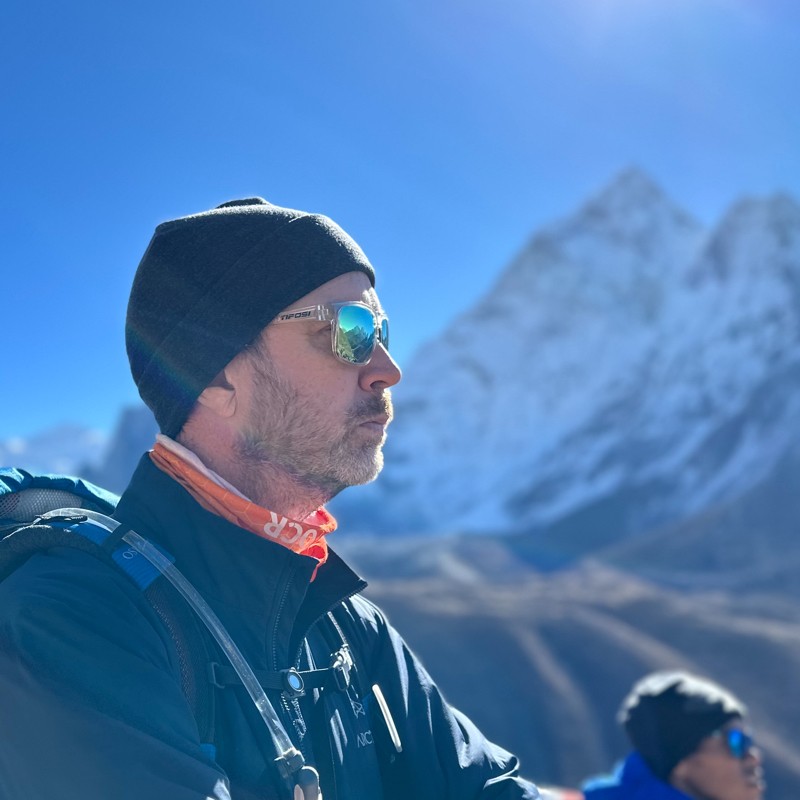
In this episode of Biz/Dev, we sit down with Michael Linnane, Founder and CEO of FeedStation, to talk about ecommerce, building better customer experiences, and what it takes to turn online traffic into real business.
Michael shares his perspective on the gaps that still exist between how people shop online and how brands sell to them, and where technology can create a more useful experience for both sides.
Along the way, we discuss customer behavior, ecommerce strategy, and building products around how people actually want to buy.
[00:00:00] David: I think there was another one I saw this like was it Madonna or Britney Spears never re-wore the same underwear?
[00:00:06] Gary: Ugh
[00:00:07] David: I'm like, "That's an expensive hobby." Anyway
[00:00:13] David: Hi, everyone. Welcome to the Biz Dev Podcast, the podcast about developing your business. I'm David Baxter, your host, joined per usual by Mr. Gary Vogt. Hello, good sir.
[00:00:21] Gary: How are you?
[00:00:23] David: cannot complain. Cannot complain. We are
[00:00:26] Gary: you think we'll ever start a show where you'll just be like, "Hold on, let me just complain
[00:00:30] David: just complain for a while. I'm trying to make that my mantra, honestly, 'cause I don't feel that complaining is useful. But I will say we had this weekend where we're-- Our kids are now both in college for the first time, and we had a sem- my in-laws still live with us, so we call it semi-empty nesters.
So we can't be indecent at home, but other than that, it's pretty nice. And so our first weekend without kids was this weekend, and I gotta say, pretty nice. Pretty nice. I'm
[00:00:56] Gary: They don't listen to this, so they won't
[00:00:58] David: 50 years. What's that?
[00:01:00] Gary: They don't listen to this, so they won't get
[00:01:02] David: No, yeah, they don't ever listen to this. I can say whatever I want. My wife does, but they, my kids would never ever...
my son used to, Gary knows this, but my son, I'm talking to our guest who I will introduce in a moment he used to be our editor, so he did used to listen to this for a long time. He got, he's "Dad, I'm so sick of your voice." Anyway, more importantly, we are joined by Michael Linnane, who is the founder and CEO of Feedstation.
Welcome, sir.
[00:01:27] Michael: Hi guys. Thanks for having me
[00:01:28] David: Absolutely. So we like to start off with some icebreakers, get to know you a little bit better in a random way. You ready? You have no idea what these are, which is on purpose.
[00:01:38] Michael: Let's h- let's hear it. Do your worst
[00:01:41] David: First impressions, do you trust them or do you wait and see when you meet someone?
[00:01:46] Michael: In a former life I would've trusted implicitly, but now I'm more of a wait and see kind of guy
[00:01:51] David: Oh. Was there a s- did you get burned somehow and that's what switched it? Or is it just getting older and
[00:01:56] Michael: you have, you have miles. You gain some miles and you ga- gather some scars, and I think that's just part of being a human being
[00:02:04] David: That's fair. Yeah, that's a good one. Getting scars that's raising children. Anyway let's see here. Do you prefer fresh sheets or do you like to break them in?
[00:02:14] Gary: That's a weird one, dude. Are you having
[00:02:17] David: Hey man, I just have a list and I pick one. These are good. I like them
[00:02:21] Michael: fresh sheets as in bedding?
[00:02:23] David: Yeah. So th-
[00:02:24] Michael: I prefer fresh, cool sheets
[00:02:26] Gary: Yeah.
[00:02:27] David: I remember years ago,
[00:02:29] Gary: Tucked in tight at the bottom by your feet. No loose feet sheets. That's the worst
[00:02:34] David: Man, you and my wife. I remember hearing a thing years ago that Oprah got fresh sheets put on her bed every single day, and I'm like, "That is the most rich person thing I've ever heard." And I think they're ironed every day too. So it's a-- She thought that was totally normal, and I'm like, "That means you're out of touch."
But anyway, I thought that was a good question. My bad.
[00:02:52] Michael: You got it, spend it
[00:02:53] David: All
[00:02:54] Gary: Like Gene Hackman in the old Superman when he was Les- Lex Luthor and he was talking about he never wears the same pair of socks twice
[00:03:00] David: I think there was another one I saw this like was it Madonna or Britney Spears never re-wore the same underwear?
[00:03:07] Gary: Ugh
[00:03:07] David: I'm like, "That's an expensive hobby." Anyway Are you the type of person who plans your trip or do you just show up, wing it?
[00:03:16] Michael: I am more of a wing it person to my wife's utter frustration.
I try to move in the direction I'm pointed
[00:03:24] David: I like it. W- my wife and I call that going left, where we're just, we're going somewhere we've never been, we're s- it's going left. It became an old thing, but anyway All right, I got one more for you. You're amongst friends, and this is important. Is double-dipping allowed?
No
Okay. What about with your significant others?
[00:03:46] Michael: My, with my significant other, yes
[00:03:48] David: Okay. All right
[00:03:50] Gary: I have a question. So it's about double dipping, but theoretically, let's say you have a pretty big nacho chip, right? You pull one chip, you dip on one side and you bite it, and then you break it in half and use the other half of the chip for a second dip. So you're not technically double dipping, but you're using the same chip twice, but it's not the same part. Allowed?
[00:04:11] David: I would say that if I am not, I don't care about double-dipping. You can double-dip anytime you want. But my family, my wife and her mother are so anti double-dip that what you just described would absolutely be considered, 'cause they wouldn't see the breaking. They would just see you dipping twice, and they would absolutely throw a fit.
So if you care about the double-dip,
[00:04:31] Gary: So they're the dip in the plate and then chips on the plate and then scrape the plate?
[00:04:35] David: Yes. Yes. Or you very clearly take the chip, dip it once, and it never goes near the dip again. That is the rule. Oh my gosh, I get in such trouble for that, 'cause I just don't care. I j- I just don't care. All right, this is not a chip and dips podcast.
[00:04:52] Michael: Well, it is now, dude.
[00:04:53] David: It is now a Chip and Dip podcast. We're rebranding. It's called Chip and Dip.
[00:04:58] Gary: There you go
[00:04:59] David: It, now, people are already confused about our name anyways. I do not need to screw it up even more. Let's talk about Feedstation. What is Feedstation? 'Cause that's a, I get nothing from that. I think of, actually, I think of cows.
I'm pretty sure I'm wrong, but that's what I think of
[00:05:15] Michael: Okay. I'll forgive you for that. So Feedstation is an enterprise platform that helps e-commerce sellers operating on marketplaces such as Amazon, Walmart, eBay, Shopify, BigCommerce with ERP connections in the back end like NetSuite or or other homegrown or smaller options, accounting systems, complex supply chain issues.
We're basically if you envision the hub and spoke, we're at the hub, and then all their properties exist at the end of the spokes, and we're actively and in real time bringing in inventory and making decisions about supply chain, pricing order logistics, platform presence, making sure that minimum advertised pricing is enforced.
And that means that there are millions of data points to manage per customer every single day. And we operate specifically on the mot- on the automotive aftermarket because the data problems are just massive and they're evergreen, and there haven't really been to date any effective larger scale solutions to handle the middle market.
You have solutions at the high end where you can have massive spend. You have solutions on the low end if you're smaller and you can operate on yourself. But the middle market, about 90% remains unaddressed historically. So that's the space we operate in.
[00:06:28] Gary: When you say middle market... Sorry.
[00:06:31] Michael: Sure. It's when you
[00:06:33] Gary: say middle
[00:06:34] Michael: around 20 million a year
[00:06:36] David: Around 20 million a year. What's the minimum on that? Is that the minimum 20 plus or is that like five to
[00:06:41] Michael: So anywhere from 1 million to 20 million or more. So we have some customers obviously that push higher than that depending on what their revenue streams look like from their various marketplaces. But on average, our middle market customers exist somewhere within the five to 20 million top line revenue annually
[00:06:58] David: Years ago I did, we used to do a lot more e-commerce, and I remember there was like Magento and all of those middle tier kind of e-com stores, and that was before Shopify kinda sucked all the air out of the balloon. But back then I remember they all had, there was the f- the free version, which was for, the mom and pops, and then they had their middle mar- they had a slightly more expensive one, but most people didn't use that.
But then there was
[00:07:22] Michael: When we're talking Magento, you've got community versus paid. Those are the two versions
[00:07:27] David: And w- and then they started having things that was like, "Hey, if you're in the multi-million dollar space," which I would guess is where you're calling much of middle market, it got pretty pricey. And it was like, "Hey, this is your world. You're making $20 million a year.
You're not gonna mind paying $10,000 a month," or whatever their number was. I don't remember. But it was, it's a when you're a new e-commerce, you're like, "That's insane." But it's like there are really large e-commerce stores out there, and they do quite well
[00:07:51] Michael: The challenge with the Magento side of things in that, that space that you're talking about from back in the day, is you're largely self-hosting, self-managing. You've got an engineering team, you have marketing teams, you have all of these additional teams to up and run or keep your system up and running.
And that, in addition to the $10,000 a month spend, that gets incredibly c- pricey very quickly. So your top-line spend starts to approach your top-line revenue faster than you'd like, right? So when options come out such as Shopify, like you mentioned we're a big proponent of Shopify, especially in this marketplace ecosystem.
When those options come out, they become a lot more attractive because you don't have to have developers, you don't have to have engineers on staff, you don't have to worry about security breaches because all of those are handled top line, right? So they're handled upstream from you. So what you really need to worry about is managing your customer relationships, managing your your fulfillment and your sales, and making sure your pricing's accurate, and then that changes the equation for you, right?
So your top-line spend can come way down relative to your overall e-ecosystem footprint
[00:09:02] David: So you are, let me make sure I'm clear, Feedstation is not an e-commerce system by itself. You hook into the Shopifys and et ceteras. Is that right? Or are you making the actual website, or are you just the analytics and all the fancy stuff behind the scenes?
[00:09:18] Michael: You can think of us as all the fancy stuff behind the scenes. However, we are gonna be launching some new products later in the year, early in '27, so stay tuned for those.
[00:09:27] David: Okay, very cool. So what got... So you've been doing this over a decade.
[00:09:32] Michael: For, forever.
[00:09:33] David: Forever. Where did, the, the e-com market 'cause Big Pixel, my company, is 13 years old, and I've been doing e-com and development probably for 20 years, if I were to guess. So you're right in the middle of that. So I'm trying to remember where 'cause I remember 20 years ago, e-com was a nightmare. That, so you were past that, but you're in, you're still in the early stages of mass e-com when you guys got started. What made you get going?
[00:10:01] Michael: That's a great question, actually. Fantastic question. So what we ended up doing what I ended up doing personally is I was at art.com back in 2006, and my responsibilities there were the channels and affiliates teams. So I was leading those, and it was a relatively small channel, and it was all managed internally by the development team.
Request cycles were really long, and getting things out to affiliates and partners like Amazon or eBay, which had nascent APIs at the time were really complicated and drawn out. So I built a couple prototype tools to handle allowing our business managing team internally, our business customers, to manage that themselves.
And so bicoastal, bidirectionally, different offices, different databases, they could just push a few buttons and have feeds generated out to handle those integration points. It was very rudimentary, but it set the gears in motion in the back of my head toward pushing on Feedstation.
And after I left art.com back in 2006 I set it off to the side and then went off on my own. And one of the customers that I had a few years later was trying to push tires up online at Amazon. They were trying to do tire reselling. And I had been sitting around watching the ecosystem do nothing the-- for sellers in that entire time.
The options for Amazon, Amazon kept growing, but the options for sellers to participate on that marketplace kept getting worse, in my opinion. So we built out a prototype of Feedstation, pushed everything up to Amazon. Amazon was very impressed. They start bringing us business. They start literally just making phone calls and directing customers our way like a fire hose.
And that was really a positive experience. That was really validating. So then it automatically grows from there. You have customers who want to operate on Amazon, then they also have eBay, then they also have Walmart, then they need order integration, then they need this, that, and the other thing, and next thing you've got dozens of integration points and then lots of workflows internally.
And that's really the genesis of where Feedstation came from.
[00:12:06] David: That's awesome. What made you choose cars?
[00:12:09] Michael: Amazon at that point was trying to mount a serious response to eBay Motors. eBay Motors was really taking their lunch and if you can believe it, and this was 12, 13 years ago. They keep bringing the business back to us. It's like Al Pacino in "Godfather Part III" where he's like, "They keep pulling me back in."
So FeeStation was built originally with the intention of being not only platform agnostic, but vertical agnostic. But the automotive side is just so data rich and data complicated, and the like I said earlier, the problems are just evergreen. So that is why we focus on the automotive space, just because not only are the data problems just never ending, but also for the sellers, the problems just never seem to end.
So there are lots of opportunities to solve those problems in interesting ways every single day
[00:12:58] David: So the next logical question is why only cars?
[00:13:02] Michael: We operate on not just selling cars, but automotive aftermarket. So
[00:13:06] David: the car
[00:13:07] Gary: Parts and stuff. Just, yeah
[00:13:08] Michael: car parts. Yeah. And I'm sorry if I was unclear about that, but it's automotive
[00:13:11] David: it's fine
[00:13:12] Michael: So that includes automotive, that includes power sports. And when you're looking at the, the SKU count in that space, it's about 14 million.
Then when you layer on top what's called fitment, which describes which parts fit which vehicles, then you end up with billions of interconnects and billions of data points. And then when you add in the complex supply chain where some suppliers have a few million parts, others have a few million parts, you end up with many billions of interconnects for a single customer that you need to manage.
Which means that for an average day in November around the holidays, we average about 4.1 to 4.3 billion changes for all of our customers across all platforms
[00:13:54] David: But you've solved a lot of problems, right?
[00:13:58] Michael: Yes
[00:13:59] David: Are you saying that fashion or home goods or whatever doesn't have the same problems and you guys could just be ginormous in that? Or is it, "I just like cars, dude. Leave me alone"?
[00:14:11] Michael: I actually have no love of cars specifically. I we have operated in lots of different verticals, including women's fashion, including collectibles, including pets, but the automotive side is what keeps drawing us in. We find that's where the-- we can bring the most value to the most customers
[00:14:28] Midroll: We believe that business is built on transparency and trust. We believe that good software should be built the same way. Big Pixel is a 100% US-based, fixed-fee, custom software design and development agency built on transparency and passion. No offshore handoffs, no surprise invoices, just a team that treats your problem like it's our own.
UX and design are core to everything we do. Not a phase that gets handed off, but a discipline that runs through every decision we make. We bring the expertise to build what your business needs and the clarity to know when AI and technology help and when they get in the way. We provide our clients honest assessments of where they are and how they can get where they want to go.
Your idea deserves the right team. Let's talk, plan, and create something that truly works for you.
[00:15:21] Gary: you mentioned that I guess with your previous employer, you were developing these rudimentary tools. Now, do you have a background in software development, or is that something
[00:15:30] Michael: I was recruited for my first startup directly out of high school as a software engineer. So I've, I have a bit of an atypical journey. So I was 18 years old on staff in New England right outside of Manhattan on some of the earliest internet-enabled startups. And then I was-- I've worked everywhere from startups to Fortune 100 and nonprofit, for-profit, you name it.
Healthcare informatics, e-commerce I've done some work with GSK, AT&T. I've had a really varied and rich career, and I've really been very lucky and fortunate. And I get to do the software side of things, which is what I love to do, and I get to do it wherever I want. And I think it's been very good to me
[00:16:12] Gary: See, now you and David will be able to nerd out forever on software stuff.
[00:16:17] Michael: Let's go, man
[00:16:18] David: But, and yet our audience couldn't care less. So if I, if you boiled it down, 'cause a lot of our audience is typically newer entrepreneurs, right? Newer people who are getting started or want to get started, and e-comm is obviously a way to start. That's where, if you're not, if you're not doing software, but you're,
[00:16:37] Gary: Very easy entry point
[00:16:39] David: you are doing an e-comm store. Where would you say that they get started? Like, how does this work? How did you... Now, I know the world is different now you're starting you've got so much experience in this world. I'm just curious, where would you recommend most people do this when they're getting started?
What do they do wrong?
[00:16:57] Michael: There are a lot of ways to attack that question. So I'm on the board at Launch Chapel Hill, which gives me an opportunity to advise and meet lots of startups. My wife operates in the Duke entrepreneurial space out of the business school, so again, we get to talk about this a lot.
From a software perspective, I typically advise people you don't need a CTO, and you don't need to pre-optimize for problems that you haven't run into yet. You just need to get something out there in the world, right?
Stop waiting for something to be perfect, and you're not-- don't fall in love with the product. Just get it out there, see if you can sell it. It doesn't matter if you can build the most perfect widget in the world. If you can't sell it for a dollar, then it's not the most perfect widget in the world.
You've got no-- there's no demand for it. From a business perspective, it sort of shoehorns into that with structure. You don't need, you don't need to put a, a C-suite on it. You don't need a CTO. You just need someone who can slap s- slap a sto- Shopify store together and make it work, right?
The world is littered... And I've been just as vulnerable to these problems as anybody else when I was younger. You're just waiting for something to be just right. Just get it out, fail fast, iterate, and get it out again. Iterate and get it out again, and again. Develop some thick skin, don't ever read the comments, and just keep pushing
[00:18:14] David: Where I recently started a startup. Started a startup? Anyway six months ago, eight months ago, something like that. And I'm a builder, so that was the easy part. Where I realized my kryptonite was, is distribution. Selling to strangers, and I love that, that phrase specifically Tom Collopy calls it, says that.
If you can't sell to strangers, you don't have a product, which is such a wonderfully worded phrase. 'Cause everyone can sell to mom, right? And they think, and there's so many people who think, "I sold to my buddy, therefore I have a business." Anyway, that was my kryptonite. I don't... I have a lot of skills.
That is not one of them. And so when you're saying build something, quick and dirty, get it out there, but it's the getting out there part that's a lot harder than a lot of people realize. How do you get out there? How do you recommend getting out there?
[00:19:08] Michael: With regard to the challenge where you're talking about selling to strangers I totally agree. That was really hard upfront, but that's something you can learn. You've got aptitudes. That's one of the things I like about people with aptitudes. I can teach them anything, and I can teach myself how to become a salesperson, which was very hard.
Like you, you make your first cold call, you start sweating, and you start having like this low-level panic attack . And then when you get rejected, you take it personally. It's nothing personal, it's just business. And once, you can build those calluses, it becomes a lot easier over time 'cause then you get your narrative down and you know the story you're trying to tell, and also being respective of other people's time.
You're able to do it within their time constraints in a way they understand. And you stop talking about features because no one cares. You start talking about benefits. How does this benefit you?
[00:19:54] Gary: Yep.
[00:19:55] David: Ah, dude, it is so funny. I've been given all this advice with my startup, 'cause I ask this question pretty regularly, and it's stop selling features. As a builder, that is so
[00:20:05] Michael: So hard
[00:20:07] David: I don't, I want to tell you about the cool thing I just made, and I want you to care, and you don't care, and so you take it personally, right?
'Cause it's my thing, it's my baby. I just built it, right? I'm now upset at you, and now the call's shot.
[00:20:20] Michael: Yeah, you
[00:20:20] David: is, it... That's a little dramatic, but that is not uncommon, and I find that getting my builder brain, which I know is a common thing for startup people, they're builders, to let that go and to talk about benefits like you're mentioning, that is, that's a, a switch I have a real tough time, and I know it's a common switch, to flip because I wanna tell you about the features and you're like, "And no one cares."
It's just... And the other thing I learned, and it's funny you it just brings to mind 'cause what you said, when you're talking about builders a- or buyers and users, right? That's a very different thing, and your buyer, the guy who's writing the check, what I learned that I was-- It's so funny 'cause you just don't think of this as true, but it's 100% true.
They don't care about making their employees' lives easier, and if that is your sell, "Hey, we're gonna make your accountant or whatever their lives easier," that's your big pitch. They're gonna be whatever. They don't care. "I'm paying them. I don't care if their job's easy. If their job was easy, I'd automate it," right?
And then it's a whole different conversation. But it's like that was... 'Cause you wanna make someone's life easier. That's such a common startup-y line, and boy, they just don't care.
[00:21:34] Michael: No. Cory Doctorow has a really interesting line where he says that the important thing to notice about technology is who it does it for and who it does it to, and that sort of resonates with what you're saying. User versus buyers. When you implement technology, who does it work for and who does it work to, right? So if you're automating away jobs or you're putting someone in an Amazon warehouse where they're working like crazy 'cause they're trying to beat the robots, that's one thing, but it's also making the money. That's the for, right?
If the boss could they're the ones writing the checks, but typically in our situation, we're fortunate enough where a lot of our customers they not only are signing the check, but they're also one of the users. So we're able to s- to speak to everybody up and down the chain.
The decision makers, we're often directly in- integrated with them as users as well
[00:22:22] David: I can imagine early on in your, in, in Feedstation's life, before you guys integrated everything, when you guys were just getting started, you had a tough time, correct me if I'm wrong, explaining the pain that you're solving. Did you... Was that a, was that an initial thing when you only had a couple of integrations, when you're just...
Or did you guys dive in and they would be like, "I have this pain, you can solve it, where do I sign?" That's the ideal, right?
[00:22:50] Michael: because Amazon brought these initial customers to us, we never had to develop that narrative off the bat, right? They came to us with the pump was already primed. They were literally just looking for a solution, and we'd already solved it a few times, and so Amazon had the confidence that they could bring this, this customer to us and they would just do whatever Amazon told them to do.
Now those days are long gone, right? So now we, to your point, we had to learn how to develop that. And typically, like any service business your narrative has to revolve around time. Here's the time we're s- we're saving you, and here's the time you're buying back. That's really what it boils down to with any service business especially any software as a service business.
Your-- There's a problem, and regardless of the type of problem, it take, it costs time, and time is expensive. So here's how you buy your time back, and that's really what it boils down to. Now, in terms of features and all the stuff that goes on behind the scenes, that black box that we have, that's loaded up with technology.
But the inputs and the outputs are what's most important to our customers, and the output is time bought back in the, at the end of the day. So it's this outcome that, that presents as listings up on these platforms, sellers or customers buying those. We are making sure that inventory and pricing is up to date in real time, and then we're handling the logistics for you on the back end.
But all of that translates into save time. So that narrative is really easy to spend to spin when a seller comes to you and says "We've got five people running inventory all day long off of spreadsheets, and then we have another five people running logistics all day long. They're handling orders and fulfillment because they have to pull a part up and search for it amongst multiple suppliers to figure out where it goes."
It's incredibly expensive in time. But whereas we have-- We're launching our new Horsepower product on Shopify, which is, which basically turnkeys the seller experience, but it also brings all those functions down into, just a few minutes a day where you're not having to push buttons and pull levers all day long.
It just takes care of it for you.
[00:24:52] David: This is my green field question. So if you, five years go by, nothing bad happens, what, where does Feedstation look like?
[00:25:02] Michael: Feed Station by then, we've had an exit and I'm onto the, i've finished my buyout clause and I am onto my next two ideas
[00:25:13] David: Okay, fair enough. So that's ob- that sounds like, or it implies that you are on that path to, to ride off into the sunset
[00:25:23] Michael: That's the intention. I've got, Our daughter is a junior in college, she'll be spending the next semester abro- abroad. My son is a senior in high school and my, my wife and I have been at this for quite some time. Sounds like you and I are on a very similar path. And it-- we are, you're obviously always looking forward, you're keeping your eye on the ball for what's happening now, but you've also gotta have plans for the future.
So yeah, I have plans for an exit and we are building toward that and hopefully sooner rather than later. And then I've got a couple of other things in the back of my mind that have been percolating for a
[00:25:59] David: Are they, and not to spoil anything 'cause I know they're your babies, but are they completely different or are they in line software kind of stuff? Or like my, my dream is like a coffee shop, so it's completely different
[00:26:12] Michael: I used to want to run a bike s- a bike shop and a bar.
[00:26:16] David: At the same time or two
[00:26:17] Michael: at two shops with an adjoi- adjoining door, like a hotel
[00:26:22] Gary: you're not gonna believe this. One of my good friends has a skate shop and a bar and a barber shop
[00:26:30] Michael: Oh, nice.
[00:26:31] Gary: by side
[00:26:32] Michael: Fantastic. So I wanted to always run the bicycle shop with an en suite bar, right? I'm-- That seems like more of a very s- a very low profit lifestyle choice, which is totally cool. I've got no problem with lifestyle businesses. I do think that as a culture we need to realign what success means.
[00:26:51] David: Oh, for sure
[00:26:53] Michael: and but for me, I've got certain things that I wanna run and yeah, they're all software, the next evolutionary step in what I've learned, I continue to learn every single day. That's one of the best parts of what we do. And so it'll take all the best things I've learned over the past decade and implement those at another level
[00:27:11] David: Nice. Yeah, my, my dream is to exit into, to have a place where if I had the dream coffee shop, I would be wealthy enough that the pro- coffee shop has to make zero profit. That's my dream. I'll
be the old man petering around, talking to people, getting coffees. That's my retirement right there. That's how I
[00:27:31] Michael: That sounds fantastic. I'll have to start drinking coffee
[00:27:34] David: it.
That's ri- it's, it... I don't know if it's possible, but that's the dream. Okay. All right, Gary, wrap us up.
[00:27:40] Gary: So Mike, in the years that you've spent doing Feedstation and even prior you mentioned earlier what certain entrepreneurs should probably avoid, but do you have three pieces of advice you can give a new entrepreneur for how to get started the right way?
[00:27:55] Michael: The first step would be bootstrap everything you can. And that means setting aside enough and having enough of a runway on your own so that you don't put anything else at risk. My risk profile is higher than most. My wife's willingness to tolerate that is higher than most, so I'm extremely lucky.
We were able to put some things on hold for a while, and that was really instrumental in getting this far. My wife and I call her my first investor, and she's our only investor. So we bootstrapped up until now. The only thing we've had to do is, we didn't even have to, we, we applied for and won an NC Idea Grant several years ago and, that, that's the only outside money we've ever taken, and we're very grateful to that.
And NC Idea's great. I recommend anybody who's looking for non-dilutive funding to go for that. The second step I would say is don't pre-optimize. You've gotta get, you gotta get your wheels spinning, get some traction before you know what you need to optimize for, right?
So you don't wanna build a race car when what you actually need is a dump truck, right? So you wanna make sure that you're building the right thing. And then the third thing I would say is just surround yourself with a good team of people. You don't need a big team to get great things done, but you do need to have people that are on mission and on support and you need to be surrounded by people who will support you because, entrepreneurship for all of its pros and cons can be extremely isolating.
So you need people around you who can support you and love you and make sure that you've got somewhere to go and talk about these challenges. That can be an internal culture, but that can also-- that also really does matter because on, on your personal side. So don't neglect those relationships either.
It's super easy to put your head down. Don't neglect those relationships. So those would be my first three pieces of advice, and if anyone wants to go deeper, we can. But those would be my first three bits of really important advice. And just-- and if you follow those, find a-- use your own money upfront, make sure you're building the right thing, and don't, don't forget the people that matter to you.
I think that's a good way to get started and on anything really.
[00:30:03] Gary: Solid. Good. Now, Mike, if anybody wants to learn more about Feedstation or more about you, where's the best place to find you?
[00:30:12] Michael: You can find me on LinkedIn at Michael Linnane, and then you can f- also find more about Feedstation at feedstation.com.
[00:30:20] Gary: And we'll make sure we put the links in the show notes. Yeah
[00:30:24] David: You must have owned that domain forever
[00:30:27] Michael: I've owned the lenain.com domain since the early 1990s, and I've owned Feedstation since the very early 2010s.
[00:30:38] David: On that note, we are out. Thank you everybody for joining us. We will be back next week. Have a good one
[00:30:43] Michael: Thanks for having me. I appreciate it. I've had a good time.
That wraps up this episode of the Biz Dev Podcast, and this time you get me, Scott Bailey. I am the lead dev over here at Big Pixel, and I know what you're thinking, "I thought David did all the work." Well, not exactly. We have an awesome team of people to back him up. Biz Dev is a production of Big Pixel, a US-based provider of UX design, strategy, and custom software.
This podcast is edited by audio whiz Matt McCracken and Christy Pronto, marketing guru for Big Pixel. Want to connect? Shoot us an email at hello@thebigpixel.net, or you can find us on Instagram, Facebook, YouTube, X, and LinkedIn.
Recent Episodes
Here are a couple other episodes to check out, or return back to the main page.



AI, Tech, and Industry News
Check out the latest insights, curated with intent, from our team.