Sci-Fi Meets Yacht Rock w/ Sandeep Bhatt

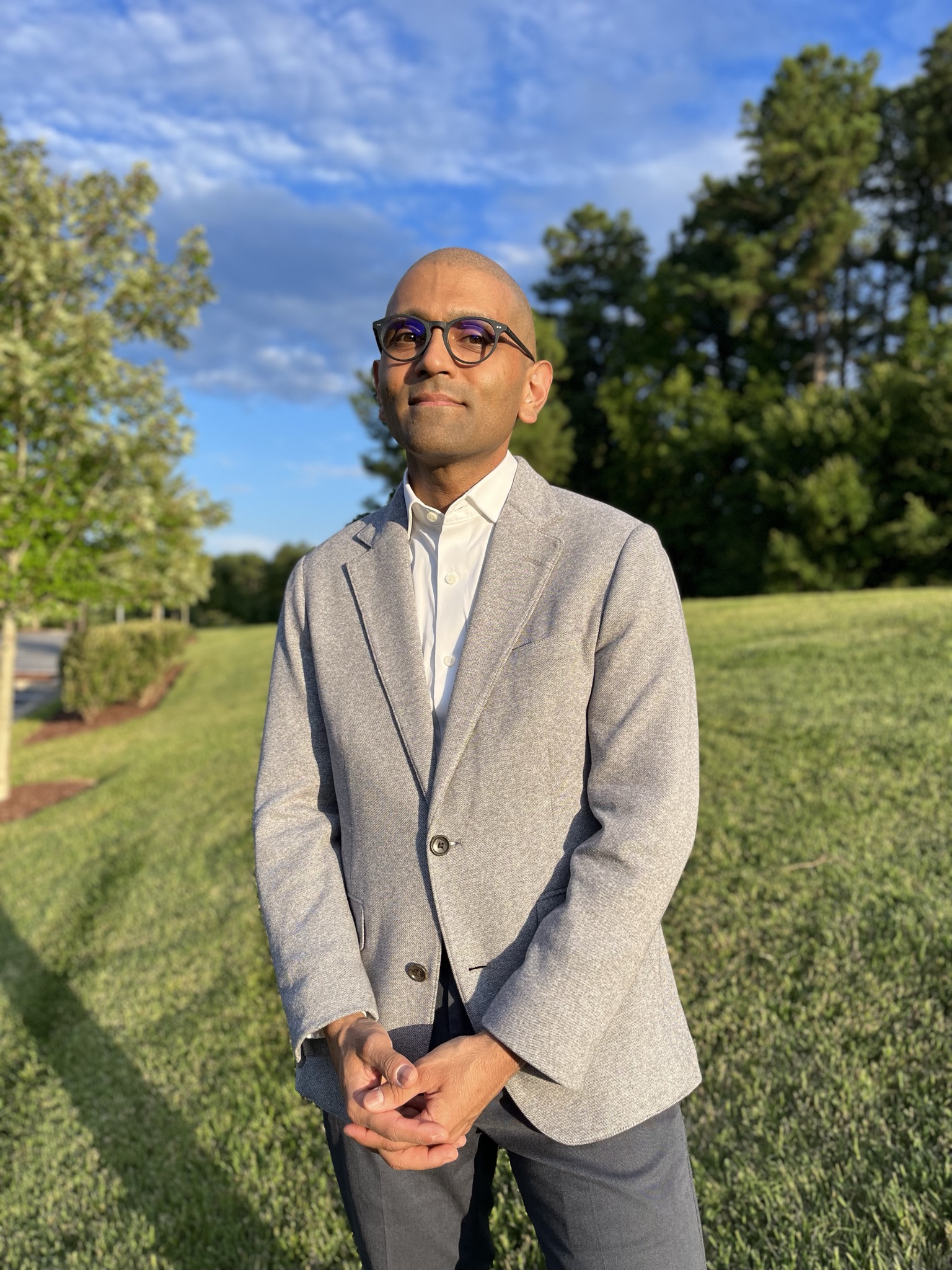
In this episode of Biz/Dev, we sit down with Sandeep Bhatt, Founder and CEO of SonoVoice, to talk about building at the intersection of healthcare, technology, and entrepreneurship.
Sandeep shares his experience turning an overlooked problem in voice health into a business, navigating the challenges of building a medical technology product, and using innovation to rethink how voice health is evaluated.
[00:00:00] David: There is something very interesting about founders is that they always think it's gonna work out. I think you almost have to have that, 'cause if you don't have that, you're just gonna cry and rock in a corner. 'Cause it's so hard
[00:00:12] David: Hi, everyone. Welcome to the BizDev Podcast, the podcast about developing your business. I'm David Baxter, your host, joined per usual by Mr. Gary Vogt, who looks extra spicy and bright today
[00:00:23] Gary: Got a new little lamp, so yeah, showing
[00:00:26] David: You got, he, we didn't need to see you any better. It's better when we can't see you. Can you just get
[00:00:31] Gary: No one sees me anyway. Matt never edits me into the podcast, so that's
[00:00:35] David: That's fair. That's, that, I told him not to. I slipped him an extra 20 for that
[00:00:39] Gary: Nice
[00:00:40] David: Figure that's, that works. Now, all right, more importantly, we are joined today by my friend Sandeep Bhatt. He is the co-founder and CEO of Sono Voice. Hello, Mr. Sandeep Bhatt
[00:00:52] Sandeep: Hello, gentlemen. How are you?
[00:00:54] Gary: Doing pretty well
[00:00:56] David: good. So I know Sandeep from Grow. He was with me in my little cohort. We've had a lot of you guys recently. I had Preet on last week, and before that I had Paige. So they all and that, that was a total accident. We asked them a lo- when I finished Grow, so that's been a while, and they, you guys are all just kinda coming at the same time, so this is very fun for me.
So I know tons about your company 'cause I've seen you pitch 300,000 times. But I'm gonna, before I dive into that, I'm gonna ask you our warm-up questions. Are you ready?
[00:01:28] Sandeep: I'm ready
[00:01:30] Gary: hard-hitting social commentary
[00:01:32] David: Hard-hitting, that's right. Are you a big fan... Let's see here. I'm going here. Are you a fire fast or coach 'em up kinda guy?
[00:01:44] Sandeep: Coach 'em up.
[00:01:46] David: Yeah? Really?
Going against all the advice. That's interesting. So why... 'Cause everybody says fire fast, right? That's I thought that was a gimme. All right, now you have to explain yourself, sir
[00:01:56] Sandeep: I like to deliberate and I like to kind of think on things, and I tend to think that my decisions pan out well, so I've started to trust that strategy. I don't think I was ever in the fire fast camp. In fact, people would call me downright slow. But it-- the decision-making tends to pan out, especially kind of long-term strategy stuff.
So I've kind of leaned into that now, is that, folks know that I deliberate, I ask questions, I look around, I think through things. I might even push a deadline off, but then it-- I can-- I wanna get it, I wanna get it right, so yeah. It's a little counterintuitive to the whole entrepreneurial ethos, but, uh, there you go
[00:02:32] David: Okay, so now because you said that, now I'm intrigued. Do you believe, and not just for SonoVoice, let me be clear, 'cause I think I know it might be different. It might be different for you than another startup, for sake. Are you a fan of pivoting or doubling down?
[00:02:44] Sandeep: Wow. I might have, I might've been like a, a fan of doubling down earlier, but now with this particular experience with SonoVoice and working with a great team and doing a pivot or two, I think that the pivot is... it's, it's the right approach. Pivoting makes sense. Don't get-- Don't fall into that sunk cost fallacy.
Like move, deliberate, move rather rapidly, as rapid as I can, and then be ready to take input iteratively and course correct, you know? And if it means course correcting like a hard right or a 180, then do it. But um, yeah, I think in my, in my past I was probably a much more of a, much more of a double down, but now I'm much more of a pivoter
[00:03:32] David: Nice. All right. This one's just funny. Imposter syndrome or delusional confidence?
[00:03:37] Sandeep: Imposter syndrome, man. That's that's like in my DNA
[00:03:40] David: I don't know anyone who honestly, and maybe I'm wrong, maybe there are some, but people who just think they're all that. Like every startup founder I've ever met really it suffers from imposter syndrome. We all think I'm certainly in here. We all think we're all faking it, and we have no... And everyone else has got it figured out except us.
I think that is universal. Even though
[00:04:02] Gary: Not even just for founders, but just
[00:04:05] David: That's fair. Th-
[00:04:05] Gary: A lot of people in the
[00:04:06] David: is right. I should not just lump founders. But even those people who... 'Cause I think founders in particular, you have to have a certain level of hubris to make the whole thing work. You can't be timid and be a ent- entrepreneur. It doesn't work.
Those two things don't work. So you would think that delusional confidence would come in, but I think the interesting part, if I were to... i'm making this up as I go, but I think you have imposter syndrome plus delusional optimist, I think is the makeup of a founder
[00:04:36] Sandeep: I think
[00:04:36] Gary: Imposter syndrome on the inside and then the delusional confidence o- as you're selling, right? Trying to be a salesperson for it.
[00:04:44] David: but you, it's, there is something very interesting about founders is that they always think it's gonna work out. I think you almost have to have that, 'cause if you don't have that, you're just gonna cry and rock in a corner. 'Cause it's so hard
[00:04:55] Sandeep: It is, and I should walk back my-- in my DNA thing because that would be a disservice to my dad, who did have that kind of complete confidence in himself. And I feel like he needed that to kinda survive. He landed in the US in 1967 with $8 and a mechanical engineering degree. His older brother brought him here, and he had to fend for himself, and he led with confidence.
Whatever little he had, it was the best. He was always the smartest guy in the room. He was always the... He was a little dude, like 5'4", but he always thought he was the tallest dude in the room, you know? So I think that, uh, maybe I should kinda lean into that a little bit more. Maybe that's in my DNA, and I've been in denial, you know?
[00:05:36] David: Are you a sneaker guy or a fancy shoe guy?
And a let me put this correctly. You are going to a nice meeting, not a wedding. We're not talking about a wedding or something like that. You're going to a nice meeting. Do you put on the nice shoes or the sneakers?
[00:05:51] Sandeep: I've always been a fancy shoe guy in a sneaker guy's body, so I wanna be the fancy shoe guy. I wanna dress up, and I used to do it back in my music performance days where I'd wear I had the '70s... I had the platform shoes and the bell-bottoms. I was bringing back the '70s vibe.
But but now I've leaned into my kind of don't be flashy. Don't flaunt it." Whatever I've got, I don't wanna flaunt it. So but I think I've always been that guy that's s- a sharp-dressed guy inside of a sneaker guy's body, so yeah.
[00:06:20] David: Okay, before we get to SonoVoice, I must... i've heard this before, but I love this. You have to tell me the story of the space pirate
[00:06:28] Sandeep: Oh my gosh. Yeah, and I'll send you my videos so you can see this, so everybody can see that this is not AI my performance videos of this. But this was my alter ego when I was playing music. This was when I was doing my own band. And yeah, it was fun, man, because we had inhabited this sci-fi meets it, it's really like it was a sci-fi meets yacht rock kind of vibe, which I thought was the best.
That's my sweet spot, dude.
[00:06:51] David: Is it? Is that really what I'd call that, the sweet spot? All right, that's
[00:06:54] Sandeep: Yeah, that's it. Everybody's gotta have a different sweet spot, David.
[00:06:57] Gary: it's like a, a twisted Ga- Guardians of the Galaxy soundtrack
[00:07:01] Sandeep: Ah, said. Said, Gary.
[00:07:03] David: all Africa and Toto? It
[00:07:05] Gary: Yeah. Oh, ooh.
[00:07:07] Sandeep: No, hold on. Okay, so I have a theory on yacht rock, which is that, and sorry if this is going off of the,
[00:07:12] David: Oh, that's
[00:07:13] Sandeep: prepared questions, but to me I don't think A- Toto is yacht rock. I think yacht rock is a sort of a slightly de-energized man singing about wanting to be with someone, but he's just really bad at it, that to me is that's the kind of... And that's my thesis on yacht rock, because I love
[00:07:30] David: Dust in the wind? W- where are we at here?
[00:07:33] Sandeep: No, we're at like think about any number of l- let's go with a quintessential yacht rock song, m- Doobie Brothers, What A Fool Believes, right? This guy can't get it together, right?
He can't get love together. I think that's the core of yacht rock. There's that one song like what's, what does he say? "But I'd really love to see you tonight." He's
[00:07:50] David: oh, yeah. He's not gonna change your life. The dude wa- he just wants to sleep with you. That's it. That song is, "I don't wanna be your boyfriend. I don't want to do anything important in your life. I just wanna sleep with you. Have a good one." That's the entire song. Yes, I know that song.
[00:08:05] Sandeep: Yeah. So I th- I think there's a whole yacht rock vibe of like this kind of sad sack dude that's like singing a mellow song, okay? So that's my thesis.
[00:08:13] David: Okay. All right. And then add some sci-fi and you have the space pirate. I got you. All right. So your space pirate, and this is why I'm leading you up. Space pirate is part of your story of Sonovoyce. So tell me about Sonovoyce and connect those two dots, 'cause those are some wild dots right there
[00:08:30] Sandeep: SonoVoice is a medical device company serving the needs of ENT physicians, so physicians that care for, among other things, our voices. And our goal is to improve the, their ability to use instrumented diagno-d-diagnostic tools to care for their patients and also continue to, drive ROI for the clinic itself.
And it came out of my experience as a s-professional singer. By that time I had moved from space pirate to doing this '80s cover band, and I was performing all around North Carolina, like twice a week. And these were these long gigs. They were like four hours a piece. You play at any number of kind of bars and venues, weddings, whatever.
And you, Th-they were like long gigs, like four hours. And so I started to lose my voice. I couldn't sing in the, that range of men that sang in the '80s which was outrageous.
[00:09:18] David: bands? Yeah
[00:09:19] Sandeep: there you go. So I, at the time, I was like, "Who could help me with this?" So I kinda searched it up and it was a la-laryngology clinic, okay?
So I went to Duke. I was a patient there and I had an incredible care team, Dr. Seth Cohen, who's one of the country's top laryngologists, but also publishes on the epidemiology of voice and the impact of, the economic impact of voice disorders. And then Leda Scarce, who ended up being on my master's thesis committee at NC State.
She literally wrote the book on singing voice rehabilitation. She was a former opera singer turned speech pathologist. And they practiced together in this interdisciplinary environment and I kind of became I kind of realized there's so much here for everybody who uses their voice, not just singers or teachers or voi-occupational voice users.
So when I was in grad school and we were tasked with building an at-home use medical device, I went back to the clinic at Duke and I shadowed there for a couple of days, followed clinicians around, sat in on patient sessions, and then asked two professors from Duke to join my thesis committee along with my NC State professor.
And that kinda yielded, um, the IP that, uh, kinda led to the formation of our company
[00:10:32] David: Nice. So where are you guys at in terms of company? Like you are, you've gotten a lot of grants and goodies and you have a runway. Is that basically where you're at and you're selling... Like I know you during Even Grow, you were traveling constantly going to these clinics and so are you guys selling the device at this point or are you still in the figuring it out stage?
[00:10:58] Sandeep: Yeah. We're meeting with clinics to do usability studies. This summer was all about testing our hardware and software prototype with six clinics around the country and getting really detailed technical feedback. And that was a direct outgrowth of all the customer discovery we did a year prior with hu- a hundred plus clinicians to understand what are their unmet needs.
We translated that into product. We put the product in their hands and had them give us technical feedback, and then we had business conversations around, "This is our pricing strategy, which we can give you such and such ROI. Does-- Is this compelling to you? And let's work with us to get to that stage where we can do an early stage, a pilot with you, so you can test this with your patients and see if it drives revenue and im- supports your high standard of patient care."
And that's where we are, and our goal is to get through that FDA registration process to begin getting this into clinics formally next year with some paying customers
[00:11:55] David: Very cool. So how does someone, the space pirate, '80s cover band guy, go to making a medical device? And I mean that practically, not just your story, but how do you have a desire, and this is true for all hardware people, but you have a desire to solve a problem, and the only way to solve that is with a gizmo, a doodad.
And it's a physical doodad, not a software doodad, right? 'Cause that's relatively straightforward. Yours is both. Yours is both. But I understand the software path. I think that inherently makes sense. We understand that you either, either hire a developer or whatever you type it yourself.
We understand software and how that's made, but building a physical device, man, that's tricky stuff. How do you get from desire to help people to, "Look, I have a working prototype. I've shrank down..." I've seen your stuff. I know the old devices are much, much bigger. You guys shrank a lot of stuff down.
You merged a bunch of stuff. How did you get there? How does that process work?
[00:12:49] Sandeep: I think me not being a hardware developer or even a technical founder, my background is in econ and I worked in finance and helped startup companies raise capital before I went to grad school. So the... Yes, so the way that that worked is find collaborators who have those skill sets, who are outside contractors, get to the point where you can build a prototype and show proof of concept, and then use that to get some small amount of funding, and then use that to kind of then get maybe people in-house, which we had the great fortune of following that process of getting the proof of concept with outside consultants, getting a National Science Foundation Phase I grant on the back of that and some NSF cu- customer discovery here s- supported by NC State, and then l- letting that kind of attract a co-founder who has deep technical expertise.
So that's my colleague Roston Rodriguez, who's a doctorate in electrical engineering and a Duke MBA. And that really allowed us to, I think showing traction and showing positive kind of steps keeps attracting kind of more and more smart people to the organization. Uh, and that's really been to our benefit is, um, each step that we take is thoughtful and it hopefully shows traction and it hopefully shows val- validity and it hopefully shows some humility that, hey, we're asking for your input and hopefully that all...
And hopefully it raises some money and that attracts more people to the platform,
[00:14:18] David: so your co-founder is the hardware nerd
[00:14:21] Sandeep: Oh, he's all sorts of smart. So he's-- Yeah, so he brings hardware, software, and AI model development experience which are all three aspects of our offering. And then he also brings a depth of understanding of business through his MBA and through his decade of product development work in large corporations.
And then he also is just a nice guy and is really wants to understand the customer's unmet need before building, o-o-one piece of product. It's like, "Let's hear what they need and build to that." So that kind of mindset is also awesome to have in a collaborator.
[00:15:00] David: Now, your hardware, if I were to build, a fuzzy alarm clock, the only way I can make that work is to make tens of thousands of units. I go to some Chinese manufacturer, 'cause that's where they all are, and I convince someone to make 10,000 units, and then I hope to God someone buys them. Y- you never get to that level of scale, right?
Your wildest dreams is you might be in 1,000 offices. Is that... I might be w- off on the number, but it's not tens of thousands. They just don't exist, right? So you never get scale. How does that work?
[00:15:31] Sandeep: Initially for the beachhead market, there isn't that level of scale. But longer term, we do see a consumer market for a wellness product that uses voice biomarkers to help track overall wellness, like an Oura Ring tracks certain metrics and certain signals and derives derives information from those signals.
A Whoop does the same thing. Our voice is actually rich with biomarkers, and with our device capturing multiple modalities of the voice, not just acoustics, but also aerodynamics, pressure and flow, those are rich with biomarkers that can actually be indicators of underlying health across a number of across a number of different fields of health, not just voice and vocal pathology.
So there's a longer-term opportunity here to not only serve clinics, but validate this through the clinical pathway, get that really r- rich data, train this AI model to c- class it to l- to take voice biomarkers and really understand them deeper, and then translate it to a consumer kind of wellness platform.
So there's a broader arc here and the goal is to really serve that broader market. But right now we have a very, like you said, a very small niche, a very small market that we wanna serve initially as our first customers.
[00:16:47] Midroll: We believe that business is built on transparency and trust. We believe that good software should be built the same way. Big Pixel is a 100% US-based, fixed-fee, custom software design and development agency built on transparency and passion. No offshore handoffs, no surprise invoices, just a team that treats your problem like it's our own.
UX and design are core to everything we do. Not a phase that gets handed off, but a discipline that runs through every decision we make. We bring the expertise to build what your business needs and the clarity to know when AI and technology help and when they get in the way. We provide our clients honest assessments of where they are and how they can get where they want to go.
Your idea deserves the right team. Let's talk, plan, and create something that truly works for you.
[00:17:49] Gary: Are there already devices that are a combination hardware software like this out there? Or is this kind of like a, an update to something that exists but more modern and more high-tech?
[00:17:59] Sandeep: Yeah, it's an-- it's there's its incumbent technology that's in the clinics which really establishes the market for our work. It's been there for several decades, and it's really paved the road for validating this type of science of capturing acoustic and aerodynamic parameters in clinical voice assessment.
And so that-- and then on top of that, there are st- young companies in the voice AI space that are using a single modality of voice acoustics only to help screen for some of these underlying health conditions. So we're providing a combination of those as clinically relevant measures that can both be-- serve patient needs as well as serve be a driver of ROI for clinics.
But then on top of that, we're building this data analysis layer that can really broaden the, these application of these tools beyond that niche voice clinic market. So that's really exciting for us is that-- And we're doing it with intent together, which is different from these disparate solutions that are out there right now.
[00:18:57] David: I had a funny thought. I see, you got Whoop and you've got all these big Aura, there's big device things, but then there's a lot of these medical, like one-offs, like you guys are talking about. Like yours is voice, and it's voice specific, and it can do all... Is there a future where there's just dozens of these things and someone's g- we're all wearing like these major gizmos and doodads all over our body to measure ourselves in 500 ways?
It just
[00:19:22] Gary: we just have a scanning bed at home that you lay down and analyze every part of your body
[00:19:27] David: Dude, have you ever s- oh, this is totally off subject, but have you ever seen those guys who are like super into their health, and they lay down on these scanners, and it measures like 8,000 things of body fat? And that's, those are like $100,000. But anyway, those, so those beds exist.
But anyway, I, it just came out as a funny thing. I'm just imagining we got all these things hanging off of us measuring various pieces and parts. You got like a kazoo just floating around measuring your voice.
[00:19:53] Sandeep: Oh, you just zip into a suit and then you're just like in a bubble all the time and it's just like measuring everything. But you can float too. You can float on water. Yeah,
[00:20:02] David: I'm sure that's what Bryan Johnson, that guy who's trying to become immortal, I'm sure he's working on the suit. I find the more that you lean into that stuff, the weirder you become. You like, you start looking like a robot. But anyway, so what is... I'm gonna ask you my green field question.
Five years go by, no major hurdles, everything you want to occur occurs with Sonovoyce. What do you look like?
[00:20:26] Sandeep: Yeah. We're a robust company serving a large clinical population of not only voice specialized clinicians, but other clinicians that can benefit from tools that support voice diagnosis. That's really the, that's really the scale that we want to achieve, and I think that there's applications across a variety of, uh, medical disciplines and medical, um, subspecialties where we can serve their needs through our technologies.
And, uh, so we're really excited to build that and, uh, and s- and learn from those different, uh, subspecialties and those clinicians and serve their needs and continue to grow. So that's, that's really where we see ourselves in five years is, uh, is growing from this small group of customers that we wanna serve initially to a much broader market.
[00:21:10] David: Nice. So you mentioned earlier that you guys got some grants and goodies. How... I've heard that is becoming much harder to do. How has that affected y'all or has it affected y'all or are you now nervous now if you go in for another round of grant-based goodies from the government particularly, that's National Institute of Health and SBIR, all those fun ones.
Are you nervous about that, that those are dried up right now or are you guys just pushing through or how does that affect y'all?
[00:21:42] Sandeep: Like you said before, we're the eternal optimists, to a fault. So we really think that things are gonna come through. We've had some great conversations with some of the some of the grant program directors at some of the different funding agencies. And we think that we had a-- We wrapped up our phase one NSF grant.
We feel like we had a really solid outcome for the the key objectives that we proposed, and we are looking at a couple of funding opportunities that are right now we're just waiting to hear back from, and we're really excited about that. I think that we remain really optimistic that there's a broader application for this, and there's a combination of dilutive and non-dilutive funding that we wanna access.
We think government grants are an incredible resource and hope to continue accessing those, but we're also actively, fundraising and looking at dilutive fundraising as well. So that's-- it's exciting to be able to tap into both of those resources is what's really cool about our opportunities
[00:22:35] David: Nice.
[00:22:36] Sandeep: Yeah, and I...
So yeah, I remain optimistic about it
[00:22:40] David: Even so the other side, the, the dilutive funding, which for regular people is classical investors and that kind of thing, are you nervous because I know you have AI in your platform, but you're not AI, and from what all the investors I've ever heard, they're sucking all the air out of the balloon, right?
If you're not building a foundational model right now, we got nothing for you. Does that make you nervous, or is your optimism strong keeping you going?
[00:23:03] Sandeep: No, because I think we're trying to do a very deliberate use of it. We're not trying to solve every problem. We're trying to really carve out a niche where we can serve a small group of people, learn from their expertise and really bui- build-- be deliberate in, in, like we're using a sc- a scalpel where other people might be using like hacking through the jungle with a big blade.
Like we're really trying to be very intentional in the use and not throwing it around as a buzzword, but how can we de- intentionally de-risk it through deep collaboration with clinicians? How can we get retrospective and prospective data from, studies at major research universities? Uh, how can we use that to continually de-risk, uh, and bring people aboard who are experts in the field to help us, and then continually go back to the customer and say, "What's relevant to you?
What do you find?" And as we grow and broaden the, the market, talk to more of those people and say, "What aspects of this software development or this AI would be helpful to you?" Um, rather than just kind of building in a vacuum with a shotgun approach. So that, that's my sense is, uh, and, um, of course, I'll defer to my colleague on that who's an expert in the field.
But but that's my s- approach to it. Yeah. Is to just be very, very disciplined and not, uh, not egotistical and not, uh, throwing around buzzwords.
[00:24:21] David: Where I find that at least in my dabbles with AI software like product software, what the thing that always gets me is, and I don't think a lot of people pay attention to this, is the token cost, that ongoing token cost. Boy, it gets pricey to run these things. And I think when you're s- charging your users X dollars a month, now for yours, you have a clinical plan and there's a hardware piece and it's obviously not just software, but that becomes a real...
This isn't like hosting costs where you can say, "Hey, my servers are gonna cost X," and it's relatively fixed. It scales as you scale, it's relatively understood. Y- if you get one user who starts going crazy and asking a lot of questions just randomly, they could cost you some real cash. Have you guys experienced any of that with your models or you guys keep it clamped down?
[00:25:09] Sandeep: No, w- right now we're very much in the R- R&D phase, so the NSF grant, part of that was around research, was around building and de-risking that initial AI model for specific aspects of laryngeal dysfunction. So it was very early, and it was just meant to show what modalities of data can we use, how do we choose which types of models to use, how do we choose how to ch- select from this huge amount of data with a expert clinician's help, like a doctorate-level speech pathologist's help, to really cut that down into what are the most relevant decision-making components of that data that a clinician would use day-to-day, and then using that, so w- it's been a very much a, in a de-risking phase right now. So that commercial aspect and that token use, it's not even like we've obviously thought about it, but it's not, we're not there yet. We're very much really in the de-risking phase right now and building that and vetting it with clinicians.
So
[00:26:04] David: Sure
[00:26:05] Sandeep: yeah.
[00:26:06] David: All right, Gary, wrap us up
[00:26:08] Gary: All right. Well, in this journey in creating a hardware and software device together... . that seems to be almost like two problems to solve at the same time, where a lot of people we have on is either one or the other. So I'm curious, through the beginning up till now what have you learned, and what would you say would be your top three pieces of advice to someone going into a hardware and software kind of entrepreneurship?
[00:26:33] Sandeep: Yeah. Everyone says hardware is hard, but I think everything is hard. Life is hard. And I like to grapple with kinda hard problems, so that, that's my specific d- mental dysfunction is I like to take on hard things. So that's, First of all, I was like up for the challenge.
So be up for that challenge, right? It's difficult. So I would say that's like my first tip. Especially for someone who's doesn't bring that specific technical expertise, be prepared to surround yourself with people who can, who believe in the vision, but who can execute very tangibly, right? So sell the vision, but also show some progress that you've made, like a proof of concept.
So yeah. So first I would say be prepared to do something hard and be prepared for it to be difficult. The second is that proof of concept. A small amount of work that you put together to show somebody who's an expert in the field who can say, "Oh yeah, I get it. Let's collaborate and take this to the next step."
I think that's important. So let's say again be prepared to do hard things that gets... It doesn't get easier. Second is get to proof of concept and then iterate iterate, iterate. The third thing is you're not gonna figure it out on the first try and you shouldn't think so. So be prepared to iterate and as you iterate, I found more and more people, if you're doing it right, more and more people are gonna get interested and wanna participate.
So get people excited about each iteration. Tell a story. Reach out, send updates. Like make sure people know, people who can help you know what you're doing and be a-- don't be afraid to be wrong. Let them educate you and let them take kinda ownership. So tho- that would be my three things.
One is be prepared to do hard things because it doesn't get easier. Second is build that prototype and get something out there. And the third is just iterate iterate, iterate to... and get opinions from really smart people along the way who wanna be involved in the process.
[00:28:23] Gary: The iteration process sounds scary to me because the way people perceive... hardware and software are different, but they work together, and people now are seeing products that work together, hardware and software really well. So there's an expectation of, not so much get it right the first time, but get it really good the first time and then iterate more.
But when you're iterating like that, it's-- you're not just throwing an update, deploying an update through a cloud server, for a software thing. You actually have to physically change the wrapping of that as well, which is... Yeah, that just seems like a, a lot to take on. So definitely good advice for anybody going into that.
[00:29:01] Sandeep: Yeah. And we're learning a lot every day and, it's a fun process. I embrace the kind of chaos and learning, so
[00:29:07] Gary: Embrace the
[00:29:07] David: my family motto is embrace the jank.
[00:29:11] Sandeep: Awesome,
[00:29:12] David: tell each other all the time. So startups I think have, have a little bit to go align with that. Thank you so much, Sandeep. This has been fun. I knew it would be. G- interviewing the Space Pirate is always a good time.
[00:29:24] Gary: We go, if anybody wants to learn any more about Sandeep or about your company
[00:29:30] David: You gonna finish
[00:29:31] Gary: SonoVoice or SonoVoice? No, I... Is it SonoVoice or SonoVoice Incorporated or? Sorry
[00:29:37] Sandeep: Yeah. You can visit sonovoiceinc.com, S-O-N-O-V-O-I-C-E-I-N-C.com, and there's some information about us there as well as on LinkedIn. So yeah, I'm excited to continue to share the story and continue to learn and grow and get to chat with folks like you. David, I'm a big fan of your work and excited to see what you do next with Big Pixel and Teela .
[00:29:59] David: On that note, I think it's a good time to end that before Gary gets really mad at me. Thank you very much again for joining us. We will be back next week everybody. Thanks again. Bye.
[00:30:11] Outro: That wraps up this episode of the BizDev Podcast. Thanks for listening. Let us know your thoughts. We'd love to hear from you. Shoot us an email at hello@thebigpixel.net or connect with us on Instagram, Facebook, YouTube, X, and LinkedIn. BizDev is a production of Big Pixel, a US-based provider of UX, design, strategy, and custom software.
This podcast is edited by Matt McCracken, yes, that is his name, and me, Christy Pronto, marketing guru for Big Pixel
Recent Episodes
Here are a couple other episodes to check out, or return back to the main page.



AI, Tech, and Industry News
Check out the latest insights, curated with intent, from our team.