Center of Community w/ Jessie Hathcock

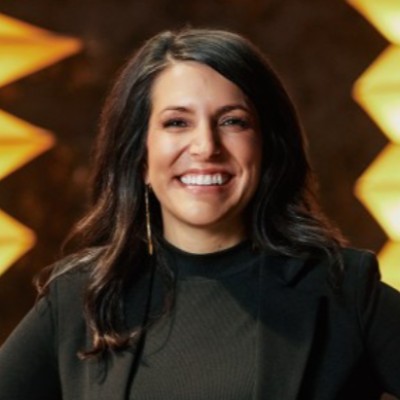
Jessie Hathcock
President of The Loading Dock and Founder of Scale Simple
In this episode of Biz/Dev, we sit down with Jessie Hathcock, President of The Loading Dock and Founder of Scale Simple, to talk about the challenges of growing a business, building stronger operations, and knowing when it's time to rethink the systems and processes behind the work.
Jessie shares her perspective on helping founders build businesses that can scale, and why strategy, team alignment, and community play such important roles in long-term success.
[00:00:00] David: Mocks, not docs is the new phrase. Don't give me a document, show me a mock. I love that. We have clients now who give us a Claude rendering of what they've had in their brain, and I'm like, "Dude, I love this.
Let's go walk through it
[00:00:16] David: Hi, everyone. Welcome to the BizDev Podcast, the podcast about developing your business. I'm David Baxter, your host, and I'm joined by, uh, no Gary today. Gary is in the middle of a squall in Florida and has no inner tubes, so he is not joining me. So I know this is gonna be a much better podcast because of it. More importantly, we are joined today by my guest, Jesse Hathcock, who is the president of Loading Dock, which is a very cool place
how are you, Miss Jesse?
[00:00:41] Jessie: I'm doing great. Thanks so much for having me today
[00:00:43] David: Absolutely. So we like to start these things out with some rapid fire this or that kind of intro questions that you've never seen before. Are you ready?
[00:00:53] Jessie: I'm ready
[00:00:54] David: All right. Start off easy. Hot sauce or no?
[00:00:59] Jessie: Oh, absolutely.
[00:01:00] David: Oh yeah? You like the hot stuff, huh? How hot are we going
[00:01:04] Jessie: n- I don't wanna be, like, in pain, but I love, I
[00:01:07] David: You a Carolina Reaper girl? Is that what you're saying? You just...
[00:01:10] Jessie: no, not that.
[00:01:11] David: No
[00:01:12] Jessie: habanero I'm tapping out.
[00:01:13] David: Okay, that's fair. Have I-- I don't think I've actually said, told this story on the podcast. It's my favorite hot stuff story. So m- we went 2019 to New York City, and my kids were with us. It was my wife and my kids, and, my son at that point was 13 or 14. And we go into a Thai restaurant, and if you've ever been to New York, for those who've never been to New York, first off, you should go. But two, the coolest thing about the whole city is any restaurant you go to of any type, whoever that country is, that's who's cooking the food. It's the best part, right?
It's always just amazing. So we're in a Thai restaurant. Everybody in there is Thai. We're the only white people in the whole joint. And I love Thai, but I hate spice. I'm a total
[00:01:52] Jessie: Really? Oh, that surprises me
[00:01:55] David: Oh, absolutely. I found as I've gotten older that my tolerance has gone up just by accident, but I still don't like it.
My son at this point is a new teenager, and he's feeling really strong about himself. He loves jalapenos.
[00:02:06] Jessie: Okay
[00:02:07] David: And so we get pad Thai, the typical white guy thing to order at a Thai restaurant, and with no spice. Like I'm like, "Dude, seriously." And my wife gets it, and then they bring out this bowl, which apparently is pretty common.
It was for her- my wife's bread or whatever it was. It was oil and then a Thai chili sitting o- it was like half a Thai chili cut and just sitting in there. And my wife is she'll swirl it around 'cause she likes a little heat, and she's enjoying it. My son thinks it looks a little like a habanero-- oh no like a jalapeno.
And he's like, "I'm gonna eat this thing." And I warn him, I said, "That's a Thai chili.
[00:02:41] Jessie: Yeah, very different
[00:02:43] David: serious beast." He's like, "I'm gonna do it." that sucker in his mouth. He turns
[00:02:48] Jessie: burning.
[00:02:49] David: the wh- his whole face turns bright red. I have pictures of him just weeping. The tears just co- I'm laughing so hard because I know he's not actually hurt, but it was the last time.
So now to this day, like he still likes hot stuff, but it's like that is now his limit. He knows what that is, and he's nowhere near it.
So, Let's see. Do you... Are you the type of person who asks permission or asks forgiveness?
[00:03:14] Jessie: Depends on what it is
[00:03:16] David: Fair
[00:03:17] Jessie: Typically, I would say I used to ask permission for everything, but now I just do stuff and then I'm like, "Oh, sorry."
[00:03:25] David: Is that an age thing or a seniority thing?
[00:03:28] Jessie: I, probably both, and I'm just like not as much of a perfectionist anymore. Before I was like, "I don't wanna get in trouble doing anything," but now I'm sort of like, "Eh, what's worse that's gonna happen?" You know?
[00:03:38] David: I gotcha. All right, here we go. Ooh, you have to choose
[00:03:43] Jessie: Okay
[00:03:44] David: ' cause this is, this is, this, Otherwise it's no fun. you keep the brilliant jerk or the reliable B-minus level player? Ooh,
[00:03:58] Jessie: as like on my
[00:04:00] David: On your team, this is a work question
[00:04:03] Jessie: I would go with probably reliable B-minus. I've had some, yeah, challenges on teams before, and those are really hard to work through, so
[00:04:11] David: I generally I agree with you. I don't like rewarding bad behavior, but I will say a B-minus player is so hard. When they're constantly just barely getting it done, that is so hard. I need-- can we mix it? No, that's what I say. You have to choose. I think I agree with you, but I would be very upset.
[00:04:30] Jessie: Yes. I would not wanna manage that person. Would I-- Now, if they were on the team, that's fine. But yeah, I wouldn't wanna manage them as a B-minus person.
[00:04:40] David: But I don't think I could manage the brilliant jerk either
[00:04:43] Jessie: Yeah, no, they're hard. They're both hard for sure.
[00:04:46] David: Totally different hard. Okay, let me see. I'm gonna find one more. Here we go. Oh, I like this one. W- again, have to choose.
[00:04:54] Jessie: Okay
[00:04:55] David: Redo your 20s or skip to your 70s?
[00:05:01] Jessie: That'd be so sad. That's
[00:05:04] David: That's
a weird of your life.
Yeah, it's like, bam
[00:05:07] Jessie: Man, 20s were hard. I would definitely redo those if I had a chance. That was, like, real hard
[00:05:13] David: See, for me, I got married at 22. I had kids at 27. My 20s were... we were just getting started, I had the cardboard box and the inflatable couch and all that.
Tell me about Loading Dock, 'cause I, we have not had... No, we did have a Raleigh-founded person on here at one point. Trying to think if we had any co-working s- people before,
[00:05:33] Jessie: Yeah
[00:05:34] David: But anyway, tell me about Loading Dock
as though no one knows what anything about it
[00:05:39] Jessie: Okay, great. So we are a three-location co-working and co-warehousing company in the Triangle. So we serve we do flexible workspace for small businesses and entrepreneurs. We have the front of house, so that's like your typical co-working space, office space, meeting space, so you can either drop in anytime you want even when you're not a member and like book a conference room or something, or you can come in and have a membership where you work out of the space as much as you like.
We also, what's kind of our big differentiator is our warehouse space. So our founder, Philip Freeman created the concept of co-warehousing. We can't find anybody that predates us, and now co-warehousing is everywhere. It's wild. People are raising like 50 million, 35 million, just like crazy amounts 'cause it makes so much sense.
So he started a CPG company out of his, a consumer products and goods company out of his garage. And you know, when you're ordering supplies for like your raw materials for different products, a lot of times it comes on pallets. And so he lived in North Raleigh, still lives in North Raleigh, in a cul-de-sac, was getting supplies sent to his house was starting to order larger quantities 'cause his business was picking up, and items were sent to him on a pallet.
Well-- And so like a 53-footer truck was coming down the, uh, the cul-de-sac in North Raleigh, and the guy's like, "Dude, uh, where is your loading dock? I literally can't get these supplies off of my truck into your house. Where is your loading dock? Like, how am I supposed to do this?" Hence our name. So he was like, "All right.
It's time for me to bite the bullet and go get my first warehouse space." Um, when you are looking at commercial real estate, and especially if you're just getting started, typically you have to personally guarantee the lease, which is super scary. You're like, "All right, here we go." And in commercial real estate, he had a five-year lease, which that's kind of small.
That's kind of a small commitment in terms of commercial real estate, but as a new entrepreneur, that's a really big commitment when your own personal finances are on the line, right? So he's like, he did it, he signed it, five years personally guaranteed. He's like, "All right, here we go. Sink or swim." Well, he swam and he outgrew the space within six months.
But then he's stuck with this lease for another four and a half years that no longer serves him and where his company is. So he's like, "There's got to be a better way to scale your physical footprint as your company's growing." And so he created where co-warehousing. He rented a space in Raleigh, right in the Five Points area at this place called Dock 1053.
It was an old grocery warehouse, dilapidated. If you saw pictures, you would be like, "That is a horror film." Like it was terrifying. He saw the vision somehow. Um, the space was completely redesigned. He took a huge footprint, way bigger than what Murphy's Naturals needed, his insect repellent company needed at the time.
But he was like: Look, if I am a small business and entrepreneur, then, and I needed this flexible workspace, other people have gotta need it too. So he created a solution based on his own needs. And we so we opened the first co-warehousing about 10 years ago in 2016. We have about 100 square foot, feet in the triangle of shared workspace.
We serve about 465 small businesses and about 1,300 members. So it's really fun. We get to work with tons of people, tons of different industries and support people in their growth and kinda watch them take off. Um, or, you know, if they try something, which entrepreneurship is so brave, they might try something and it's like, you know what?
That's not the best thing, and they gotta pivot, and they might need to downsize. But we're able to do that in a way that's not locking them in to this long-term commitment.
[00:09:20] David: So inside baseball, your Wake Forest location, does it have a warehouse?
[00:09:26] Jessie: It doesn't. So we signed that lease before we really got super clear on like who is The Loading Dock. Now we have pretty stringent parameters in terms of size and footprint and type of building and all those things. But we signed that lease when we were signing our other location, and it works great.
It just has office warehouse, excuse me, office meeting space and co-working, and it's an awesome location, but
[00:09:49] David: It is a lo- great location, yeah. That's near me.
[00:09:51] Jessie: Nice.
[00:09:52] David: I almost rented a it, another inside baseball, I almost rented a space where you guys were building it out, and I had picked my thing, and I had been at Raleigh Founded forever. I'm officially their oldest member, which is very
[00:10:05] Jessie: Oh my gosh. That's awesome, David
[00:10:08] David: it's very weird.
But I was moving... long story short, I was get- leaving them 'cause I was downtown Raleigh and I was like, "I live in Wake Forest. This is crazy." So I looked at you guys and I picked my spot and everything 'cause it wasn't even finished yet. And then I realized, I was like, "I think I'm ready to put on my big boy pants and get out of co-working."
[00:10:27] Jessie: Yeah. company... at that point my company was almost 10 years old and I was like, "Do I need to do co-working?" It's almost like a college kind of experience, right? It's, and it's wonderful. A huge fan of it, but I was like, "Okay." But the w- funny thing about me is my company is remote, right?
[00:10:43] David: Everybody's away. So it's just me. I call this whole area that I'm sitting in my fort because it's
[00:10:47] Jessie: Yes.
[00:10:48] David: And finding a office space that's under 1,000 square feet is really hard. I have one that's 550. It's just this tiny little thing. It's perfect for me. And my landlord cannot hear this podcast 'cause I don't know where I'd mo- move.
Like there's not a lot of options for a small group like me. But anyway so I'm very familiar with your Wake Forest location. So I had a question. And it's funny, I did, I, this was, this is real life happening right in front of you. I had a client, we had a verbal. They were they were a startup.
We had a verbal. We were very far along in the contracting process, and they reached out to me today. This morning I got an email from them saying, "Hey, we're not doing it anymore."
[00:11:27] Jessie: Oh, that, like they didn't get started. Like it wasn't they chose another vendor, they just, they're not
they're not pursuing it. Okay. Yeah
[00:11:34] David: That is the second time this year that has happened. So my question to you, and again this is coming to me fresh off the presses, is are you seeing that on a larger scale that startups are struggling right now? I know it's a weird economy. It's good in some ways, bad in others. But are you seeing that?
'Cause like another way of asking that, like she basically said, "Hey, I don't see a way to raise money for what I was doing." And that I see as more and more common. But generally speaking, I mean your heartbeat is right there in the startup world. Where do you see-
it?
[00:12:09] Jessie: to be quite honest, I would say Raleigh Founded, American Underground, those are two other co-working places. These are more in the startup tech scene. We do have some s- tech startups, but a lot of our companies are like the physical product, hence the warehouse, construction, professional services, marketing, um, real estate.
So it's a lot of just like small
local Businesses.
Yeah. Um, now some of them are trying to raise money, and I do think it has been harder. I mean, when I am involved in like Raleigh-Durham Startup Week or anything like that, like I, I definitely hear there's a lot more hesitation from the investor side of things.
[00:12:48] David: AI has just sucked all the air out of Yeah.
It's like if you're not building an AI, not even AI adjacent. It used to be like AI adjacent. It's like even those companies, 'cause there's so many of them, they're struggling now too. It's like if you're not building a-- If you're not OpenAI or Anthropic, there's no more money.
[00:13:05] Jessie: Yeah.
[00:13:05] David: They've just taken all of it. Uh, which kind of funny, did you hear his l- j- Sam Altman's was on a podcast like a week ago, and he was, he quoted as saying it's a terrible thing that, uh, so many people wanna buy laptops 'cause he wants all that RAM. I was like, "Dude, he's taking all the money and he wants all the RAM."
Anyway but I was-- I mean, you guys do a lot of e-com. Like isn't that a big part of what you guys do? Does, is that being affected? I would assume that that they're struggling the same way a startup, a technical startup
[00:13:33] Jessie: you know Our e-com companies, I actually, I really haven't seen them struggle. I've seen them grow a lot, which is good. Like we have a supplement company Gut Personal. They're awesome. Female founded. She's raised a, she's raised money and is in the process of a big raise. She's graduating out of our space which is always bittersweet, right?
Like she she decided to move to a 3PL model, which is essentially where someone else does your ordering and fulfilling. But in order for that model to work, you have to be processing a certain number of orders a day. If you're doing just, five to 10, 20 orders a day, it doesn't really make sense to outsource that, so people use our space as they're getting their companies going.
But no, we're seeing quite the opposite. Pretty much anybody that starts in our warehouse space ends up expanding, and it's like if somebody moves out, it is like a scramble to who's gonna get that expanded space. So I don't... But I also don't know that they're doing, I don't know many companies that we're working with that are doing raises.
I think it's more organic growth
[00:14:33] David: Which I'm a huge fan of. I feel like entrepreneurship in general has gone so far into the you must raise
[00:14:42] Jessie: Yeah
[00:14:43] David: concept that I really think... I don't underst- I had my own little thing that I was building and I'm a builder, right? So I built it before I had a customer base, classic. And I think to myself, 'cause that's not uncommon.
A lot of people come to us as Big Pixel with ideas and say, "Hey, build this for me, and then I'm gonna go and sell it."
And now that I've been through myself through that process, we've seen that succeed and fail, of course. But
[00:15:07] Jessie: Sure
[00:15:08] David: that to be so interesting because you just don't-- You have no guarantee.
You're spending a lot of money, especially pre-AI. You go five years ago, building your startup was expensive. It still is to a point, but it's, it was a lot more expensive back then. And, but they're putting all this in, and then they're like, "Oh, now I'm gonna go find out." And I would preach to them so hard about "You need to go get that hype machine going now.
Don't wait for me. Go do that. We're gonna build you a great app. Don't you worry about that." But once it's done, it needs to land somewhere, and if you don't know who that is, that has got... at least with my stuff, I wasn't hugely out of pocket 'cause I just built it.
[00:15:45] Jessie: That's nice. Yeah
[00:15:46] David: that is, it is so interesting to me is like how many people do that, and they think, "Oh I'm going to go raise money."
And that doesn't solve any of that.
[00:15:56] Jessie: It doesn't. We're actually-- So we're actually doing a a meetup or like a, an event with Raleigh-Durham Startup Week this week on how to vet your ideas before you really go to market. So we're meeting with Shruti Shaw and Sarah Davids. They are both two fema- female founders in the area, but have done a lot of like client work, like testing, testing what does the market actually want?
What is it gonna support? Like that's Sarah's whole business model, and Shruti has a really interesting story about that as well, and pivoting and chasing the money and how you can get the funding and then your company can still completely fall apart because the private equity wants, X amount of returns that's unrealistic for the stage of the company.
So it's really interesting. I think... and with Loading Dock too, we grew pretty quickly and we didn't raise money, but we did take on like friends and family loans, and I really feel like slow organic growth is s- is what's gonna create the most sustainability, because you can vet the market as you grow before you get too big,
[00:17:01] David: but is that, the, I'm playing devil's advocate a bit here. The market tells you can't grow slowly because as soon as you get a whiff of success, someone with money is just gonna rob you blind. Is there truth to that? Or do we still have room to grow slow?
[00:17:19] Jessie: I guess it depends on what type of industry you're in, right? Like I can imagine in tech it's very different because you need to essentially ship it out to as many people as possible to make sure it's viable and sustainable, right? So that makes sense from a tech perspective that you kind of have to grow fast.
I mean, what we're seeing in the co-working world is like the companies that went and raised a whole bunch of money are now reducing their footprint a good bit because, um, their projections aren't where they needed to be, or they didn't actually have a, a sustainable business model, so they went all on hypotheticals and now they're having to reverse course.
Whereas like, you know, for us it's like we have grown slowly and we're being super intentional. It's killing me 'cause I'm such a f- I like move so fast and it's killing me 'cause I'm like, I just wanna get a deal signed to be able to grow. But yeah. I mean, I think there's, that's a good cultural question of like, is slow growth possible?
[00:18:20] Midroll: We believe that business is built on transparency and trust. We believe that good software should be built the same way. Big Pixel is a 100% US-based, fixed-fee, custom software design and development agency built on transparency and passion. No offshore handoffs, no surprise invoices, just a team that treats your problem like it's our own.
UX and design are core to everything we do. Not a phase that gets handed off, but a discipline that runs through every decision we make. We bring the expertise to build what your business needs and the clarity to know when AI and technology help and when they get in the way. We provide our clients honest assessments of where they are and how they can get where they want to go.
Your idea deserves the right team. Let's talk, plan, and create something that truly works for you.
[00:19:21] David: So back to loading dock a little bit. So you guys are at capacity now with all of your spaces. So are you looking to add new spaces?
[00:19:31] Jessie: We are, yeah. That's really what I've been working on all year is like, where do we go? What's the best model? How do we fund the growth? What is that gap? How do we build that bridge? So yeah, that's really what I've been working on all year. So we're close to having two deals.
We're pretty far down the line which is exciting. But yeah, you know the
[00:19:52] David: be new warehouse-y kind of things like your downtown one. And are they... Are, and feel free to tell me to shut up, but are they local or are you guys expanding outside of the triangle area?
[00:20:06] Jessie: Great question. So it's funny because I started the year like, "Okay, we need to grow. We've been at capacity. Like, let's, pick it back up." And I started looking in Winston-Salem, in Greensboro, Asheville, Wilmington, kind of like the up-and-coming markets throughout North Carolina. But then I was like, that creates such a logistical nightmare of like, what if someone call...
'Cause we're an in-person, like we are not remote. We're like very much so in-person. So like what if someone calls out sick and they are in Greenville or like, you know, how are we supposed to get there to fill in? So then I was like, you know, we actually have a ton of potential to grow right here in the Triangle.
So that's really where we're focused over the next couple years, is continuing to expand our reach here,
[00:20:49] David: Nice
[00:20:50] Jessie: Johnston County, Durham County, Orange County, Wake County. There's still a ton of growth we could have here, and also with coworking too, I do believe it's best when it comes out of the community, and it is like a more of a grassroots thing.
'Cause I think even, we saw it with WeWork, right? Like they grew like crazy, not doing so hot now. And I, and we've seen that with several other coworking brands. When they grow really fast, it just, it doesn't land as well with the local community 'cause they, the whole point of coworking is like kind of gritty, startup, getting, small business, backbone of the community type industry.
So I think it makes sense to stay local, for now.
[00:21:30] David: What makes it work versus not work? Is it really about the office space, the co-working space, or is- do you really have to build that community?
[00:21:40] Jessie: That's such a good question. I think it's both, right? Like we just did a member engagement survey. We do one every year to kind of get a pulse on where our members are at. We have plenty of members that come here and they need quiet. Like their life is crazy. They got four kids at home. It's like 14 dogs.
Like they just need a quiet place to come. They are not interested in meeting other people. They wanna come in, get their work done, and go home. So we do have a segment of that. I would say the majority of people come for a sense of community. So for example, Halloween was a couple days ago. Across every campus I just got goosebumps thinking about it.
It was so fun. We had a magic show in Wake Forest. People signed up for lunch to do lunch ahead of time, probably 20 people eating lunch together, and then they went and some of them even brought like significant others and things to this magic show. And I think that, I'm pretty sure the magic show was led by one of our members, which is so fun.
Yeah. And then our other two locations, you know, they did all kinds of fun like Halloween treats and activities and all kinds of things and like it just-- we, we love the term surprise and delight. You know, like life is so life be lifin' for a lot of people. You know, like it's just a lot and so it's a weird time and, you know, we kind of look at it as like, look, if we can bring a little bit of joy to people's lives, if they can come in and feel seen and known and we get to greet them by name and say, "Hey, have you talked to so and so?"
Like that's really our delight. That's what we kind of live and breathe to do.
[00:23:12] David: I call this my blue sky question. Five years from now, put your little s- your tin, your crystal ball. I was gonna say tinfoil hat. That's not right. Your crystal ball out five years from now, and here's the blue sky part. Assume nothing major bad happens, only good things. Where is the loading dock in five years?
[00:23:32] Jessie: I would love to have doubled our size. So right now we have three locations. I would love to have six here in the Triangle. I think that's doable too. So that's what we're working on.
[00:23:42] David: Nice. Okay. All right. So no changing of anything major in that if all things fell into place? All right
[00:23:50] Jessie: Yeah. No, I think I think our model really works. It will be interesting to see with AI how it changes the job market. Now, what we've seen so far this year is we have a lot of like solopreneurs, AI consultants, um, developers, you know, like we have all kinds of people coming to kinda, uh, it's almost like the gold rush, right?
To kinda like stake their claim in the, the AI race. So we have a lot of that going on right now with our members. Um, but it will be interesting to see on a macro level just how that changes the job landscape and entrepreneurship. But I personally think AI is gonna increase entrepreneurship and small business 'cause I think it creates tools that people would never have access to.
Or like you said, it's usually way more expensive, and now you can move a little bit quicker
[00:24:39] David: It is, and I think in the optimistic world and it's so hard to-- You could see it up from a million angles, but the optimistic world is just like when the internet came out and startups got easier, and then the cloud came out and startups got easier. AI makes it, again, easier. But at the same time, where it's so fascinating is the dark side of it is it might remove the need for your idea completely.
[00:25:06] Jessie: For sure.
For sure. I was just hearing a podcast they in- guy, Nilay Patel, who's my favorite tech guy, he was interviewing Bill Gates. And Bill Gates, love him or hate him, the dude is brilliant, and he is, he, this is what he does, right? He lives in tech, and he's a brilliant guy. And they were talking about AI, and he was like, " We're up for the next 20 years, we're gonna go through the largest human upheaval in history."
[00:25:36] David: He's talking industrial revolution level kind of stuff, where he's like, "Within 10 years, we will have robots that will be able to, at scale, be able to do almost any human labor." And he's like, "I know it doesn't look like that now, but they're right there. They're right there." And AI is going to continue doing what AI is doing.
And now he's saying even take all the crazy bioweapons and cyber, put that to the side, and that whole thing. That's scary, let's say that doesn't happen. You still have now what does a person do in this scenario when basically all labor, whether it's going and harvesting food, to typing on a computer, to accounting, it's all done by these bots.
And it's like, what do you do in that situation? I'm like, my brain doesn't work like that. Like that's too-- that's a big question.
[00:26:29] Jessie: It's like so meta.
[00:26:30] David: It is so crazy. And to think that we are walking into this, I'm not, that's kind of one of those things you'd be like, "That's for my kids to worry about.
That's for my grandkids to worry about." Dude, this is gonna happen in the 10 years. And it's
[00:26:42] Jessie: Yeah
[00:26:43] David: ugh. And when you're talking about entrepreneurship, in some ways you're like, "Yeah, this is fun. We can build apps easier than ever." But at the same time, it becomes this there's just one app now. It's just one app, and it does everything.
Oh, you need accounting? Just go do that. It's crazy. I
[00:26:57] Jessie: So how does that... Can I flip it back on you? Like, how does that, like you build technology, you build software apps. Like what is, where are you at with all that?
[00:27:07] David: I'm quaking in the corner. No, um,
it is... I had a conversation with a guy another software development company owner just today, and my question that I ask myself almost every day is, what does a software development company look like in 2026? 'Cause it's not the same as it was two years ago.
It's not-- if you had said 2023 and before, you could go back almost 20 or 30 years. They- there's been obviously big changes, but software development was largely the same. And now it is completely and utterly different. But it doesn't... And I think part of it is, the hard part of it is we're not any less needed, but it sure looks like we're not.
Does that make sense? So many startups say, "I could just do this myself. I'll just go build it. I don't need any software. I'll just go build it myself. Oh, that doodad that you're trying to sell me, I'll just go build that myself. If I need it, I'll go build
[00:28:03] Jessie: Mm-hmm.
[00:28:04] David: That's not true. And actually, that- if you, unless you live under a rock, the big cyberattack that happened last week PHP exploded, which runs 70% of the internet.
And then Node happened right behind it, which runs another big chunk of the internet. I think ironically, that was probably one of the better things to happen for our industry. It's horrible, don't get me wrong, but it proved to a lot of people, oh gosh, we need professionals involved here. Like our guys were, we were patched within an two hours of it coming out.
When Wizards, we were, all of our clients were patched. And if you don't have that dev sitting around, you didn't vibe code that, is what I'm saying.
[00:28:42] Jessie: Exactly. Yeah.
[00:28:44] David: and I think it, it reiterates that importance
[00:28:47] Jessie: I agree. And I think even how we've used it within our own company this year, yeah, like it can get you to a certain point, but if you're relying on that totally without the expert lens to guide you through that, like you're gonna get yourself in big trouble,
[00:29:03] David: if my phrase on that is if you're building real software, it needs to be really built.
it's it's gotta, it's gotta be upkept, right? Like, you gotta have constant upkeep, all those and security and yeah we have the three S's. I'm stealing this from somebody, but that's fine. It was scale, security, and he called it sleekness, which is like UX. Those three things require professionals. And e- even as the bots get better, that's the other thing is even if you did vibe code something amazing, you don't wanna maintain it.
That's not what you love to do. Give it to the pers- it's like accounting. I could do accounting. I hate
[00:29:40] Jessie: I don't wanna do it. Yeah
[00:29:41] David: don't wanna do it, but I could. You know, I could do it, but I don't want to. And it's the same thing, is even if, yeah, you could go and tell a bot to go do it, and it'll get you there. And if it's some throwaway internal whatever, fine. Or if you're just validating an idea, that I love. I love where they, the, someone... Again, I'm horrible at attribution. Mocks, not docs is the new phrase. Don't give me a document, show me a mock. I love that. We have clients now who give us a Claude rendering of what they've had in their brain, and I'm like, "Dude, I love this.
Let's go walk through it and realize w- how far it is really." What's really interesting is when someone like me, this is my job, walks through it, it's dr- it'll change dramatically by the time we're done because you're not thinking like we think. It's like you can't build your house without an architect.
You're not... You shouldn't build software without a designer. So in light of all of our chats, we typically ask you for three pieces of advice for a small business owner and especially important in, in this age as we just talked about.
What would be your three pieces of advice?
[00:30:45] Jessie: It's a great question. I-- So this is why I started Scale Simple last year. So I started a really small consultancy, and it was because there were so many things that I just wish I had known before I got started at Loading Dock. We could have really saved ourselves a lot of time, energy, stress, all the things.
But I think from the beginning, it's getting really clear on what it is you want. Like, where you personally, like if you were the founder of something, what do you want? Do you want a business that's gonna be in the hands of every person in the world? Do you wanna build something local and organic?
Really getting clear on what it is that you want and building strong mission, vision, values, not only personally, but also from an organization-wide mission, vision, values. Because really everything you're deciding should be going through those lenses at all times. So like I- I've done a talk a lot recently this year on building your ideal week, sustainable leadership, meeting your core needs, but so much of that is like the whole premise is like every yes is a no to something else.
So you, when you are building something, you are like so underwater, things are moving so fast, and you need a really quick matrix to be able to say go or no go for decisions with strategy, with people, with customers. Like you need a quick rubric to s- gut check, is this in alignment with the direction that I'm heading?
And if it's not in alignment, then that's a quick no, right? If it is in alignment, then that's a much easier yes. But you still need to discern is it the right yes, but you can at least pass as kinda like that first step, and then you can go on to further decision-making. But I think having a lot of clarity around what you want as an individual, the type of company you wanna build, all of those kind of things, like I think having that front and center really have a compelling mission, vision, values, that's gonna attract good talent when you're ready to bring people in.
People need something compelling to work towards. And I think that'll help with not only attracting talent, but keeping talent and making sure the people you bring on the team are not the B-minus people and they're not the toxic A-hole, but A-plus person, right? Like they're somewhere in between.
You can be a high level, but also be kind. So I think, all of those things kind of litmus test to quickly assess am I making the right decision moving forward, are really important. And then I'm super passionate about social entrepreneurship, so I feel very strongly that business leaders have a, a, a responsibility to take care of the world and take care of their people.
And so I think as you're building your business, how can you, from the beginning, build in give back programs? How can you be mindful of the the environment? How can you be mindful of your community engagement? All of those things. It's so much harder to build that in once your systems are already built.
So like from day one, what are some causes you care about? Do a give back program for that and just have that be a part of who you are as an organization. There's so much data that actually helps you in terms of brand awareness and cause marketing. It really helps you build a stronger customer base.
So yeah, I think creating that sense of alignment personally, creating a sense of alignment professionally, and then building in some layers of like of good. How can you use your business for good? That's what I would
[00:34:16] David: Nice. Nice. So if anybody wants to learn more about you or Loading Dock, how would they Yeah. Feel free to go to The Loading Dock website. It's just loading dock-- theloadingdock.com. And you can check us out there. We're also on Instagram, LinkedIn, all of those things. And then best way to connect with me would be LinkedIn. That's where I spend most of my time online,
Fair enough. All right, well thank you Jesse so much for joining us. This has been a lot
of
[00:34:44] Jessie: you. Yes, thank you so much, David. Good to see you
[00:34:47] David: All righty. And on that note, we are out. We will be back next week, everybody. Thank you so much. Have a good one.
[00:34:53] Jessie: Thanks
[00:34:53] Outro: That wraps up this episode of The BizDev Podcast, and this time you get me, Jen Baxter, co-owner of Big Pixel and David's wife. Yep, I finally took the mic, or wrestled it away from David. BizDev is a production of Big Pixel, a US-based provider of UX design, strategy, and custom software. This podcast is edited by audio whiz Matt McCracken and Kristi Pronto, marketing guru for Big Pixel.
Want to connect? Shoot us an email at hello@thebigpixel.net or find us on Instagram, Facebook, YouTube, X, and LinkedIn
Recent Episodes
Here are a couple other episodes to check out, or return back to the main page.



AI, Tech, and Industry News
Check out the latest insights, curated with intent, from our team.