Friends Elite w/ Preet Mankad

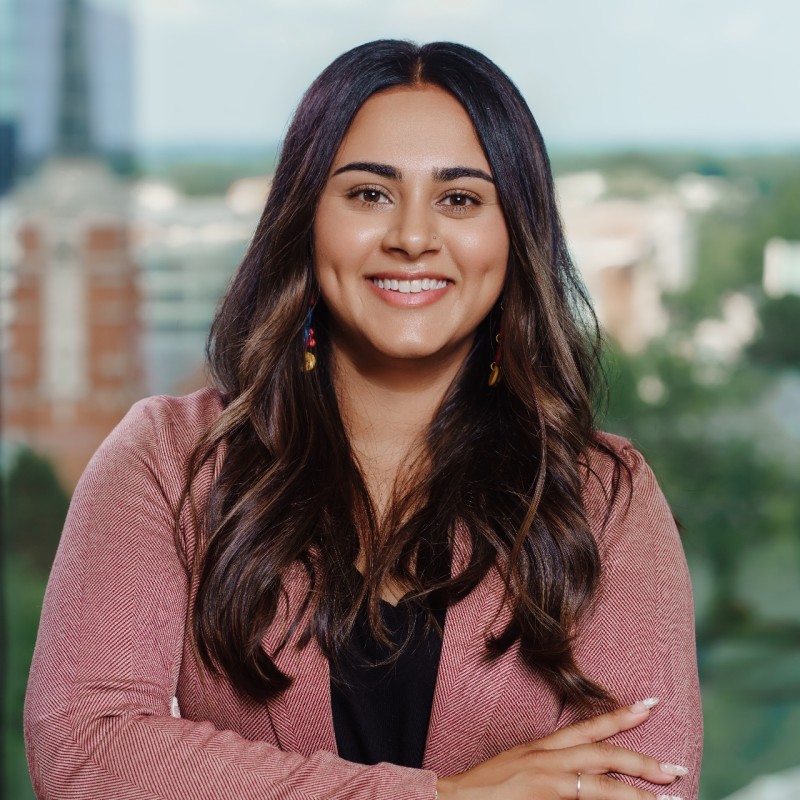
In this episode of Biz/Dev, we sit down with Preet Mankad, Startup Programs Lead at CED, to talk about what she’s learned from having a front-row seat to founders building and growing companies.
Preet shares the patterns she sees in founders who gain traction, why customer feedback matters, and how to know when it’s time to keep pushing or change direction.
[00:00:00] David: it is really fun to talk to Preet.
She's a, a lovely human, and she's gonna make for a great podcast host, or not host guest. You can be a host too if you want. I can just take off. It'd be fine.
[00:00:12] David: Hi, everyone. Welcome to the BizDev Podcast, the podcast about developing your business. I'm David Baxter, your host, joined per usual by Mr. Gary Voight. What is up, man? You're like a floating head today. You're like extra
[00:00:23] Gary: Yeah, but I do have to say I like your Ted Lasso T-shirt
[00:00:27] David: This is not a Ted Lasso tissue.
[00:00:29] Gary: says Kansas, and that's, when I hear Kansas, I
[00:00:32] David: so fine. If you wanna call it that, that is fine. I am currently caught up on the latest season, and I don't e- I have learned I don't even care. I just wanna be in the world with those people. That's it. I don't care what they're doing.
[00:00:45] Gary: That existence is a good existence.
[00:00:47] David: I just want to sit at the table when they're having barbecue and just hang.
That's, that's-- These are the greatest people on the planet, and I want to be their friend. That is... I don't care what they do. That, and I think I can only say that no, my wife would say that about Friends. She just wants to be with Friends and hang out with Friends. Preet is our guest, and she is dying to jump in here.
You are welcome to. We will introduce you in a second, but come on
[00:01:10] Gary: Comment all you want, Bri
[00:01:12] Preet: Ted Lasso and Friends, elite. So I love both of that. Not,
[00:01:16] David: see, we're bonding already.
[00:01:17] Gary: We're in good company
[00:01:19] David: All right. That wonderful accent you're hearing is Preet Mankad, who is the startup program lead at CED. Welcome. Thanks for joining.
[00:01:28] Preet: Yeah, thanks for having me. Excited to be here
[00:01:31] David: I am very excited to have you. I know Preet because she is the head honcho over at Grow, which is a thing I've mentioned several times, which is what Teala went through six months ago whatever ago. And now I'm a coach at, which is very fun. And so it is really fun to talk to Preet.
She's a, a lovely human, and she's gonna make for a great podcast host, or not host guest. Guest, that's better. You can be a host too if you want. I can just take off. It'd be fine. One of these days. All right. Fair enough. Okay. So normally we start... We did do a little Ted Lasso intro, but normally we start with icebreaker questions that you've never seen before.
W- Are you ready?
[00:02:07] Preet: Ready. Let's do it
[00:02:08] David: Okay, here we go. Do you believe you can skip most meetings with an email?
[00:02:15] Preet: Oh my goodness. Absolutely.
[00:02:17] David: Fair enough. I have... In a remote company, I'm not sure that's true. One, we never send emails. That should be. Gary, how many emails have I ever sent you in thir- in the 13 years we've worked together?
[00:02:32] Gary: Well, the funniest thing is like I'll send you a long email 'cause it's too long for Slack. You'll read the last sentence and then ask me a question that's related, like literally answered in the first paragraph of the email. So it's kinda useless these days. Like you just gotta break up the conversation into little Slack nuggets
[00:02:50] Preet: I am so glad you say that. We have many a debate in the office about what should be an email versus what should be a Slack. And there's two sides of the camp. But yeah, the less meetings the better, but Slack is a fun time
[00:03:03] David: Slack is good stuff. Are you an over planner or do you like to wing it most of the time?
[00:03:08] Preet: Yeah, that's a good question. We've done so much work in our team as far as like personalities and things go, and where we have concluded is that I land a little in the middle. So there are times where I'll plan to a certain extent and then wing the rest of it. So a little bit of both. Not too into the planning, but not super winging it either
[00:03:28] David: That you've very political there. Very good
[00:03:31] Preet: Yeah, there you go.
[00:03:33] David: All right. Are you the type of person who cooks it or orders it?
[00:03:38] Preet: Orders it. Yep. Yep. In our hou-- in fact, just for lunch I would have ordered something, but my partner ended up cooking, so
[00:03:47] David: For lunch? Nice. All right.
[00:03:50] Preet: Yeah
[00:03:51] David: Yeah, so I, you have a green thumb behind you, but you burn everything is what I'm gathering. Is that correct?
[00:03:57] Preet: Yep, on the food
[00:03:58] Gary: Grow the vegetables, don't cook them
[00:04:00] David: Yeah, don't cook them? That's
[00:04:01] Preet: Don't cook them. Exactly. That or I can bake things, but that's...
[00:04:05] David: Oh, really? You can bake. See, I'm the opposite. I can cook, I cannot bake
[00:04:09] Gary: bake is almost a little bit more technical
[00:04:11] David: Yeah, ba- baking's harder
[00:04:13] Gary: cooking. Yeah.
[00:04:14] Preet: Yeah. I think you-- the s- yeah, the specificity of it is always helpful. Plus, like I have a sweet tooth just by nature, so if I can make things that I can eat, I'll do it
[00:04:25] David: Tell me about CED. We'll start there. Start at the, the, the grand poobah, the CED
[00:04:32] Preet: Yeah. Tell you about CED. Boy. I am hoping that, most of you all are familiar with CED. We've been aro-around a long time in the ecosystem, right? 40 years, and the, the goal has always been to work with founders in the innovation ecosystem, right? So you have your high growth tech founders, anywhere from software to now a lot of AI all the way through to kind of ag tech, clean tech, deep tech, whatever technology kind of exists.
And if you are a founder building a product-based company, CED is there to support you on the tech side. And then we also work with founders on the biotech side to anywhere from, your therapeutics to medical devices, people starting out in universities. But really our goal is to give founders the tools, whether that's education or the network and the connections that you need to make sure that you're not building in isolation.
And then really just making the right decisions without too many mistakes as much as possible. So the-- One of the ways that we're able to do that, having been around for such a long time in the ecosystem, we have been very fortunate to have supported a whole slew of founders that have built their companies, had exits, and learned a lot along the way.
And so really tapping into that flywheel and saying, "All right, you have built a company, you've exited, you've made some mistakes. Let's share those learnings with the next generation of founders." So David, you're, a coach, right? In the GROW program. A lot of that is because of said lessons that you've learned.
So really tapping into kinda your knowledge and expertise, and then providing that to the next gen of founders to know, "Okay, maybe here's where you should take a left instead of a right."
[00:06:10] David: Very good. So outside of Grow, which we'll talk about in a minute, what does CED practically do?
[00:06:17] Preet: Yeah. So Grow is for our early stage companies. We'll-- if you think about the life cycle of a founder, Grow is the first step in that journey. But from there we have Venture Connect is one of the most kind of flagshippy events that we have. That's the annual kind of venture conference where we have founders pitch on stage, a whole lot of educational content, but really a spot for the ecosystem across the southeast to come and connect.
Beyond that, we have three sort of main audiences, right? We have the founder audience which we've touched on a little bit. We have our investing and capital side of the house. Alex, our new CEO, is leading up that vertical right now, where one of his roles is to provide support from a capital perspective to the founders, but also bring in investors from out of region and showcase kind of what the talent looks like in North Carolina and matchmake so that more dollars are coming in, ideally into North Carolina and going to the founders that are building it.
So capital is huge. And then connect side of the house, which is where Abha leads it. So a lot of the corporate relationships i-in North Carolina where they fund a whole lot of work that CED does and then provides that customer pipeline for our founders
[00:07:24] David: So your part is grow. So it'll you mentioned it a little bit, obviously I know a little bit about it, but dig, dig in there a little bit 'cause probably most of our listeners, that is where they're at or aiming at
[00:07:38] Preet: Yeah, fair. So yeah, my role with CED Grow is absolutely one piece, but all founder programming, right? So that could be the incubator for the earlier stage companies, a 12-week program that founders who are beyond that idea stage. So you've moved past your drawing on the napkin. You have, maybe an email address with a domain, is what we like to say.
And you're looking to build a really strong business around the technology or idea that you have. So you come in for 12 weeks, you get that core education that you need, everything from how do you do customer discovery? Why should you do customer discovery? How do you manage your money and runway?
All of that sort of, all of the core concepts, and then we match you with a coach for the duration of the 12 weeks. And so that is the persona of someone that has been there, done that that will really take the theory and then help you apply it into sort of practical steps for you and your business.
So that you know you're taught how to do something, but then you say, "Okay, this is how it applies to my business," is the second portion of the program. And then the other really fun part, and probably my favorite part, is the cohort. So you're surrounded by your peers who are in a similar situation, probably not a similar industry, but they're facing challenges that you have yourself.
So instead of, being tucked away in your home office like I am right now, you can go into a space where there's other people that are facing similar challenges and have that kind of camaraderie. So that's Grow in a nutshell.
[00:09:02] David: And you guys do that twice a year, is that right?
[00:09:05] Preet: We do grow twice a year. So we have a spring cohort and then a fall cohort. And we support, maybe 20, 25 companies across the two cohorts
[00:09:14] David: All
[00:09:15] Gary: How long does this program last?
[00:09:17] Preet: 12
[00:09:17] David: 12 weeks
[00:09:18] Gary: 12 weeks, okay
[00:09:19] Preet: Yeah
[00:09:20] David: So now because of your vast startup experience, and I mean that as the... i, to the best of my knowledge, you have not done the startup thing yourself, but you've been s- neck deep in it for a long time. I met her for a little inside baseball. I met Preet originally at Raleigh Founded many a moon ago.
So was that your first job?
[00:09:44] Preet: My
[00:09:44] David: I wrong on that? First real job, I should say
[00:09:46] Preet: Yeah, first real job. First actual fun job when I first moved here from Australia was at Vadery, at the chocolate shop.
[00:09:52] David: Oh, there we go. My first job was for CiCi's Pizza, which
[00:09:56] Preet: Amazing
[00:09:57] David: no one knows and like
[00:09:59] Gary: Cardboard and ketchup
[00:10:00] Preet: I recently learned about CCs. Pretty cool.
[00:10:03] David: My son loves CiCis so much. The only one that's around here is literally an hour from our house, and he will say, "Hey, we need to go to CiCis." And it becomes a day trip basically, 'cause you go there, it's four hours all together, right? You eat, you drive
[00:10:20] Preet: Crazy
[00:10:21] David: for crappy pizza. Anyway, so I'll just say we...
I have known of you way before this and now you're the grand poobah of startups and Grow. So you have a lot of experience, and that, that's, that was the whole point of this. I wanna get really practical and ask you some very probably impolite questions about startups
[00:10:42] Preet: Got it. Go for it
[00:10:44] Gary: Say hard-hitting instead of impolite. It sounds better.
[00:10:47] David: Hard-hitting?
Yeah, 'cause I'm a journalist. I'm a journalist.
[00:10:50] Gary: just sounds rude, but yeah
[00:10:51] David: I'm no one's n- ever called me polite. But anyway, so what is the most common stupid thing that startups do?
[00:10:59] Preet: Yeah. Startups will, and founders will think that they have a problem based on one conversation that they have or a problem that they faced personally in their life, and dedicate years and a lot of time, a lot of money into creating a solution for that that problem without validating if it exists for anyone else.
And so you have spent just time really into creating this fantastic thing that has all the bells and whistles, and then you try and build a business around it, you try to take it to the market and you find out that, oh wait, people don't actually want this. Or, yeah, I felt the problem and that's fine, but you don't feel the problem and 10 others don't either.
And so then at the end of it you're kinda like what did I put all this time and money into? What do I, what do I do now?"
[00:11:48] David: Fair, fair. I've seen that, done that. What what is... How much is ego a problem in the startup world?
[00:11:55] Preet: Big time. I think, I really wanna come across-- and you do come across a lot of founders in the ecosystem who are there, maybe they have experienced a problem or, have friends, family, whatever, that have experienced it and built something around it for the greater good, which is great.
But oftentimes if, the founder journey is never linear, there's gonna be, dips, right? And I think most founders are successful when they can say "Okay, I was wrong about this decision or this mistake," and really just be humble in owning that decision or mistake or whatever, and then moving forward from there and moving forward quickly as opposed to doubling down and kinda saying "Yeah, I knew I was right about this," or, "Even if people are telling me otherwise, I'm gonna keep going."
So I think the more you can-- yeah, ego in everything is gonna be a factor, but if you can put that to the side as much as possible and, follow the data or follow kind of what you're hearing from others, you'll just be just vastly more successful.
[00:12:50] Midroll: We believe that business is built on transparency and trust. We believe that good software should be built the same way. Big Pixel is a 100% US-based, fixed-fee, custom software design and development agency built on transparency and passion. No offshore handoffs, no surprise invoices, just a team that treats your problem like it's our own.
UX and design are core to everything we do. Not a phase that gets handed off, but a discipline that runs through every decision we make. We bring the expertise to build what your business needs and the clarity to know when AI and technology help and when they get in the way. We provide our clients honest assessments of where they are and how they can get where they want to go.
Your idea deserves the right team. Let's talk, plan, and create something that truly works for you.
[00:13:51] David: So what is the advice you find yourself giving the most that's ignored the most?
[00:13:56] Preet: Yeah. Oh, man. Oftentimes, so many things. On the business side especially now with AI and things, right? Get as far as you possibly can into your business without looking for investment. So as you're building a company, keep in mind that, A, you're building it f- to solve a problem or to, get customers, not to raise money.
And people oftentimes flip that. They'll go in and they say, "Cool, I have this great idea. I now need to go raise money to create this proof of concept." And we, talk about this, this is salient 'cause we talk about it in Grow all the time of as soon as you get that first check-in, which is so hard right now you're on a, you're on a time crunch basically, but not for what you wanna do, it's for what the investor needs.
So imagine if you had gone in and said, "All right, I will, be scrappy as much as possible, use the resources that I have or can find for free, for cheap, whatever, and maybe get one customer, two customer, three customers, and then have wherever possible, like spin that up, and then use the investment money to accelerate as opposed to the flip side of that."
I think-- I wish more people would do that. I once talked with a founder back before all of the AI stuff where, he... A serial founder, so this was the second company that he had built. And he shared this really cool story of, he was developing an app or some sort of product for a particular group of people, and as he was building, developing with maybe one technical founder, he said, "I am not going to write a sing-- not write any code, not even one line of code until I have a customer signed up."
And so he put on his kind of founder salesperson hat, went and spoke to however many people that he had to convince and say that "Okay, you are going to be our awesome, like first pilot customer. Let's sign this small deal, and then you'll have a custom app basically for you, but you have to pay me for it."
And it worked. So that is what he used to fund the early development, and then you snowball from there, right? But it's that sort of scrappiness that I think you need now, especially to get your first customer.
[00:16:02] David: So that's a good question. So you're mentioning, 'cause people still think that money grows on trees, but, and you have to have AI in your pitch somewhere or unless you're, if you're tech at all, there has to be an AI angle nowadays. But the money is only for the super-duper AI people. Not people using AI, but people, the foundation- foundational labs and those sorts of things.
But what are you seeing in the startup space for the regular company in the money space? 'Cause five years ago there was money on trees. They were throwing money at anything tech 'cause SaaS was making, printing cash. So what are you seeing now?
[00:16:40] Preet: It's 10 times more difficult, if not harder, right? We-- You hear-- So I was at Converge South over the past week, and David Gardner was giving a talk about how SaaS valuations and things like that have just rapidly declined, right? And that is because it's so much easier to get further with your tool. So you need to have, if you're building in the tech space, AI space customers, proof of concept before you'll get any money.
And as a region the North Carolina as a whole is more conservative than the West Coast in terms of writing checks. And so a lot of investors and things like that maybe are switching theses to where they would typically fund AI companies maybe of that earlier stage. But now maybe there's, it's more lucrative to be in deep tech companies or hardware that sort of side of the house.
So not only is it you have to be further as a company to get a amount of money, that amount is probably going to be a lot smaller. And so you as the founder need to understand and make a really good case for, okay, if I'm getting $500,000 for whatever percent of my company truly, how are you going to use that money in the most effective way to grow the business, not to develop the technology?
You need to be able to do that and figure it out on your own. And in fact, the technology should already work. But if you get this money, like, all right, the sales are going to increase or whatever, right?
[00:17:58] David: So on the AI front,
Has Grow and CED and the advice that y'all give, has that changed at all for these early founders?
[00:18:09] Preet: Yeah. It's more so reiterated and doubled down, right? 'Cause we've always said get as far as you can with the resources that you have and be as scrappy and lean and agile as you can. So with the AI space, it's almost like, all right hey, this is now a set of tools that you can add to your toolbox to continue to be that way.
[00:18:29] David: Okay. B-
[00:18:30] Preet: Yeah.
[00:18:30] David: but if you're not, if you wanted to build a SaaS today,
You can build it much easier, sure. But now the superpower is getting anybody to give a crap, right? That's the hard part. It used to be the tech, right? 10 years ago, you'd see all the startup-y people, the business guy or gal would be like, "I desperately need a developer or a CTO," and which basically means, "I want someone to build this for free."
And that's what they were looking for. And now they're like, "Screw this, I can just whip this up over the weekend," which is not true, but fine. But "I can whip this up and I don't need a CTO anymore. I can do this alone," which is interesting.
[00:19:08] Preet: that. Yeah
[00:19:08] David: But once you have it There's a million apps coming out a day because of exactly this.
So how do you get above the noise? Do you guys have advice on this is how you cut through and make someone pay attention when five other apps were built last weekend, right?
[00:19:26] Preet: Yeah, 100%. My advice there or guidance is do your research first, and even before you jump into anything, think about whether you're-- what you're doing is something that you need to be doing in the space that you need to play in, or is there an existing competitor or something that can do whatever you're doing quicker?
So really identify your moat and be crystal clear on that, but then also package your team and your story and work with whomever you need to work with. That could be CED, that could be someone that, teaches storytelling workshops for a living. But be really crystal clear about how you're setting yourself up and to be, to cut through the noise and then tell people about it as much as possible.
[00:20:05] David: So you you're telling me I shouldn't get everybody to sign an NDA? Is that what you're saying?
[00:20:09] Preet: There you go. Who's gonna sign an NDA? Oh my goodness
[00:20:13] David: yeah. I, I, if I could give one piece of advice or two super early, it's, "Dude, forget the NDA." I was actually just at NC State on a panel for a class, and the first question the students asked when we finally finished our little thing was about NDAs.
This is the thing that will not die, is, should I be talking about this? Is anybody gonna steal my idea?" I'm like, "Dude, no one cares."
[00:20:37] Preet: No one cares. Everyone is so focused on what they're doing. You're doing yourself a disservice by, not appropriately circulating what you're doing
[00:20:45] David: Yeah, you gotta yell. To anyone who will stand still long enough to hear your 60-second pitch, you should be giving it. And I say, as someone who, when I went through Grow, boy that is not a skill set that I have. It's funny, I can talk to a wall, but when it comes to customer discovery and follow-ups and all of the rigmarole that is early sales, founder-led sales, I suck.
And I d- I had to go through Grow to learn that. I just... I thought I'd be good at it. It just does not come naturally to me. I can force myself to do it, but it's... Some people can just do it. And I th- there was a girl in our cohort, Ellie,
She's just prints money. But, and also her-- it helps that her idea is amazing, but just she could do it.
It just comes naturally to her. She talks about her idea and money falls from the sky. It's wonderful. But I think since she left Grow, she's raised money twice. It's shut up, it's not fair. Anyway, she's lovely. I'm trying to get her on the podcast. She's ignoring me.
[00:21:43] Preet: Ellie's in China right now. She's having a great time.
[00:21:45] David: no wonder she's ignoring me.
[00:21:46] Preet: Yeah.
[00:21:47] David: Man, she will get... No. I just had actually going live this week is Paige
from
our cohort. So yeah I'm trying to round up all the people on the cohort to see 'cause they're all fun people. Anyway Gary, what you got for us before we close out?
[00:22:00] Gary: We usually ask to give three pieces of advice to a new founder, but we have it a little bit different for you, Preet. So after watching so many companies go through this process, what would you say are three things that you wish the founders would've gotten right first?
[00:22:15] Preet: Ooh, what are three things that I wish the founders would have gotten right first?
[00:22:19] Gary: Or
Things they could have done right in the beginning to set themselves up for success
[00:22:23] Preet: Ye- yeah, 100%. Number one, don't build in isolation. We've talked a little bit about talk about your idea. That's one thing. But go to the co-working spaces, get outside of your house, go to a coffee shop if you need to, go to the happy hours. And if you don't have a network of like founders and startups in the ecosystem, build it and then maintain it.
Because I have seen, especially with COVID and things like that, people in my circle had really strong networks that they could rely on for, any time a problem came up, whatever to where now they don't have that same network and then they're in their own echo chamber. And so building a comp- company in isolation is never good, and don't do that if you don't have to.
So yes, keep your network cultivated and tight is always good. Talk to your customers. And in that, not just the people that you think will use your product, but talk to the decision makers and really validate that someone is going to pay you for what you're building, and only as much as possible, only then build.
What's a third thing that founders should have gotten earlier? Network, talk to your customers. Think with the end in mind. So you have, a probably a near-term problem that you're solving. That's great. But what if you stay in this industry, in this business for 10 years before you have an exit?
Is that what you want? Do you wanna build a company that is sellable, or do you wanna have a main street business, right? Or a lifestyle business. What is a good outcome for you 10 years down the track? And then work backwards from there as opposed to the other way around, 'cause otherwise you'll get distracted and then again, you might find yourself 10 years later raised a bunch of money, but maybe you only have a tiny stake in your company, and then what's that opportunity cost that you've lost?
So build with the end in mind and the end being what is the favorable outcome for you as a founder. And that might be a very like one-sided way or a selfish way of looking at it, but two things can be true. You can have a company that is impactful for a group of people, but also for yourself, in my opinion.
[00:24:29] Gary: Very
[00:24:30] David: Very good
[00:24:31] Gary: if anybody wants to learn more about you or CED or this GROW program, where's the best place to find you?
[00:24:39] Preet: LinkedIn is perfect. You will find me, you can read a lot about me through LinkedIn. Or you can email me, which is oftentimes slow, but one day you'll get a response. So LinkedIn probably
[00:24:52] Gary: All right. We'll put those links in the show notes as well for anybody who wants them
[00:24:56] Preet: Love it
[00:24:57] David: Ms. Preet, I knew this would be a lot of fun, and you did not disappoint, so thank you so much for joining
[00:25:02] Preet: Thank you for having me. This was, I love talking startups, so you know, great opportunity to do it.
[00:25:07] David: Easy peasy, right?
[00:25:08] Preet: Yeah
[00:25:10] David: On that note, we are out. We will be back next week. Thank you everybody
[00:25:13] Outro: That wraps up this episode of The BizDev Podcast, and this time you get me, Jen Baxter, co-owner of Big Pixel and David's wife. Yep, I finally took the mic, or wrestled it away from David. BizDev is a production of Big Pixel, a US-based provider of UX design, strategy, and custom software. This podcast is edited by audio whiz Matt McCracken and Kristi Pronto, marketing guru for Big Pixel.
Want to connect? Shoot us an email at hello@thebigpixel.net or find us on Instagram, Facebook, YouTube, X, and LinkedIn
Recent Episodes
Here are a couple other episodes to check out, or return back to the main page.



AI, Tech, and Industry News
Check out the latest insights, curated with intent, from our team.