The Best of the Best w/ James Amato

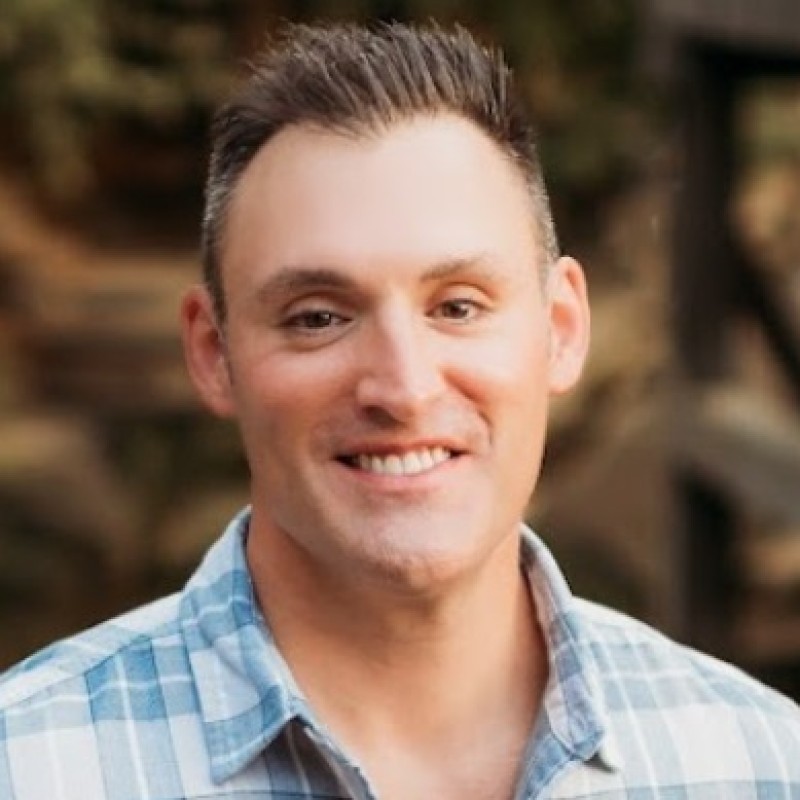
James Amato
Founder of Catalyst Advisors & Consultants
https://www.linkedin.com/in/jame5amato/?skipRedirect=true
https://www.linkedin.com/company/catalyst-advisors-consultants/
In this episode of Biz/Dev, we sit down with James Amato, Founder and CEO of Catalyst Advisors & Consultants, to talk about leadership, growth, and turning big ideas into real momentum.
James shares his perspective on building organizations people trust, navigating change, and creating meaningful growth across businesses and communities.
Along the way, we discuss entrepreneurship, AI, and what strong leadership looks like when the path forward isn’t always clear.
[00:00:00] James: I don't wanna name drop really big powerful firms, but if- Like McKinsey and United Way ... Yeah, if McKinsey, if McKinsey and United Way had a baby, right?
[00:00:11] David: Hi everyone, welcome to the BizDev Podcast, the podcast about developing your business. I'm David Baxter, your host, joined per usual by Mr. Lumpy himself, Gary. What's up, man? Lumpy? That's a new one. Yeah, I figured. You just kind of look lumpy to me today.
[00:00:25] Gary: I look like an
[00:00:26] David: Oompa Loompa, and you look lumpy.
[00:00:27] Gary: I think I just was grumpy and you messed up.
[00:00:28] David: Oh, I did mean grumpy. You're grumpy. All right, fair. Yeah.
[00:00:32] Gary: All right. More importantly- Yeah, e- either way, I'm not grumpy. I'm doing good
[00:00:35] David: today. You're doing good? Yes. Okay. No one cares. All right. Yeah. We are more importantly joined by James Amato, who is the CEO and founder of Catalysts. Welcome, sir. How are you?
[00:00:46] James: Thank you. I'm doing well. I hope you are.
[00:00:48] David: Cannot complain.
[00:00:49] James: Thanks for having me.
[00:00:50] David: Absolutely. All right, so we start, let's start out with some random questions to get to know you a little bit better. You have no idea what's coming. Prepare yourself. Gird your loins. Are you ready?
[00:00:59] Gary: We're gonna... They're gonna shake you.
[00:01:01] David: Sure. All right. I'm prepared. Gas station snack of choice.
[00:01:06] James: Ooh. Oh. That's a good one. That's
[00:01:08] David: a new one. That's a tough one. Gary likes that
[00:01:11] James: one. M- modern day, like Wawa, James, or like old school? I'll go old school. You know those Fritos barbecue twisty things? Those, or we want to really throw it back, I would say pretzel cheddar cheese combos.
[00:01:27] David: Okay, I'm sensing- You know ... a savory side of things. For sure. Gary, do you have a favorite?
[00:01:31] James: Yeah.
[00:01:32] Gary: Currently it would probably be, and this is gonna sound dumb, but I'm almost addicted to the, the chocolate and mint CLIF Bars.
[00:01:41] David: Of course your gas station thing is a CLIF Bar. What is that? That's bougie,
[00:01:45] James: Gary. Yeah, I know.
That's bougie, man.
[00:01:47] David: What is that? No, it's good. But he's a complete snot. Absolutely. How am I a snot? CLIF Bar? Really? Man.
[00:01:54] James: Yeah, yeah.
[00:01:55] David: Mine's a Nutty Buddy. Little Debbie Nutty Buddy. Come on now.
[00:01:59] James: All right. I buy it. Oh, man.
[00:02:01] David: Do you prefer to improvise or script it out?
[00:02:05] James: Oh, I'm an improv guy. Let's do an improv style.
[00:02:07] David: I recently... I'm a wing it guy myself, and I recently had to give a five-minute speech for a startup thing I was doing, and I hadn't done that in a very long time, and it was so hard. It is. It was so hard because I had written stuff down that I wanted to specifically say, make sure you say it. Yep. And normally when you're winging it, you're just doing whatever.
But I had certain got you lines, wa-pow, right? Yeah. And so I didn't wanna miss them, so I had to memorize this thing. It is- And it was so weird. I, I got through it, but it was way harder. I don't know how people do that. I
[00:02:39] James: got
[00:02:39] David: one more for you. Are you a breakfast or dinner guy? What's your favorite meal?
[00:02:47] James: Breakfast, hands down.
[00:02:49] David: Breakfast hands down. Breakfast
[00:02:50] Gary: or dinner is always acceptable. Breakfast
[00:02:52] James: for lunch, breakfast for breakfast late night, always.
[00:02:54] David: Yeah. No, okay. Right on. But are you like Gary, where breakfast is a CLIF Bar, or-
[00:02:58] Gary: No, that's not breakfast. That's my gas station snack.
[00:03:01] David: What is-
[00:03:01] Gary: Breakfast usually includes
[00:03:02] David: eggs
he probably has something, little poached eggs, maybe with some salmon and some lox. Maybe some capers, you snooty snoot-snoot. You look orange on screen You're talking about
[00:03:12] Gary: Gary, right? Okay ... but it's just green from this side. All I see is green Oh, nice. Well done.
[00:03:17] David: Are you, what i- what is your breakfast of choice?
Is it sweet or savory? I'm guessing it's savory based on your snack choices. Are you a Eggs Benedict guy- You know ... or a stuffed French toast guy?
[00:03:27] James: Nah, I can go both ways on the breakfast, for sure.
[00:03:30] David: Okay. All right.
[00:03:30] James: Usually, like the standard is some oatmeal with some fruit and nuts and that kind of thing, but I can tear into an omelet.
I can tear into, yeah, a good breakfast scramble.
[00:03:41] David: My kids make fun of me- Big bowl of, big bowl of grits ... whenever we're on vacation at any hotel or anything where they give us breakfast, I go for the oatmeal, and my kids are like, "You're 800 years old. You old fossil" "You need to die." And I'm like, "That's lovely.
Thank you so much." Teenagers are great. Anyway, all right. So- For sure ... let's talk about Catalysts. Let's get over these questions. Tell me about, now your whole thing is heart-led leaders. Give, tell me what that means. Besides the marketing speak, what does that really mean?
[00:04:14] Outro: Yeah. I,
[00:04:14] James: I look at it this way. I think we're governed by a lot of things in business.
I think that for us, we wanna work with people who can look beyond the bottom line, while also saying if we care about people, if we care about each other, if we care about the impact we're having on the world, we're probably gonna make more money and more impact all at the same time.
[00:04:36] Outro: I
[00:04:36] James: think it's almost like the B Corp philosophy.
It's like we, we might not exist solely to make a profit. We definitely gotta make that profit to make the impact that we wanna have. And so I think it's just a way of kind of looking at how we do what we do with people, starting at who they are, what their capacities are as a leader, and how that translates across the many functions that a business must kinda master to be successful, particularly now.
And so that's what we think about when we, when we just start taking on a new client.
[00:05:06] David: So I jumped a little ahead of myself. I did not ask the obligatory question, what does Catalysts do? Yeah. I don't
[00:05:13] James: wanna name drop really big, powerful firms, but if- Like McKinsey and United Way ... you're about to. There you go.
Yeah, if McKinsey, if McKinsey and United Way had a baby, right? And you said, "Look, I think there's an opportunity here to work with some really exceptional executive level talent on things that the organizations we happen to serve may not have the bandwidth, the capacity, the strategic wherewithal, the time, the sophistication to kind of tackle."
We do a lot of public sector work, nonprofit work, higher ed work with very busy people, often people who don't have big budgets, or even the capacity to look beyond the next fire that's in front of them, right? And so I think having Been boots on the ground in many of the industries we serve as a team helps us look at things in ways, you know, we've got the strategic wherewithal, but we can also do the work.
We don't need to go away once the project is over. So I hope that's helpful, uh- So- To, to kind of trip ...
[00:06:10] David: are you guys like strategic consultants? Are you coming in here to help plan? Yep. Are you development, like- Yeah ... where marketing? What, what kind of consulting and advising do y'all do?
[00:06:21] James: We're a boutique strategy firm with built-in execution.
So there's three dimensions that we focus on. The traditional consulting or project-based work, the intent out of the gate for the client is often, "Hey, we got a thing that needs done. You wanna do it?" Sure, but there's no intent beyond getting the deliverable to work together. Now, obviously, I think anyone in my shoes would say we want to do what we can to ace that test and get that firm to keep us around.
If we built the plane, why not keep us in the hangar to help fly it or enhance it or do whatever? And that leads to the second dimension of work, advisory, retainer-based programs of work that keep us attached to the thing we originally created to tweak it, to fine-tune it, et cetera. And then finally, that third dimension really is fractional work.
A lot of folks can't afford the commitment to FTE that having the executive level talent we can bring them in a fractional capacity can really help facilitate. And so that's been an, an awesome thing to do to slip in and augment a busy city leadership team or a busy sales force or you name it.
Slotting in there and trying to figure out, okay, how can we make an impact here in a way that isn't gonna hamstring this organization for whom the purse strings are tight. So if you could design your ideal job, not necessarily client,
[00:07:41] David: what would you guys be doing?
[00:07:43] James: Yeah. I think we-- I enjoy, I think our team enjoys being able to Really sink our teeth into the broad spectrum strategy work, and then the tactical things that flow from that.
So in an ideal world, we pick up that, that consultative client, but we work it through the three dimensions. The client, through the tremendous work that we do, the rapport that we're building, the things we're helping them uncover, the successes we're helping them find in whatever dimension it is that we're working, leads us to continue to build that relationship.
But for us, it really starts with that strategy, whether it's a full-blown strategic plan or some adaptive strategy answering some call or challenge that business has in the immediacy. It starts there. And then as you uncover it, as you get the right people involved, and you start to poke holes in the current and talk about the barriers to entry to whatever the future can potentially look like, you start to build a broader picture of what the possibilities are.
And that's really what we're designed to do. We're so confident. I hesitate to say Jacks and Jills of all trades, but it's really a multidisciplinary firm. There isn't an aspect of business or organizational strategy that we're afraid to tackle. But I think that stems from the fact that we're not the hero.
We're not the protagonist in the story. We work for the client who plays that role. And so it's easy for us to check ego at the door and say, "Look, like, this is your plan. How can we be of service to helping you create a plan that's gonna outlive even you?" So I think that's, I think that's a differentiator for us right now in, in our core market.
[00:09:24] David: That's fair. So back into what you said earlier about the heart lead and choosing kind of the mission-driven people, how does that work practically? You guys are about two years old, so you had to start. You guys are probably either still in or recently out of what we call the slog, which is the definition of that is the time from when you launch to the time anyone cares.
So
[00:09:50] Outro: as a consulting firm,
[00:09:51] David: I, Big Pixel, my company, is a consulting firm, so I understand this world. Two years is not a long time. No. Are you to the point where if someone was just dri- bottom line driven, they're not exa- Are you gonna say no? Or is that still aspirational to y'all?
[00:10:07] James: You know, I, I would say we're pretty committed to our brand pillars, our brand essence.
We've been really intentionable, intentional rather, about, you know, discerning what we call the willing client. And this is something that plagued me in my years in, in corporate and even to a degree in nonprofit where clients aren't often willing. I think sometimes it's out of fear. You, in the ad business, you do digital marketing campaign after digital marketing campaign, sit down and you talk results and all you can give a client on the ad side is all, "Here's the impression delivery, here's the conversion rates, here's this, here's that."
And you turn it over to them and you say, "Hey, what are you seeing on your side? Are things transacting? Is the needle moving in the right direction?" And often the, I think either the person was too guarded to answer the question honestly, or they just weren't with the capacity to know where to look. And I think so willingness to us is two-dimensional.
It's do you have the capacity to be helped? And are you willing to trust us to the degree that you'll welcome us in and you'll show us what's going on behind the curtain? And I know a lot of firms struggle with that. Is it aspirational? I'm not working with anyone, we're not working with anyone right now that we don't consider a willing client I can tell you that The book isn't as deep as I'd love for it to be, but whose is?
Sure. But I would say we don't have anybody in the client partner portfolio that I would call lack- lacking in willingness to be helped.
[00:11:38] David: That's fair. So when you say we, how big are you guys? Is it just you and your partner? You got a whole crew? You know, so this is the ...
[00:11:44] James: No, this is the curious way that we operate.
For years, I was in a, a scenario in corporate, and I know this is not uncommon, so this is not a shot at the corporate world. But I know there are a lot of agencies that get by from whitelisting. You contract certain aspects of the business out 'cause it's good for margins. But you never tell the end user or the client, "Hey, we work with this group for this and this group for that and that group for this."
I'm the opposite. The six dimensions that I contract to support, and I call these people team members, they're fellow entrepreneurs whose businesses my partner and I believe in very strongly. These are folks who we're investing, in, in most cases sweat equity because we love entrepreneurship. It's a passion of ours.
We wanna see these folks, all of whom are executive level talent, really be able to achieve the same types of things that we know they want us to achieve. That, that success, that impact. And so yeah, we've been really fortunate to curate a tremendous group, many of whom are friends, some of whom are better friends than others.
But we've got our creative down, we've got our operations down, we've got our video production, we've got our market research,
[00:12:57] David: and the list goes on.
[00:12:57] James: And we're pretty proud about that. But I'm always clear with the client, "Look, we have a team. It is a tremendous team. But the virtue of working with us is that in some respects you are supporting entrepreneurship across our region and state."
[00:13:19] Midroll: We believe that business is built on transparency and trust. We believe that good software should be built the same way. Big Pixel is a 100% US-based, fixed-fee, custom software design and development agency built on transparency and passion. No offshore handoffs, no surprise invoices, just a team that treats your problem like it's our own.
UX and design are core to everything we do. Not a phase that gets handed off, but a discipline that runs through every decision we make. We bring the expertise to build what your business needs and the clarity to know when AI and technology help and when they get in the way. We provide our clients honest assessments of where they are and how they can get where they want to go.
Your idea deserves the right team. Let's talk, plan, and create something that truly works for you.
[00:14:14] David: So you mentioned that you work with nonprofits and companies of all sizes and schools and entrepreneurs. Do you find some of their challenges to be universal?
[00:14:23] James: Oh, yeah. Without a doubt. And I loved the prep you guys put into this interview, and some of those questions were fantastic. I do. I think absolutely.
Where do I start, right? I think, and I just wrote a Substack on this today, one of the things that I'm I'm trying to figure out a better way to put this. So many of our clients, and then anyone in, in business, is reliant on storytelling. You talked about the elevator pitch that you recently made and memorizing that.
I think the challenge we face right now is, yes, there are some people that know their story, but they have no idea how to tell it. I think there are others that don't know their story or they think they know, but maybe 10 years has passed and the story is completely different, or you've got a workforce full of people who believe the story is this and it's really this or the inverse of that.
And so I think that's a critical thing that I'm finding everybody dealing with right now in some way, shape, or form. Whether it's a revenue related thing or a culture related thing or a what do we exist to do type of thing. I have a couple of C-level executives right now I'm advising on growth strategy, which I always tell people like it's a biz dev podcast, I can say it.
Yes, growth means revenue growth, but look beyond the revenue sometimes, right? This is where the heart-led leadership comes in, is like how is the company growing? How are the humans? How's the reputation capital of the firm growing? How's the network of the firm growing? How's the portfolio of the firm growing beyond the money?
And it's always curious who can't really answer those questions. But it is a blessing for a strategist care about strategy. There's some very plain things that you can do with that. You start to chip away at some very tangible things.
[00:16:10] Outro: They can get people
[00:16:11] James: righting that ship. They just gotta know what to look for.
One of the things I see chronically in, in sales environments with sales leadership is, i- you've no doubt had people talk about this in the past, so I'm probably preaching to the choir for your audience. You walk into the place, small shop, boutiquey type of office, very posh, lovely. The right things are on the walls, the colors, they're where they need to be, but marketing's there and sales is up there or vice versa, and there's no connectivity between the two teams outside of the weekly staff meeting.
And if you were to ask marketing or sales if marketing or sales was a function of their own respective jobs at any other time outside of that weekly staff meeting, both would say, "Hell no. No, I'm not in sales, I'm in marketing," and vice versa. And that is just fundamentally untrue, and it is my personal quest among personal quests to see that just end because I frankly don't understand it and I don't understand where it happened.
I don't know if it stems from this fear of sales Or this fear of creativity that people have. In the sales environment, it's you can either do it or you can't. That's the belief. And in the creative space, it's you can either do it or you can't. I had a third grade teacher tell me once that I can't draw, so I'm never gonna try to draw again.
Dan Pink writes a lot about this stuff. It baffles me how those two primary functions inside of a business see themselves as like foreign countries often fighting wars back and forth. Hmm. And yeah. Normally I hear those wars are between ops and sales, not
[00:17:52] David: necessarily sales and marketing.
[00:17:53] Outro: That makes more sense.
[00:17:55] David: Someone always says that sales brings pain And there's truth to that because you grow, it causes growth by definition, and that causes change, which often throws the people who've got to actually do the work into a tizzy. So I've understood that. No, that's a brilliant point. But I don't understand sales versus marketing.
I know they're different functions, but why they would be against each other I don't really understand. I've, I have wondered, and this is my own naivete, and you're a large company and you have a established marketing team and an established sales team, totally different divisions as it were, what their individual roles are.
Is it just try and dial on one side and the other one is coming up with brilliant logos and advertising? It gets-
[00:18:39] James: True ...
[00:18:40] David: I understand that at a level, but it seems like at some point when you have tons and tons of people doing this, that there'd be so much overlap. But anyway, I digress.
[00:18:48] James: No, you make a good point.
Maybe it's less a dichotomy of marketing and sales and more a dichotomy of the doers and the sellers.
[00:18:55] David: The doers and sellers are always going to be against each other because it's just the nature of what they do. Now y- if small enough, they're all on the same team, we're all cheer. But it, sales people- That's if you're good at your job is to break things because you're bringing in growth, you're bringing in change, and the ops guy's job is just to get stuff done.
He doesn't care about the size of the company. He's got a task in front of him and he's got to do it, right? And so those guys are inherently going to fight, which is, as long as it's done right, I think very healthy. You've written previously about AI and the future of work. I'm curious how you see leaders today.
We're in this transition period. I see us now with pre-AI, and eventually we're going to have AIs everywhere, and right now we're in this weird middle, right? So where do you see leaders that are asking the wrong questions right now while we're in this m- ugly middle 'cause we don't know what the future brings?
'Cause eventually- Just like- ... the internet just is here and it's ubiquitous and it's everywhere and it, and everyone's got it woven into their business in every shape, way, form. AI is not that yet. I believe it will get to that, but we're not there yet, so we're in this really messy period where some people are saying, "I don't need it at all.
It's horrible. We should all burn it to the ground." That's my son. And then we have the other side of people who just wanna plug themselves straight into the computer and join with their A- overlords, right? That's where we are right now. So where are leaders getting this wrong right now?
[00:20:19] James: You know, I think they're getting it wrong because it's just, uh In the, in the areas of...
I'll give you a tangible example. So from a staffing standpoint, hearing a lot from hiring managers right now who are using, it's curious, they're using AI tools to sniff out people who are using AI to complete application processes. And it's curious. I'm of the belief that if someone's taking the time to run things through tools to ensure that they do put the best product forward, to me that's a sign of respect.
With our team, I am a huge proponent of using-- We talked a little bit about a, a tool on the front end of this conversation that may or may not have been running in the background for both of us at that moment. I'm a big proponent of people really understanding what the intent of a person using a tool is.
I'm a proponent for our clients of them being able to augment their own thought leadership. Look at the tools as a thought partner who can take the mundane and give you a chance to more fully express the gifts that you bring into whatever it is that you do. And I think that's what trips people up, and then it becomes, "
[00:21:32] Gary: Okay,
[00:21:33] James: how do I do that?"
They do some research or find a person to help you, to coach you through what the possibilities are, or query a tool to help you do that. And so I think it's just, uh, there's just a lot out there. And I think like anything else, people, it's easy to go to extremes. It's easy to say, "I'm gonna be a never user," or, "I'm gonna be an all-in type."
And then I think there's a loss on both sides. I think for us, we, we try to help people leverage it as they leverage us, like a catalyst of sorts to, to get the good work done in a more effective way. But again, for us, it comes back to that human eleph- element of helping people more fully express the things that they're already incredibly good at.
[00:22:18] Gary: Both forces are working in opposition of each other, and nobody's really benefiting from it. So there has to be like some sort of way to find a medium ground. Maybe right now it's just because everything's so new and easy that it's the obvious choice for both sides, the applicant and the recruiter. But I think eventually there's gonna have to be some way to, like you said, filter through, or at least maybe it's even the process prior to sending applications that things are filtered through.
But one way or another, we have to find a way to solve this
[00:22:52] David: There's no way to
[00:22:53] Gary: solve it Well, it's not AI's fault. It's just like what James was saying, it's the intent behind the use. Yeah I'm off at the ribs To tie it back to what James said earlier, it's gonna come down to people not using the tool to write the resume and predict what the tool using to read the resume wants to hear.
Yeah, the game And it's gonna come down to personal storytelling. Yeah.
[00:23:12] David: Yeah. That's true, and that's always... Even w- here's, here's where it comes down to. All AI g- conversations start, and we've done this, hundreds of these now
[00:23:20] Gary: It's the dead internet, yeah. It's just bots talking to bots
[00:23:23] David: They start with the how do humans AI, and then it's how does AI change that, and then it's how do humans get back in the loop.
There's your entire AI conversation every single time.
[00:23:36] James: Pretty
[00:23:36] David: much, yeah It always comes back to we need more humans. Anyway
[00:23:40] James: I'll tell you a really unique way that I've seen this handled, and this isn't for any- everyone, but I've seen someone do, they basically create a SaaS solution where, and they're in the, they're in a very niche place.
They staff for Division I and Division II athletic departments, and they created a effectively a, a platform not unlike LinkedIn proprietary to their own company. So they're a top three market shareholder in their space, and I think they've amounted some 30,000 profiles in their own tool that they've levered.
Now, not everyone can do that, but I thought, "Wow, that's a unique way to curate a talent pool and to keep eyes on that talent pool and to give that talent pool an opportunity to reach out and touch you and vice versa." And great success, great placement rates, great, great firsthand knowledge of the product they have in that database within their own proprietary tool to take out to their market.
So it's an interesting way of looking at it. But I, I wonder, Gary and David, how much longer we'll be working on the resume cover letter game before it becomes something different. That's another thing I think
[00:24:55] Gary: about a lot Yeah, that's definitely gonna be changing.
[00:24:58] James: I,
[00:24:58] Gary: I- I agree
[00:24:58] David: You say
[00:24:59] Gary: that, but I can't- It's almost like social media in some form now is a better or more effective recruitment tool than the standard cover letter resume
[00:25:08] David: That says if you're, and now this is snooty, but if it, the idea is if you're worth hiring, you shouldn't need a resume.
That's the gist. Because if you're worth hiring, when someone, when the market catches wind that you're available, you just get attacked. I don't know how you necessarily do that 'cause most people work privately. How would they know? But that's where it should be your network that just takes over. It's not, you don't apply for jobs.
Mm-hmm. They come to you. That's the, that's how it should be. I don't
[00:25:40] Gary: know. I think that's just an optimistic goal to float over people- Yeah ... to tell them to do their best. So I don't think- That's fair. Yes, of course, that does work. Let's say you're the head of a certain department at a certain tech company, and then, yeah, you're probably getting calls from other tech companies that do similar things all the time.
"Hey, whenever you're ready, whenever you're ready, we can offer you this," blah, blah, blah. But that's what? Not even 1% of the people in the job market for that same job, so It's just an
[00:26:05] David: aspirational thought Best of the best, Gary. That's what we aim for here. It's why you're fired.
[00:26:08] Gary: That was a decent movie in the '80s, I gotta say.
Best of the Best, what was that? Wait. Eric Roberts. I saw that Sylvester Stallone movie. It was a martial arts movie. Yeah. It was an international martial arts tournament movie.
[00:26:21] David: Oh, see, now you've got me stuck. I've got the Karate Kid song stuck in my head. You're the best around.
[00:26:26] Gary: Oh, you're the best around.
No. Yeah,
[00:26:27] David: that's it.
[00:26:28] Gary: Yeah.
[00:26:28] David: Yeah. Sorry. Gosh. All
[00:26:29] Gary: the '80s montages had the best music.
[00:26:32] David: I just Man, I've lost all cohesive thought. Wrap us up, Gary.
[00:26:35] Gary: So what would you say are your top three pieces of advice for a new entrepreneur or someone starting a business?
[00:26:41] James: Yeah, I would say first and foremost, know your role within the ecosystem.
I think in most startup ecosystems, and this isn't my thought leadership, it's Brad Feld. But in every startup community, have your leaders and feeders. And I think that folks often invert those particular roles. I think the folks in government, the folks that are trying to create supportive ecosystems often wear the leader badge when in reality they're feeding an ecosystem for those of us who are out there actually doing the work.
And so I think understanding that role, the fact that you are a leader within your own purview, oftentimes your own community or region, there's power in that because I think stepping up shows the feeders how to help you. And I don't know many entrepreneurs that haven't gotten to what they would define as even nominal success without having a community of support.
I would say number two, it's not for the faint of heart, but don't get discouraged. I think just focus on the fact that it's not just founding a business, but it's also building the business, running the business, and doing the work. And find time to do those things and do them all really well. And when you can start to augment with, first and foremost, humans and perhaps also some tools, do those things, figure it out.
I think number three, and I wouldn't put these in rank order, but take care of yourself. I think it's cliche to talk about self-care right now, but I don't care. I don't have... I think this is another thing I would say is universal among all of my clients and universal within the ranks of each client I serve, is this notion of self-care needing to be more pronounced.
You're not gonna find the success that you even hope to find if you're not keeping the tank full. And just something that everybody needs to do a better job of
[00:28:37] Gary: Yeah. When we started asking this question during our interviews way back, that was probably just after the COVID era or whatever, and that was a piece of advice that a lot of people would bring up all the time, is just learn to stop, rest, take care of yourself, make sure you do something somewhat healthy other than just sitting in front of your desk working all day.
And it went away for a little while recently, and then you just brought it back up, and yeah, it's a good reminder. Fourth.
[00:29:05] David: We're back to the hustle, hustle culture.
[00:29:07] Gary: No, we don't need to go back to the hustle culture.
[00:29:11] David: Tell them.
[00:29:11] Gary: We let AI hustle for us now. It, it is. It's AI hustle. As long as we're spending tokens and we have three, you know- Tokens 24/7,
[00:29:18] David: baby
we know
[00:29:19] Gary: the buzzwords are, "I'll spin up 85 agents to spin up this, and spin up that, and spin, spin this, and spin that." I'm gonna have
[00:29:25] David: 17 computers running 24/7. Don't you get in my way.
[00:29:29] Gary: So James, if anybody wants to learn more about you or more about Catalysts, what's the best place for them to find you?
[00:29:36] James: Yeah, you can find us on the web at catalyst-nc.com, and find me on LinkedIn @
[00:29:41] David: JamesAmato. And on that note, we are out of here. Thank you so much again for joining us. We will be back next week. Have a good
[00:29:47] Outro: one. That wraps up this episode of The Biz Dev Podcast, and this time you get me, Scott Bailey. I am the lead dev over here at Big Pixel, and I know what you're thinking, "I thought David did all the work."
Well, not exactly. We have an awesome team of people to back him up. Biz Dev is a production of Big Pixel, a US-based provider of UX design, strategy, and custom software. This podcast is edited by audio whiz Matt McCracken and Christy Pronto, marketing guru for Big Pixel. Want to connect? Shoot us an email at hello@thebigpixel.net, or you can find us on Instagram, Facebook, YouTube, X, and LinkedIn.
Recent Episodes
Here are a couple other episodes to check out, or return back to the main page.



AI, Tech, and Industry News
Check out the latest insights, curated with intent, from our team.